What happens during a Subud session
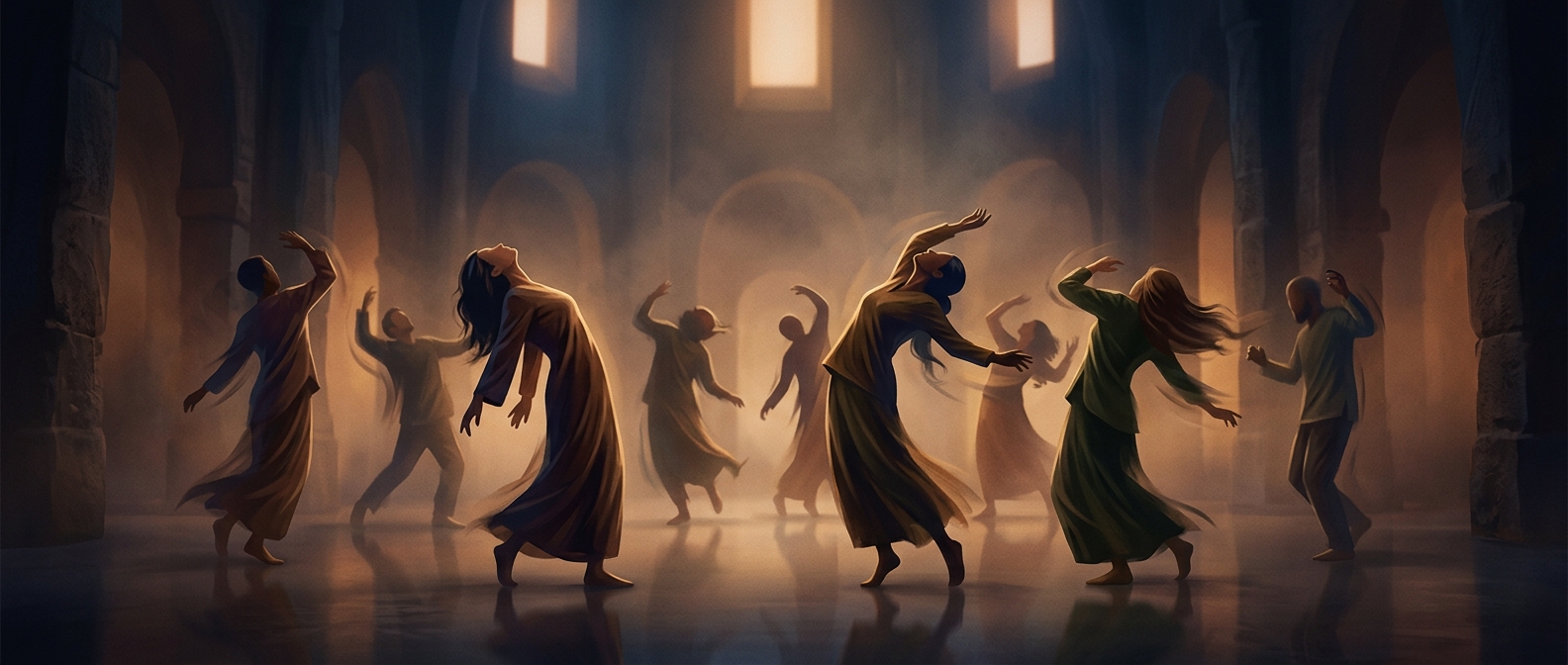
The practice is called latihan kejiwaan, often shortened to latihan—Indonesian for “spiritual exercise.” Participants stand quietly, usually in a group, and allow whatever movements or sounds arise rather than following steps or copying a leader. One person may sway or tremble; another may cry out or move more forcefully. The variety is part of the practice, not a sequence to learn.
Subud members understand the latihan as a way of becoming receptive to an inner spiritual guidance they call the Power of God. That is a religious interpretation, not a claim that the movements have been scientifically shown to come from a supernatural source. From the outside, the session can look like uncontrolled dancing, but participants are not trying to perform for an audience.
Why the movements are left spontaneous
The lack of choreography is central to the exercise. Members are encouraged not to plan a particular gesture or imitate someone else; instead, they try to remain open to what emerges. The movement can change from one session to another, and stillness is possible too. Shaking, shouting, or flailing is therefore not a required set of symptoms or a test of whether someone is doing it correctly.
The empty, uncomplicated room helps make the gathering feel unlike a stage or a conventional worship service. With little to watch or follow, attention stays on each person’s own experience. The result is a group practice in which everyone is present together, but no one is meant to produce the same motion.