Why a Fire Can Hold the Gaze
A fire is visually busy without demanding much interpretation. Flames bend, split, brighten, and vanish, while glowing coals pulse beneath them. The changes are irregular enough to keep the eyes engaged, but there is no plot to follow and no decision to make. Attention can settle on the movement without having to sort through a stream of new information.
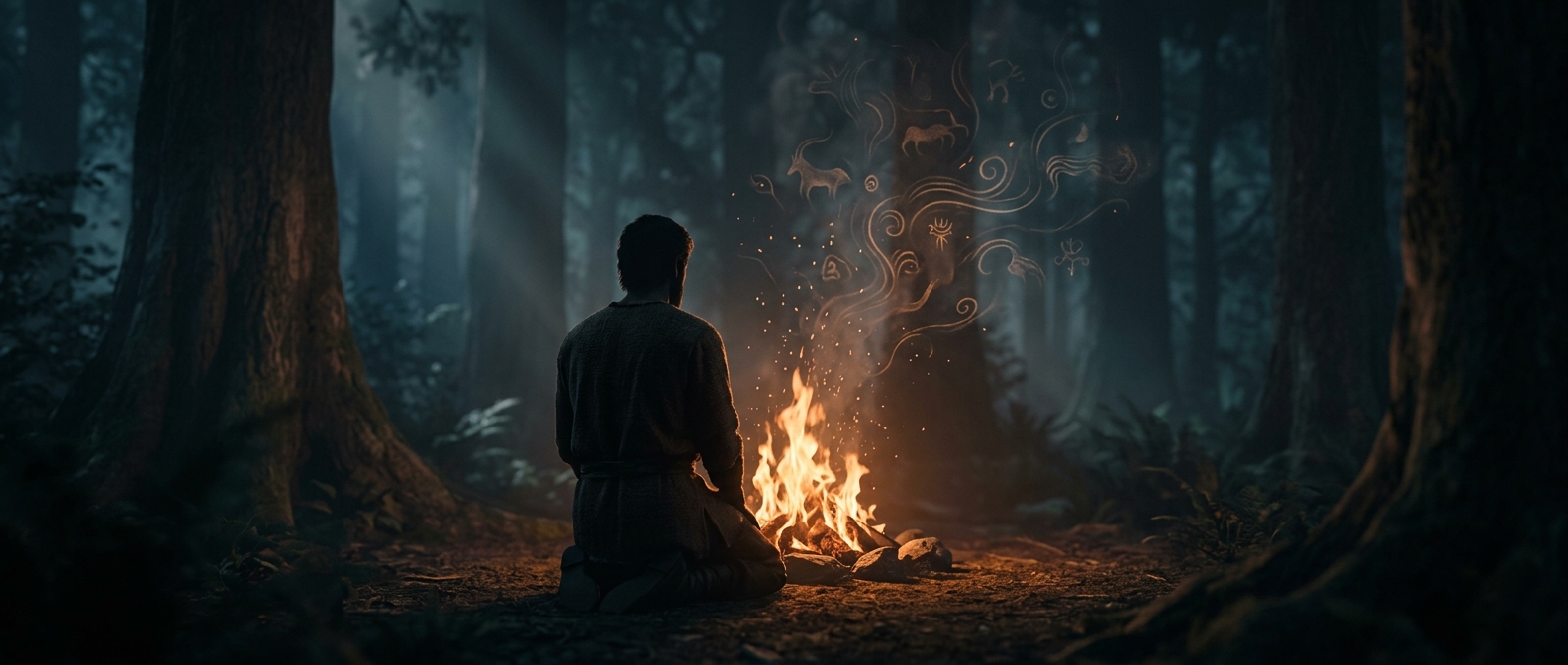
That combination helps explain why people often become quiet and absorbed while watching a fire. As attention narrows to one shifting scene, surrounding distractions may recede and thoughts can feel less deliberate. This is a trance-like state of focused absorption—a description of an experience, not necessarily a formal or clinical trance.
A Shared Focus, Not a Spell
The fire also gives a group a common point of attention. People can sit together without needing to speak or look directly at one another, making silence feel natural rather than awkward. Its changing light and warmth provide a steady sensory backdrop while conversation slows or pauses.
Calling the effect “primitive” can suggest a simple explanation that the experience does not need. The appeal is more immediate: a flickering flame is absorbing, low-pressure, and easy to watch. In a dim room or outdoors after dark, that small pool of movement can make a gathering feel quieter and more inward-looking.