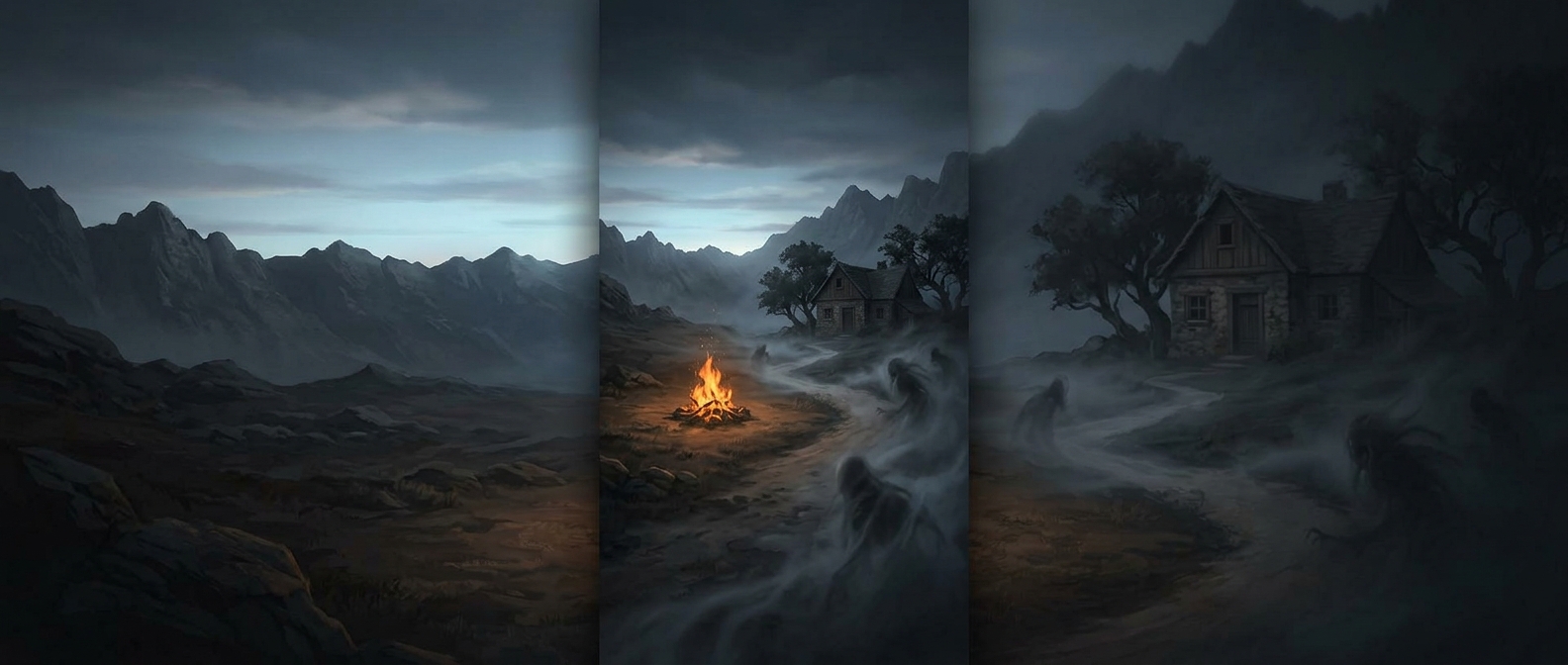
When a Flame Outlasts the Night
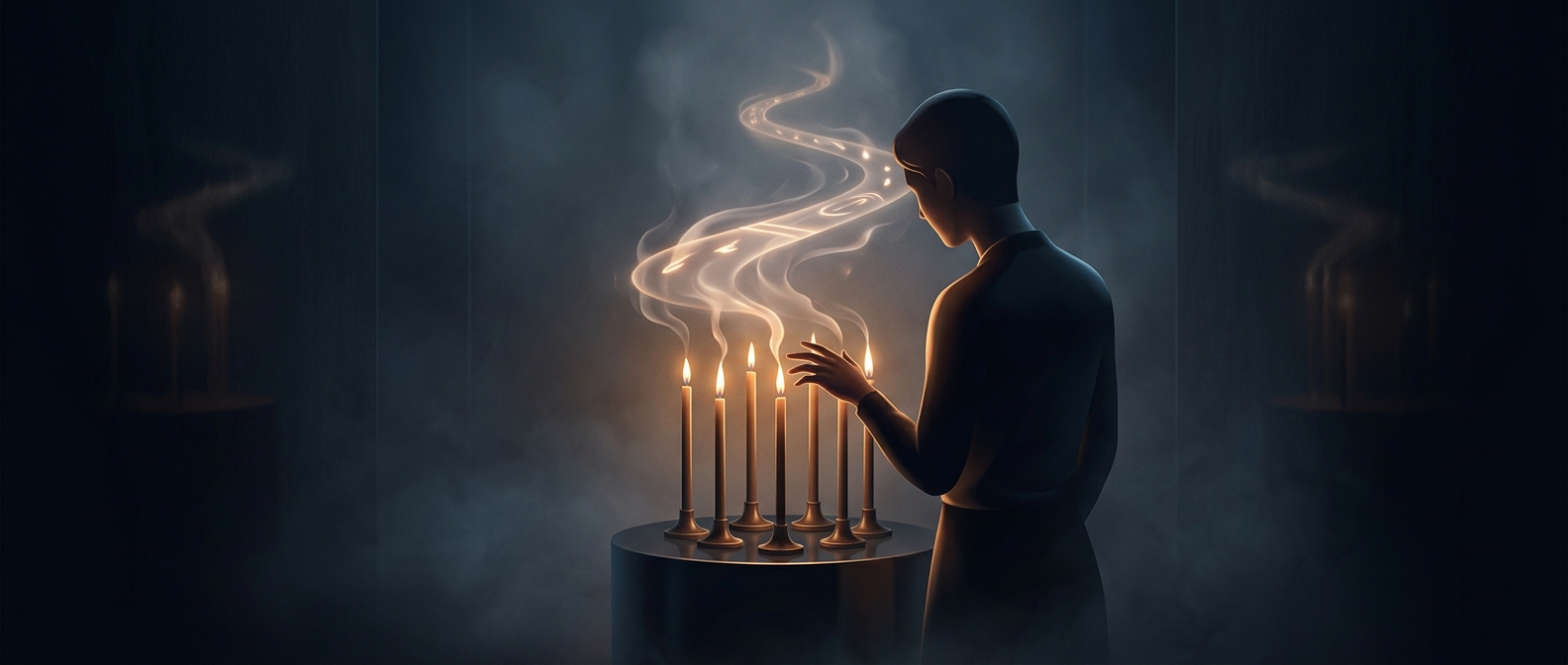
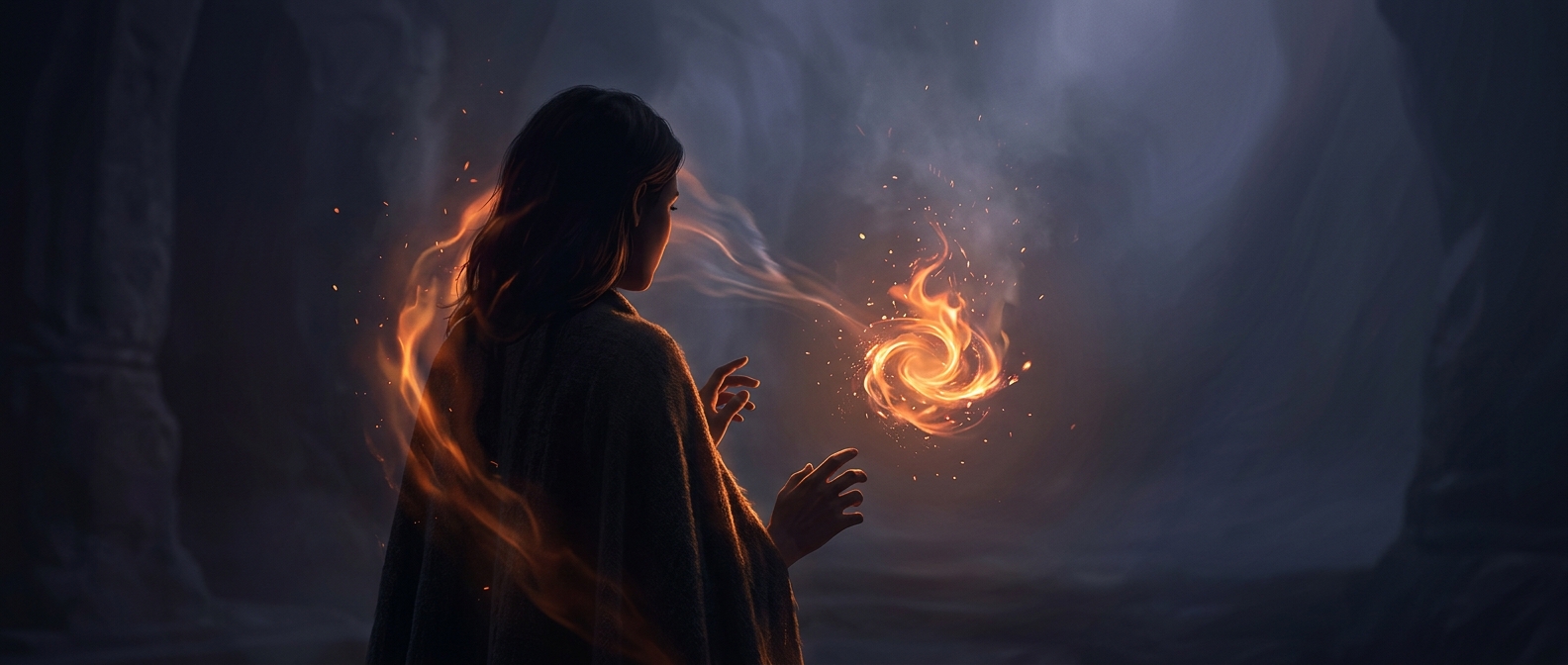
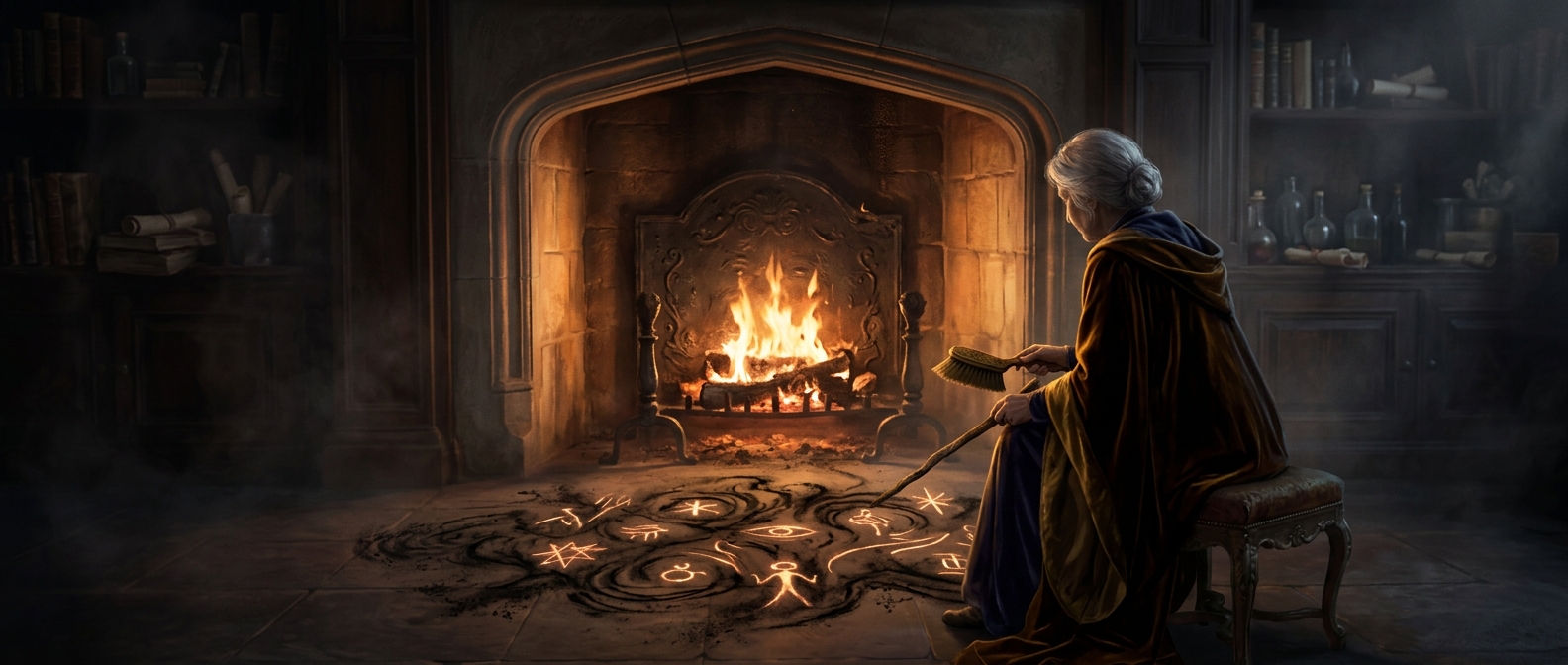
In this folklore, a fire that still burns at dawn is treated as an omen: its persistence suggests that something out of the ordinary may be approaching. The flame is not understood simply as a source of heat or light. It becomes a signal to pay attention at the moment when night gives way to day and the household is still vulnerable to what might come from outside.
The warning centers on the boundary between the home and the unknown. Wandering entities are imagined as seeking entry, so the unusually persistent fire prompts watchfulness rather than certainty. The belief gives an everyday event—a flame continuing to burn longer than expected—a meaningful place in a story about protecting the household.
An Omen, Not Evidence
The folklore does not establish that spirits exist or that a lingering fire predicts an actual arrival. Its force lies in how it frames uncertainty: an unexpected sign can be read as a reason to guard the home and stay alert. That makes the flame memorable as a warning precisely because it appears in a familiar place, among ordinary domestic routines.
In the story, dawn does not automatically end the danger. The fire’s continued presence is what turns a quiet morning into a moment for caution.