What a soot-reader looks for
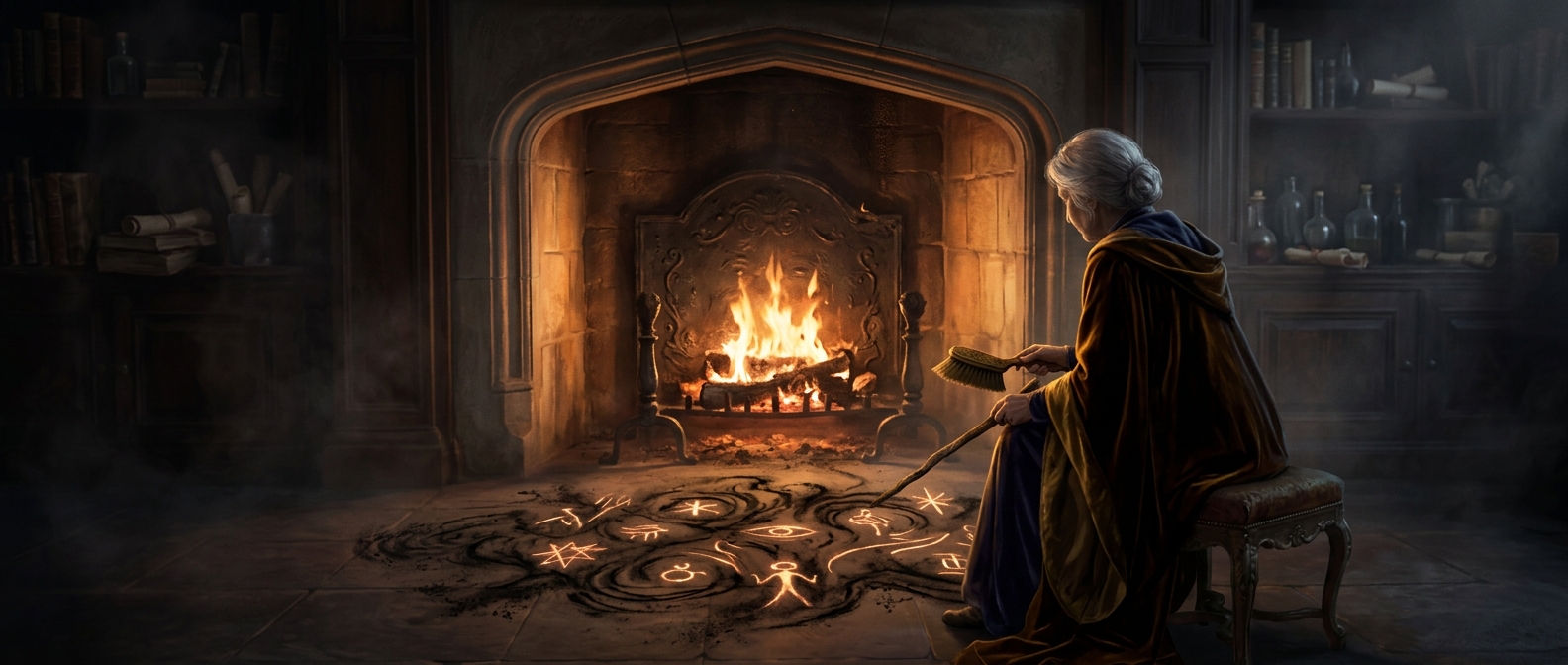
In some forms of folk divination, soot left around a fireplace is treated as a surface on which signs may appear. A reader might look for shapes, streaks, or clusters and interpret them as clues about what lies ahead. The practice belongs to a wider tradition of seeking meaning in the traces left by fire, rather than relying on a fixed, universal code for every mark.
How the marks get there
Soot is made of tiny particles produced when fuel burns. Smoke carries them upward, and they settle where the smoke cools or loses momentum. A chimney’s draft—the flow of air drawing smoke out—along with the fuel and the fire’s behavior can all affect where residue gathers. So a dark patch or curling streak has a physical path from flame to hearth, even when a reader also sees it as a sign.
A reading shaped by interpretation
Soot-reading gives ordinary residue a second role: it becomes material for reflection about uncertainty and the future. Because marks are irregular, their meaning depends on the reader’s tradition and interpretation; there is no single pattern that guarantees the same prediction everywhere. That openness is part of the practice’s character: the fire leaves the marks, but a person supplies the story they suggest.
And sometimes the most practical clue is the plainest one: soot collecting in a chimney can mean it is time to clean it.