How polluted water became a mosquito hazard
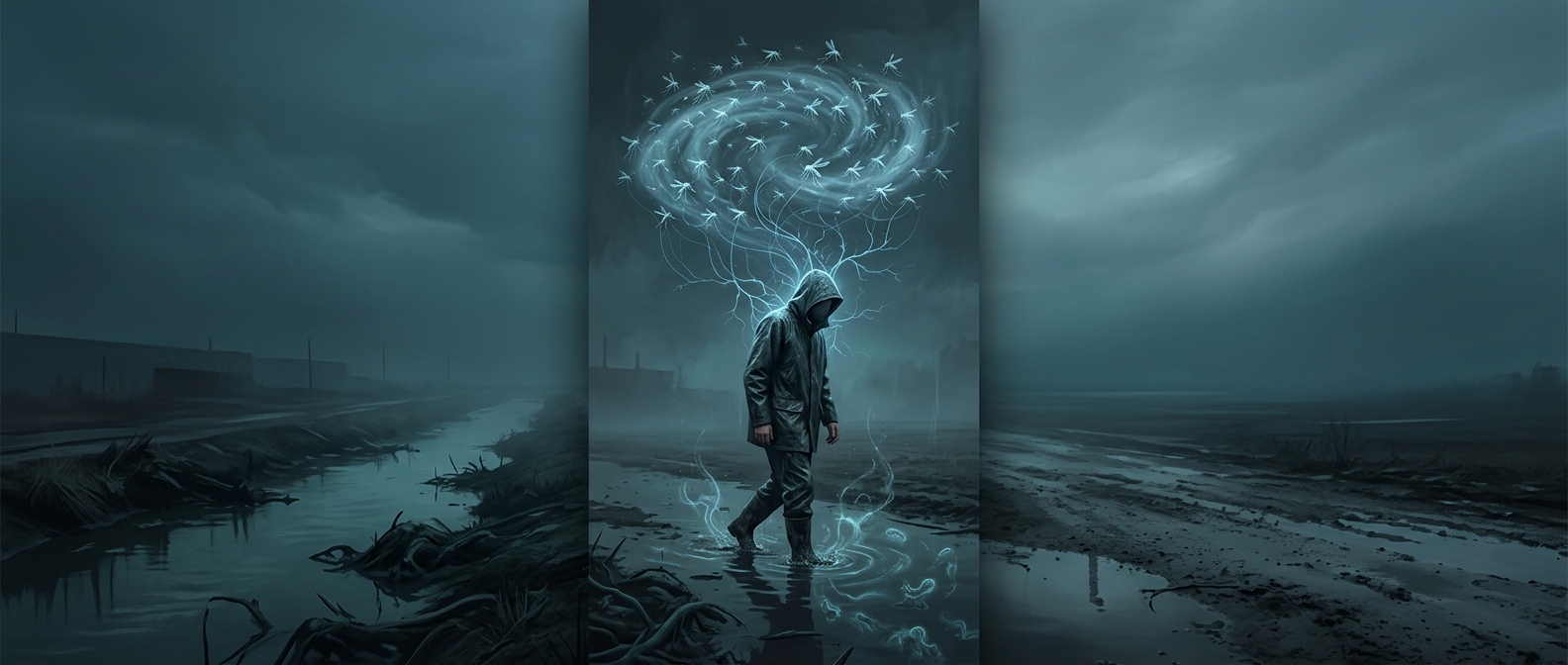
During St. Louis’s severe 1933 drought, water did not simply disappear. In and around the city, sewage and wastewater could collect in shallow, stagnant pools. Those conditions offered Culex mosquitoes—a group that includes species able to breed in polluted water—a place to lay eggs and for larvae to develop.
The drought did not create the virus. It helped create the conditions for more mosquito contact with people. To understand how the outbreak spread, it helps to distinguish where the virus circulates from where mosquitoes breed.
From birds to people—and into the brain
St. Louis encephalitis virus is maintained chiefly in a cycle between birds and mosquitoes. A mosquito can acquire the virus while feeding on an infected bird, then pass it to another host in a later bite. People are generally accidental hosts: they can become seriously ill, but they do not usually sustain the virus’s onward spread.
After entering a person, the virus may cause no noticeable illness or produce fever and other symptoms. In severe cases, it reaches the brain and triggers encephalitis—inflammation of brain tissue. That inflammation can disrupt the brain’s normal work and become life-threatening.
The chain depended on several links: water that supported mosquito breeding, mosquitoes that encountered infected birds, and bites that brought the virus to people. The drought’s danger lay not in thirst alone, but in the mosquito habitat left behind alongside inadequate sanitation.