When a Garment Becomes Part of the Set
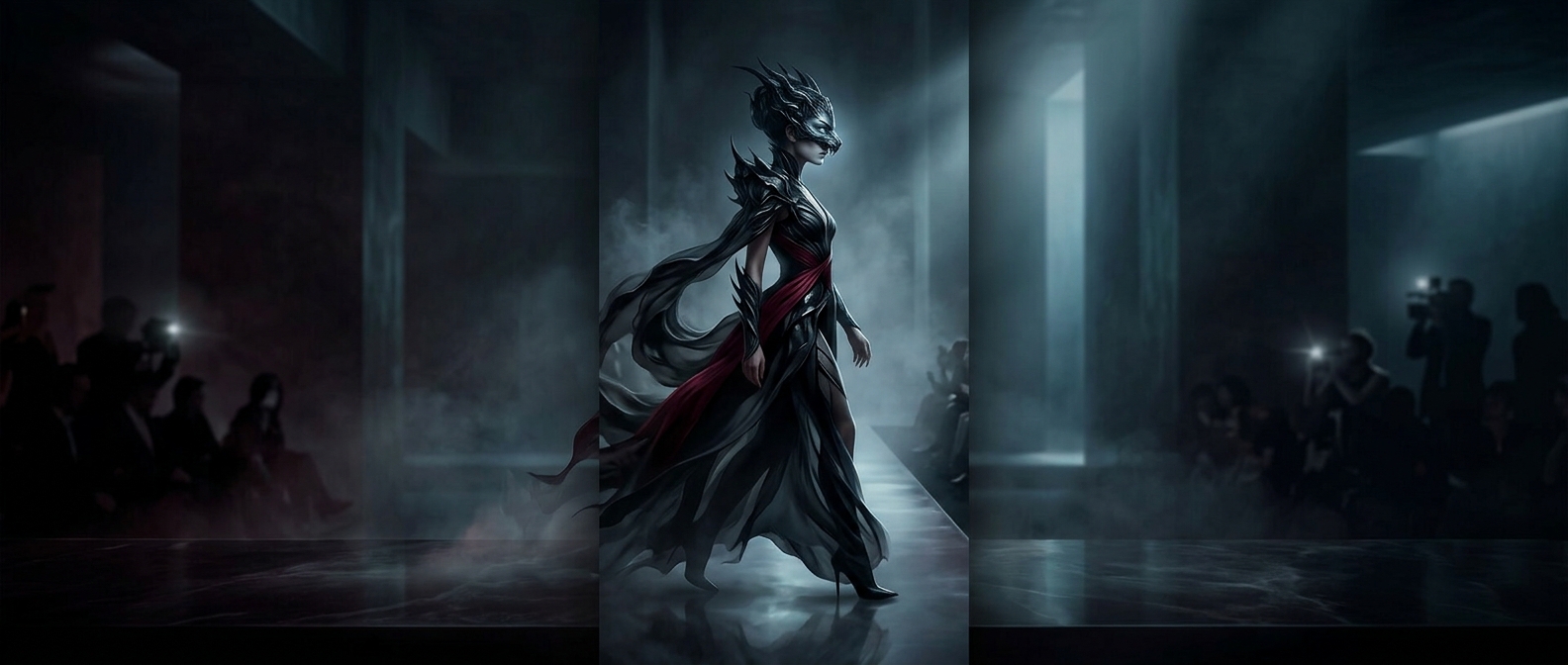
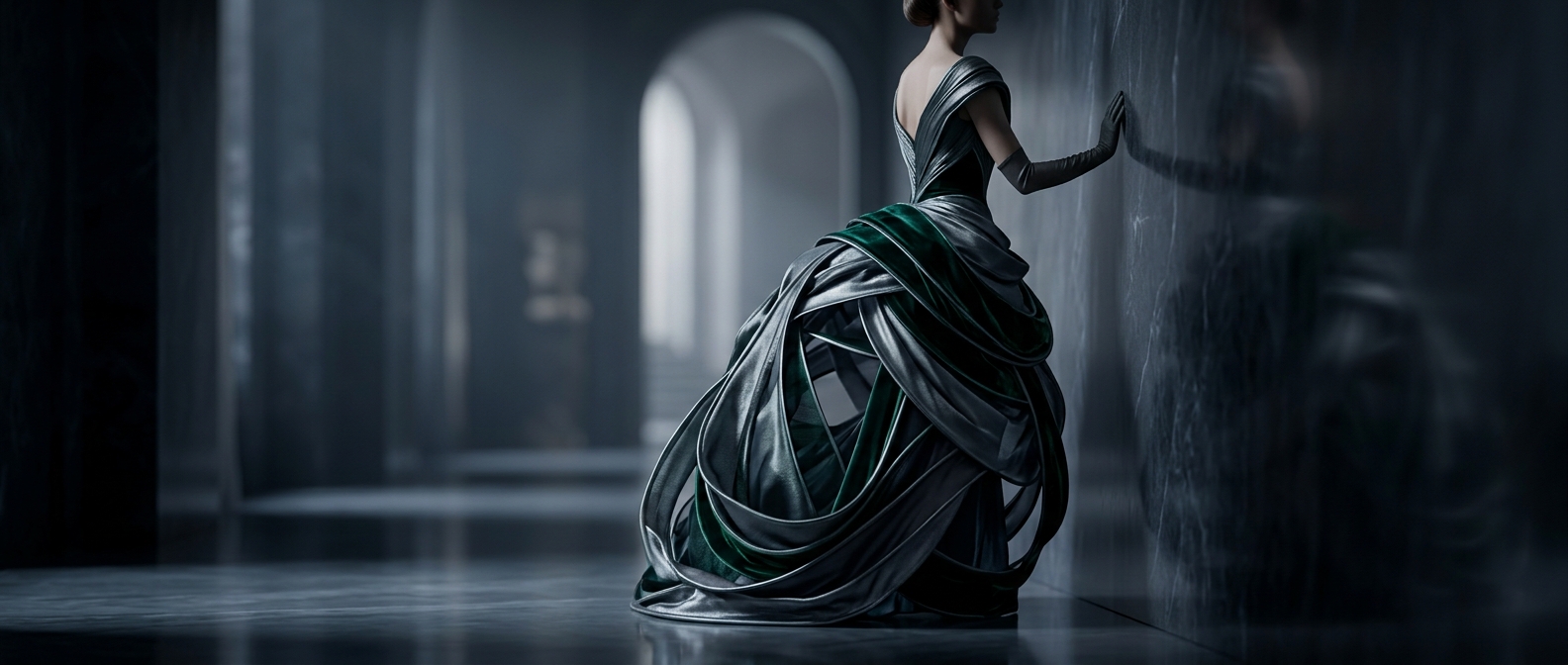
A runway outfit is not always designed to move like ordinary clothing. Oversized panels, rigid frames, or dense metal elements can extend far beyond a model’s body, turning the look into a moving sculpture. The wearer may have to take short, careful steps because the design changes where their weight sits and how much room they need to move.
The Walk Is Choreographed Around the Shape
Models usually learn how a look behaves before stepping onto the runway. A broad geometric piece may block their view of their feet or make turning difficult; a heavy structure can pull on the shoulders or shift as they move. Rather than risk a stumble or damage to the garment, they may slow down, keep their posture controlled, and avoid sharp turns. The result can look more like a shuffle than a conventional catwalk stride.
That restriction is often part of the presentation, not a flaw to be corrected. The designer is asking the audience to notice the silhouette, material, and relationship between the body and the object—not simply how easily the clothes could be worn on the street. The model’s movement helps reveal the piece’s scale and makes its physical presence unmistakable.
A Runway Look Has Two Jobs
Couture can be a demonstration of construction and an artistic statement at the same time. In a wearable outfit, ease of movement is a practical requirement; in an extreme runway look, the designer may deliberately trade that ease for a striking shape or spectacle. The runway is a controlled setting where that tradeoff can be shown briefly and safely.
That is why a model’s tiny steps can communicate something a photograph cannot: the design is not merely large. It occupies space, resists the body, and changes the act of walking itself.