A hotel built around the car
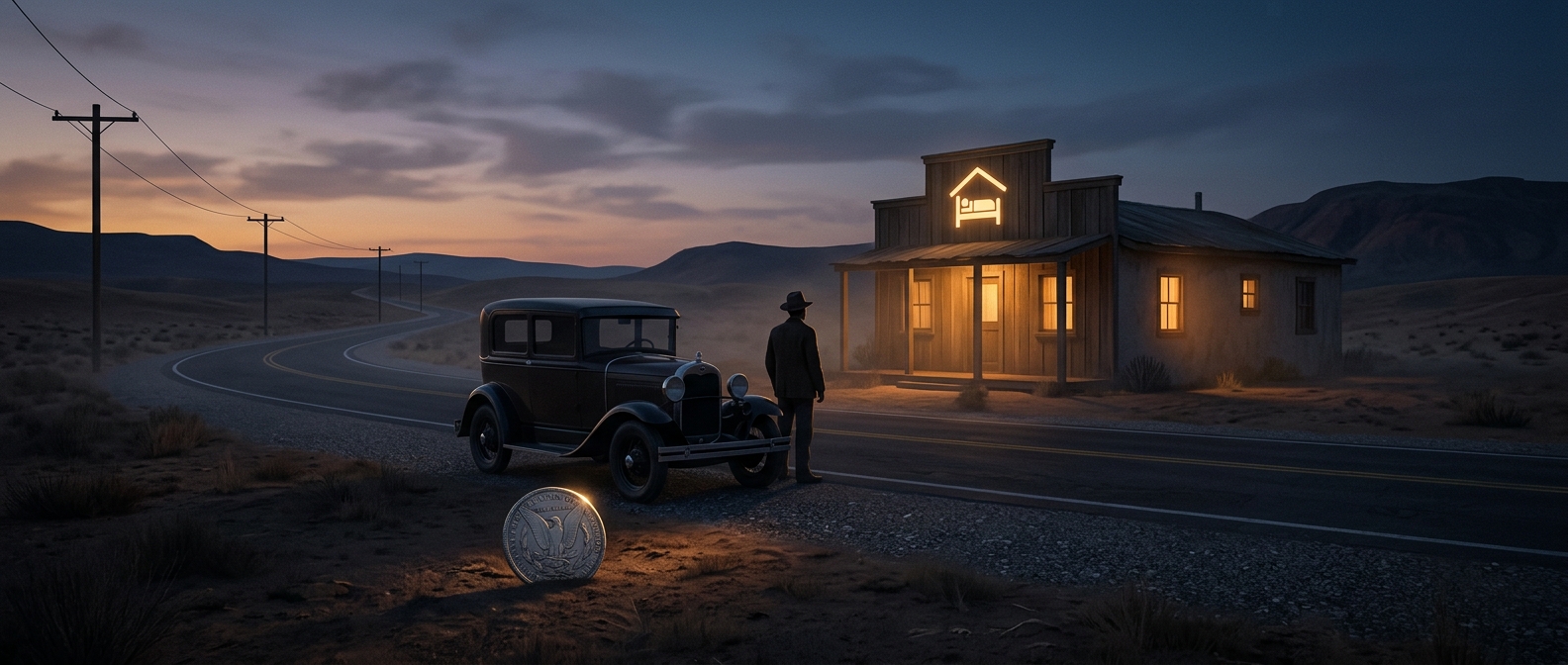
In 1925, architect and developer Arthur Heineman opened the Milestone Mo-Tel in San Luis Obispo, California, along the route between Los Angeles and San Francisco. Its design addressed a problem familiar to early motorists: a long drive could mean reaching a town, finding a hotel, and leaving the car somewhere else. At a roadside motor court, travelers could stop directly off their route and keep the car close to where they slept.
That arrangement changed the overnight stay from a downtown destination into a convenient pause in the journey. The low nightly price made the idea accessible to drivers who wanted basic shelter rather than the services of a grand hotel. The word “motel” itself shortened “motor hotel,” capturing how closely the new lodging was tied to automobile travel.
A new kind of stop
The motel’s importance was less about luxury than about reducing friction. Drivers did not need to plan a detour into a city center or carry their bags far from the vehicle. Lodging could instead appear at the roadside, where a traveler could pull in, rest, and resume the trip in the morning.
As car travel spread, that simple format proved easy to repeat along major routes. The Milestone Mo-Tel helped establish a model for lodging shaped around the motorist—not just a place to sleep, but a practical part of the drive itself.