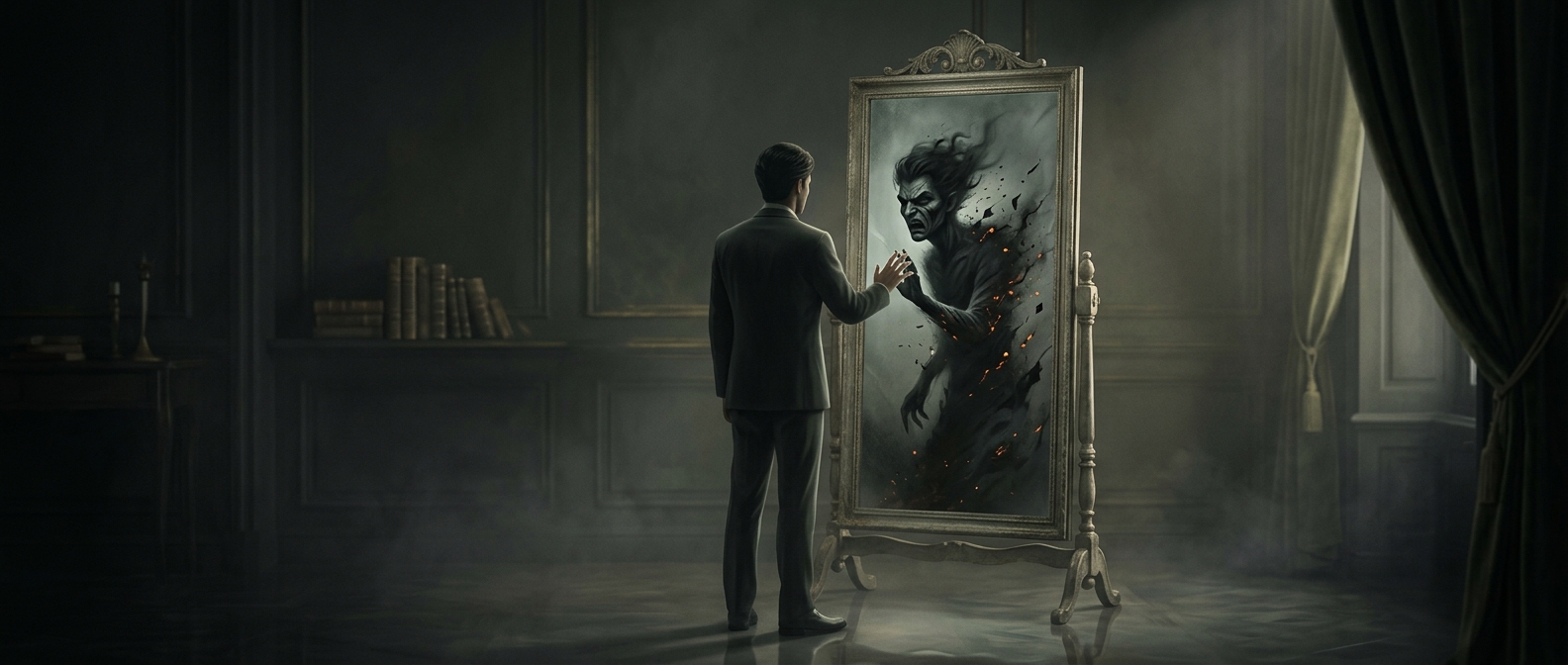
Why a double feels threatening
A familiar face usually signals a familiar person: someone with a history, intentions, and a place in your life. A doppelgänger breaks that link. It looks like you, but it is not you—and in folklore, that mismatch turns recognition into unease. The double can embody the fear that identity is less stable than it seems: a person’s outward appearance may conceal something strange or dangerous.
The self’s shadow made visible
Stories often give the double qualities its counterpart would rather deny: envy, cruelty, selfishness, or a desire to escape ordinary restraints. The figure works as a visible shadow of the self—not necessarily a literal supernatural diagnosis, but a way to make hidden impulses into an antagonist with the same face. Its threat comes from the possibility that the worst parts of a person are not wholly separate from them.
That tension also gives the double its power as a warning. Seeing it may foreshadow misfortune, while being pursued or attacked by it turns inner conflict into an external danger. The story need not explain exactly what the apparition is; its resemblance alone makes the encounter personal.
Why the face matters
A stranger can threaten you, but a copy of you blurs the boundary between victim and threat. The double seems to know your appearance perfectly while remaining beyond your control. That is why the figure can stand for more than bad luck: it makes the unsettling possibility of confronting one’s own nature impossible to look away from.