A guardian for the hours of helplessness
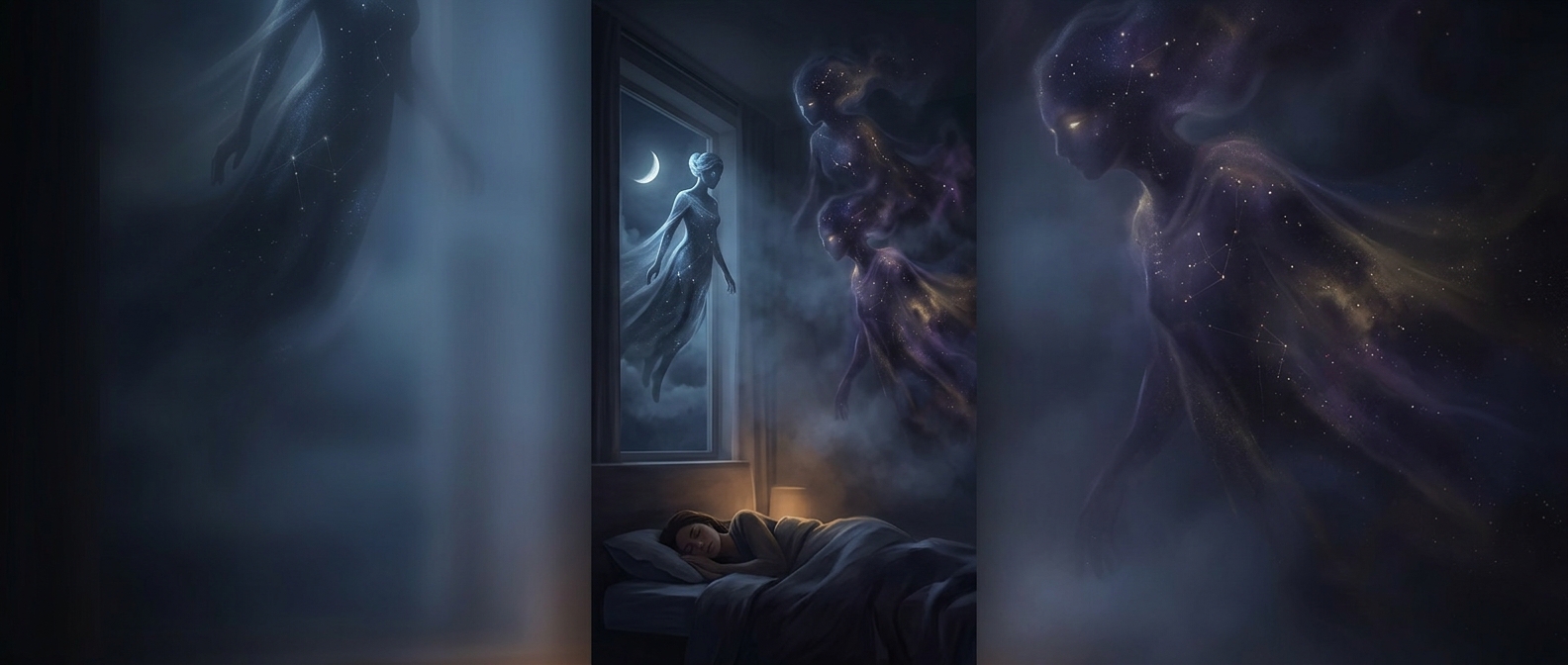
The idea of a personal protective spirit gives a familiar shape to an unsettling fact of sleep: for hours, a person is unconscious and unable to respond to what is happening around them. In traditions that include guardian angels, ancestor spirits, or other personal protectors, the watcher represents care that does not depend on the sleeper staying alert.
The details vary widely. Some beliefs describe a being assigned to one person; others place protection within a broader spiritual community or relationship with ancestors. “Guardian spirit” is therefore a broad label, not a single shared doctrine.
What the image can mean
A watcher beside the bed can express trust, comfort, or a sense that someone remains present when ordinary awareness fades. It can also shape how people approach sleep: bedtime prayer or a quiet moment of reflection may become a way to entrust the night to that protector. These practices give spiritual meaning to vulnerability without requiring the person to keep watch themselves.
The belief is a matter of faith, not a claim established by sleep science. Its enduring appeal lies in the image’s intimacy: protection imagined not only in danger or public life, but in the private hours when a person cannot protect themselves.