Why glass keeps light from scattering
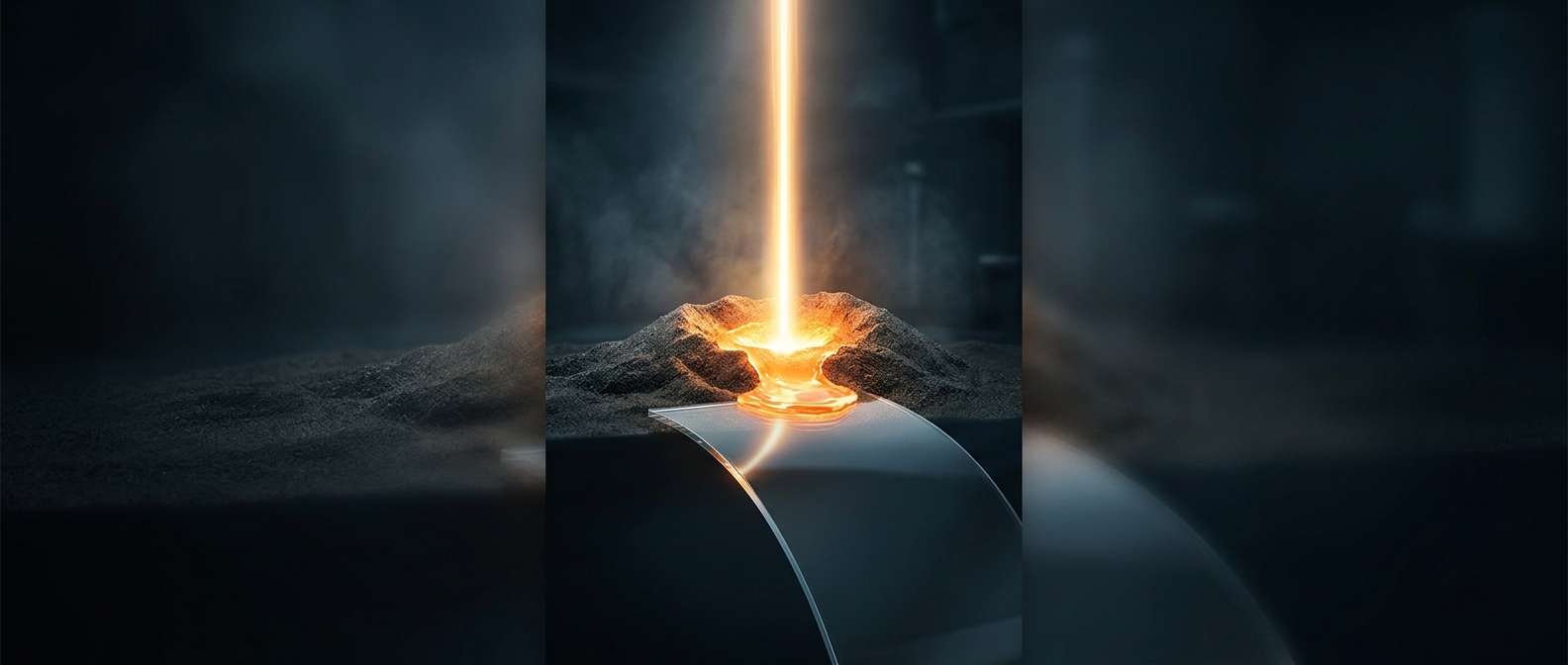
In a pile of sand, each grain is a tiny boundary between materials. Light changes direction at those boundaries, and it also bounces off pores and impurities, so the pile looks cloudy rather than see-through. Melting silica-rich sand erases that granular structure: the grains fuse into one continuous liquid.
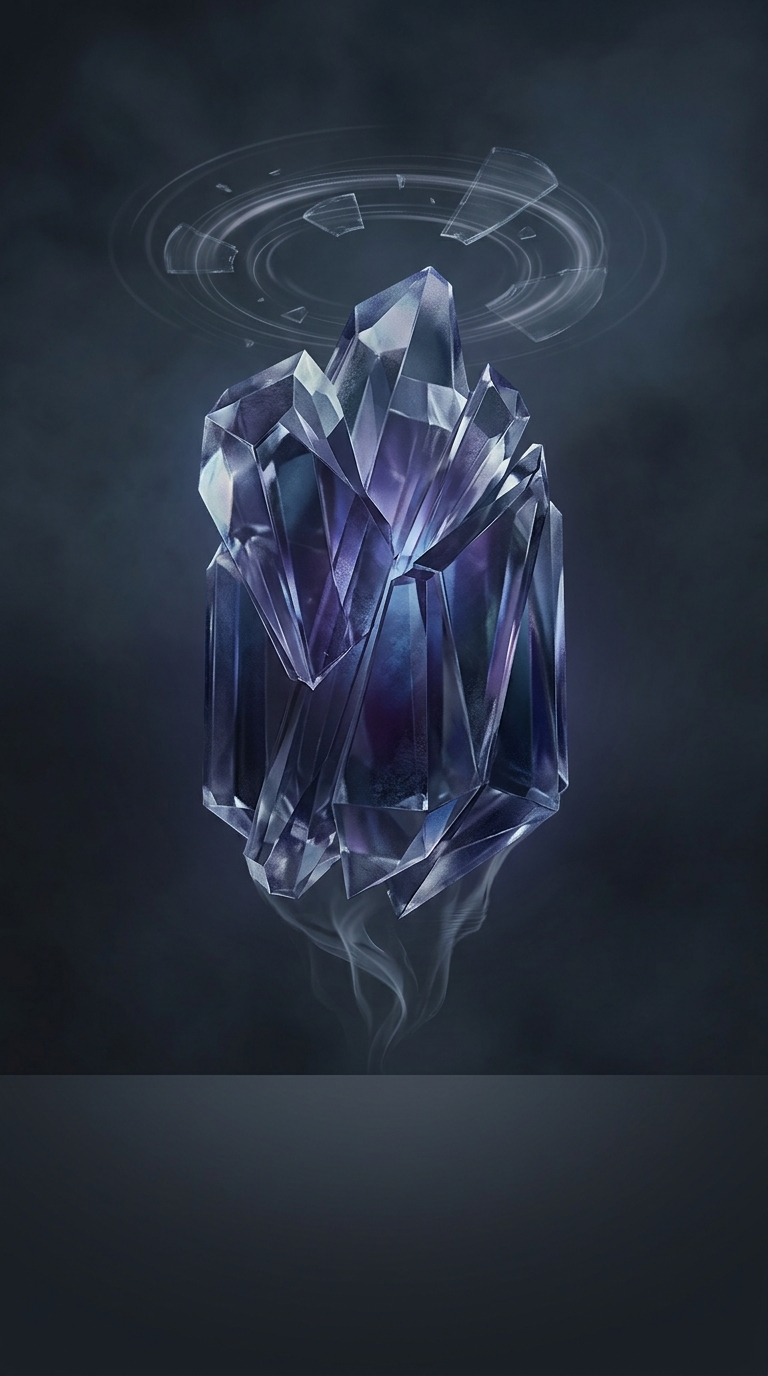
As the liquid cools, its atoms do not settle into the repeating crystal pattern typical of minerals such as quartz. Instead, they become locked into a disordered arrangement. This kind of solid is called an amorphous solid—a material whose atoms lack long-range order.
Cooling preserves the disordered structure
In a crystal, orderly regions can have different orientations, and boundaries between them can redirect light. Ordinary glass has no such network of crystal grains. When it is sufficiently uniform and free of bubbles or other inclusions, light can pass through without being scattered much, making the material transparent.
That does not mean the atoms are randomly spaced or that glass has no structure at all. Their arrangement is irregular over large distances, but neighboring atoms still bond in a definite pattern. The key is that cooling freezes the melt before those bonds can reorganize into a crystal lattice.
Additives make the transformation practical
Pure silica requires very high temperatures to melt. Glassmakers commonly mix in other materials that make the melt easier to work with and can also affect its durability and optical properties. The molten glass can then be shaped before it cools into a rigid solid.
The transformation is striking because the clear solid is not made by removing every grain of sand one by one. Heat dissolves the boundaries between grains; controlled cooling leaves their silica in a continuous, noncrystalline form. That is why a material made from cloudy sand can become a window.