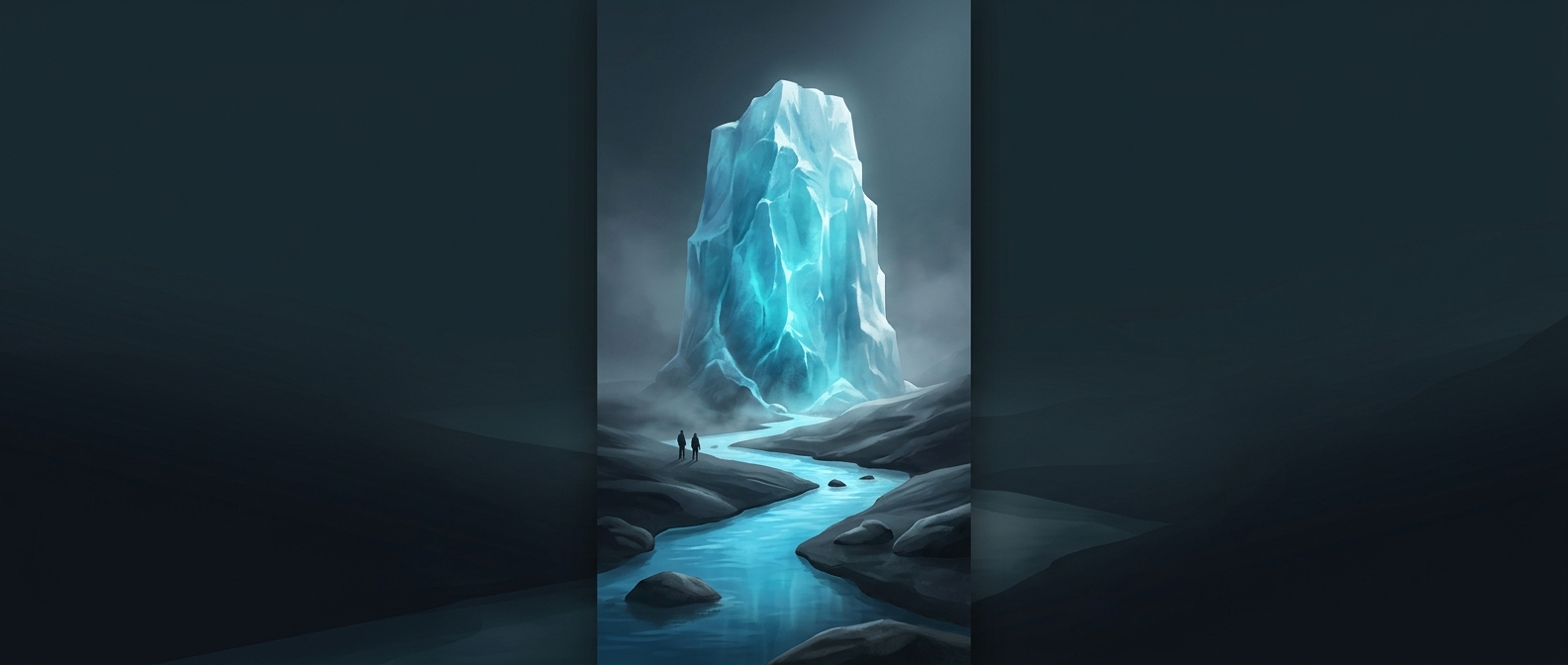
How a white ice sheet turns blue
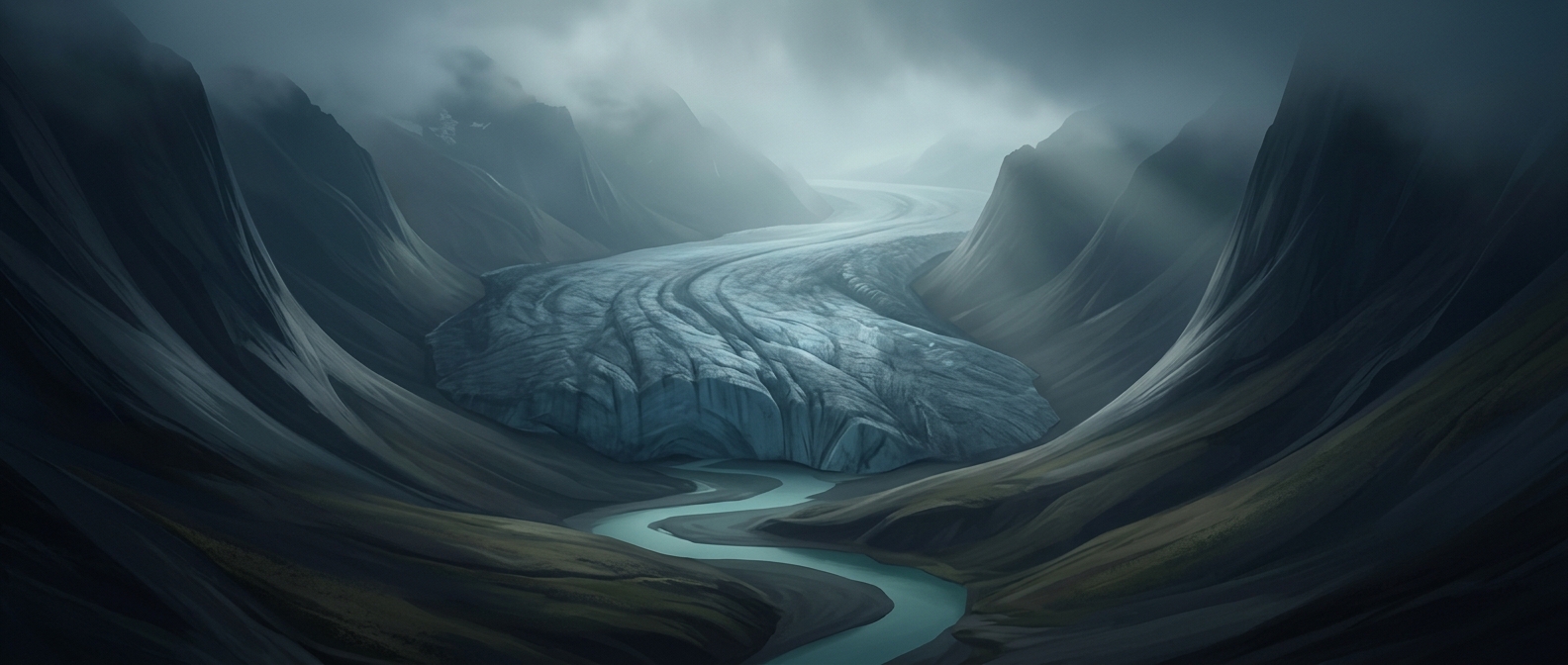
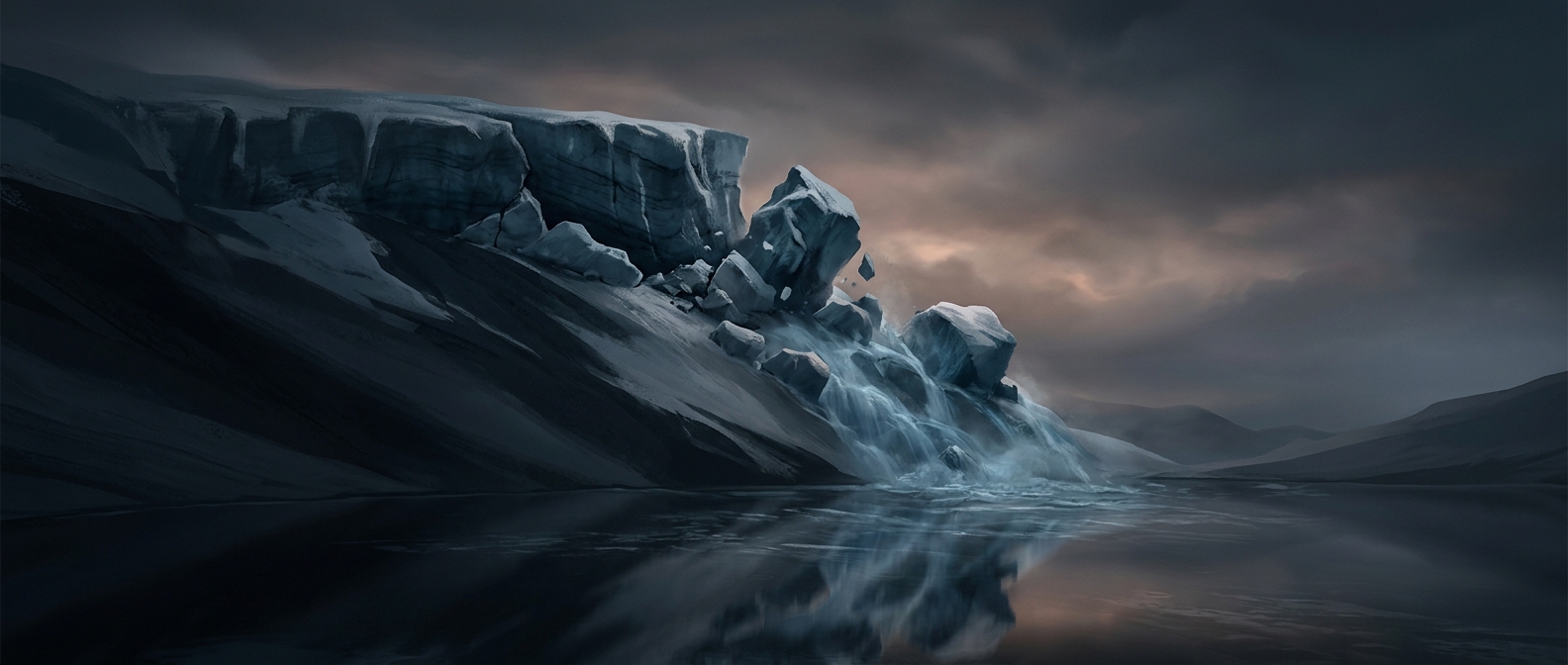
Ice can melt without first breaking apart. When warmer air and sunlight transfer energy to its surface, some of the solid ice changes directly into liquid water. That meltwater spreads into shallow depressions and collects in hollows, forming broad pools while the surrounding sheet remains solid.
The color shift is a clue to what is happening. Snow and rough ice scatter much of the light that hits them, so they look white. A pool absorbs and reflects light differently; viewed from above, deeper or clearer water often appears blue against the ice. The contrast can make a large area of melt seem to emerge all at once.
Why the change can cover so much ground
An ice sheet is not a smooth, level slab. Its surface contains dips and channels that can guide water into connected basins. As melting continues, water can spread across these low spots or drain from one pool to another. The result is not necessarily a single deep lake, but a patchwork of pools that may cover an area comparable to a city.
This surface water matters because it changes how the ice interacts with its surroundings. Darker water absorbs more sunlight than bright snow, adding energy at the surface and potentially encouraging further melting. Some water also finds cracks and channels that carry it downward, where it can reach the ice sheet’s base. There, it may affect how readily the ice slides over the ground beneath it.
The striking blue is therefore more than a color change: it marks water accumulating on ice, where sunlight, surface shape, and drainage can influence what happens next.