The brain is constantly reading faces
A face is not just a collection of features. In a fraction of a second, we use tiny changes around the eyes and mouth, the direction of a gaze, and the timing of a smile to infer attention and emotion. These signals arrive together, so we usually experience them as one coherent person rather than as separate clues.
That fast reading system is useful in ordinary life, but it also makes us sensitive to small inconsistencies. If a face looks human while its expression changes in a way that feels slightly mistimed, the visual cues and the social meaning no longer line up. The reaction can be unease rather than a clear judgment that anything is wrong.
Why almost-real can feel stranger than stylized
With a cartoon, the mind knows how to interpret the face: it is a deliberately simplified character, not a literal human. A realistic-looking animated person invites a different set of expectations. Viewers start applying the standards they use for real faces, including subtle expectations about how eyes track, expressions unfold, and movement connects from one moment to the next.
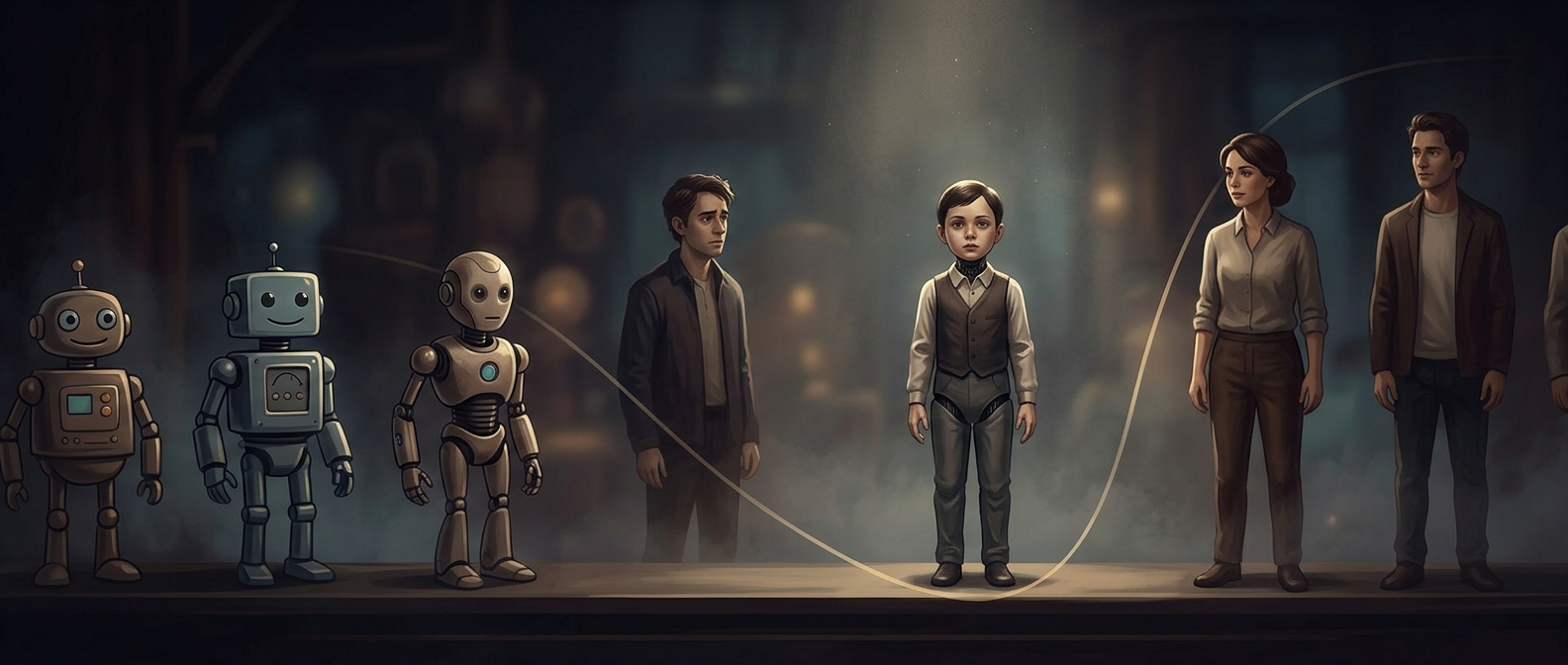
When those details fall just short, the mind has trouble settling on a category. The character is recognizably human, but some cues still suggest an artificial figure. That unresolved impression is often called the uncanny valley: a dip in comfort as a nonhuman image becomes more humanlike without becoming fully convincing.
The mismatch is the memorable part
The effect does not require viewers to consciously inspect a character’s eyes or mouth. It can emerge as a general feeling that a person on screen is difficult to read. In The Polar Express, the humanlike appearance encourages social recognition, while imperfectly convincing facial timing can interrupt it. The result is a useful reminder that realism is not only about adding detail; it also depends on whether all the little cues behave like parts of the same living face.