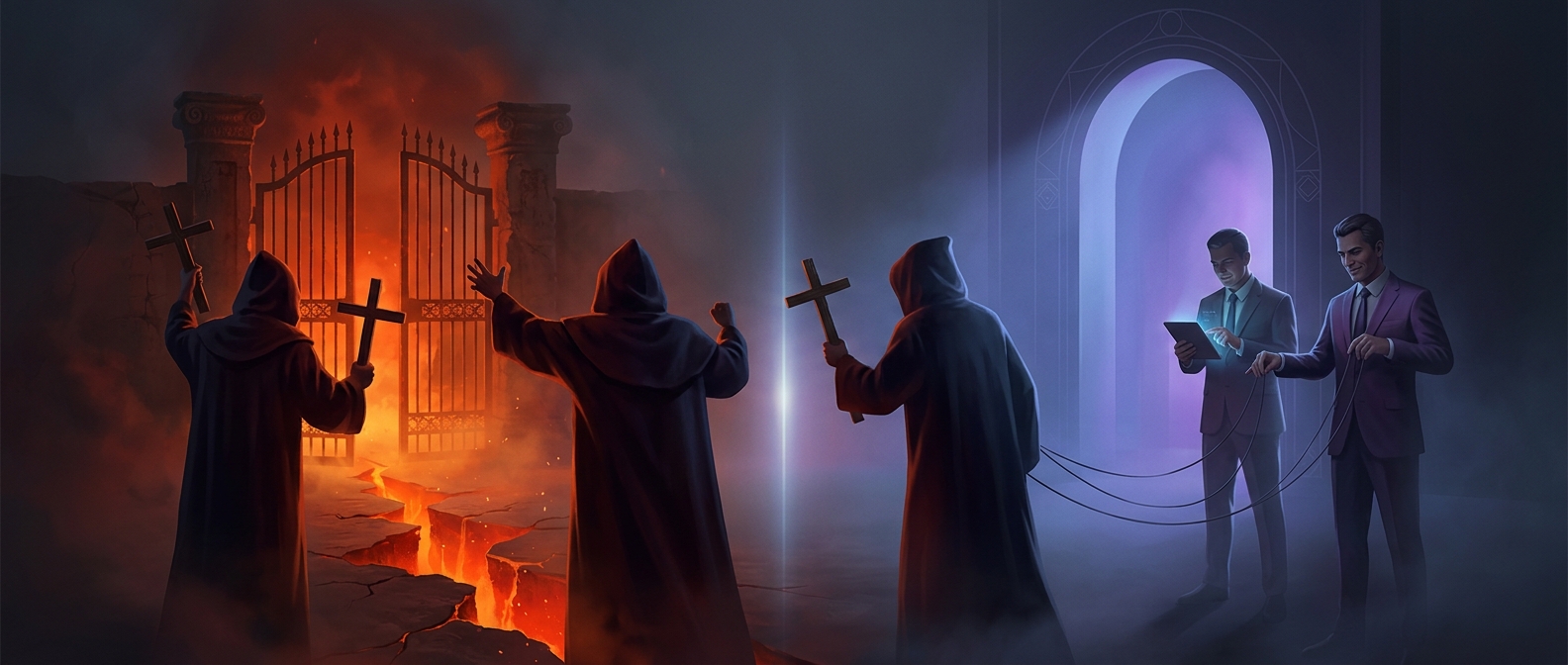
A protest designed as part of the pitch
At E3, the major video-game trade show, a group appearing to condemn Dante’s Inferno was itself part of the game’s promotion. The tactic turned the launch into a small public spectacle: people encountering the apparent protest could wonder whether the game had provoked real outrage, then discover that the outrage was staged to attract attention.
That ambiguity was the mechanism. A conventional advertisement asks people to look at a game; a mock protest gives them a scene to interpret and talk about. It also fit a game drawing on religious imagery and the journey through Hell associated with Dante’s work. The campaign borrowed the visual language of moral opposition to make the game feel provocative before players even tried it.
When the performance crossed a line
The stunt depended on viewers believing the protesters were genuine. That made the campaign attention-grabbing, but also meant it used the appearance of religious conviction as a prop. Christian commentators who objected were not simply reacting to the game’s subject matter: they criticized the decision to impersonate people protesting it.
The distinction matters. A staged opponent can make a marketing campaign seem as though it is confronting real public resistance, while the real people whose beliefs are being imitated have had no say in the performance. Once that became clear, the attention the stunt generated also turned toward the marketers’ methods.
The result was a promotion that manufactured a conflict and then faced a genuine one—not over whether a game could depict Hell, but over who gets to perform public religious protest for entertainment.