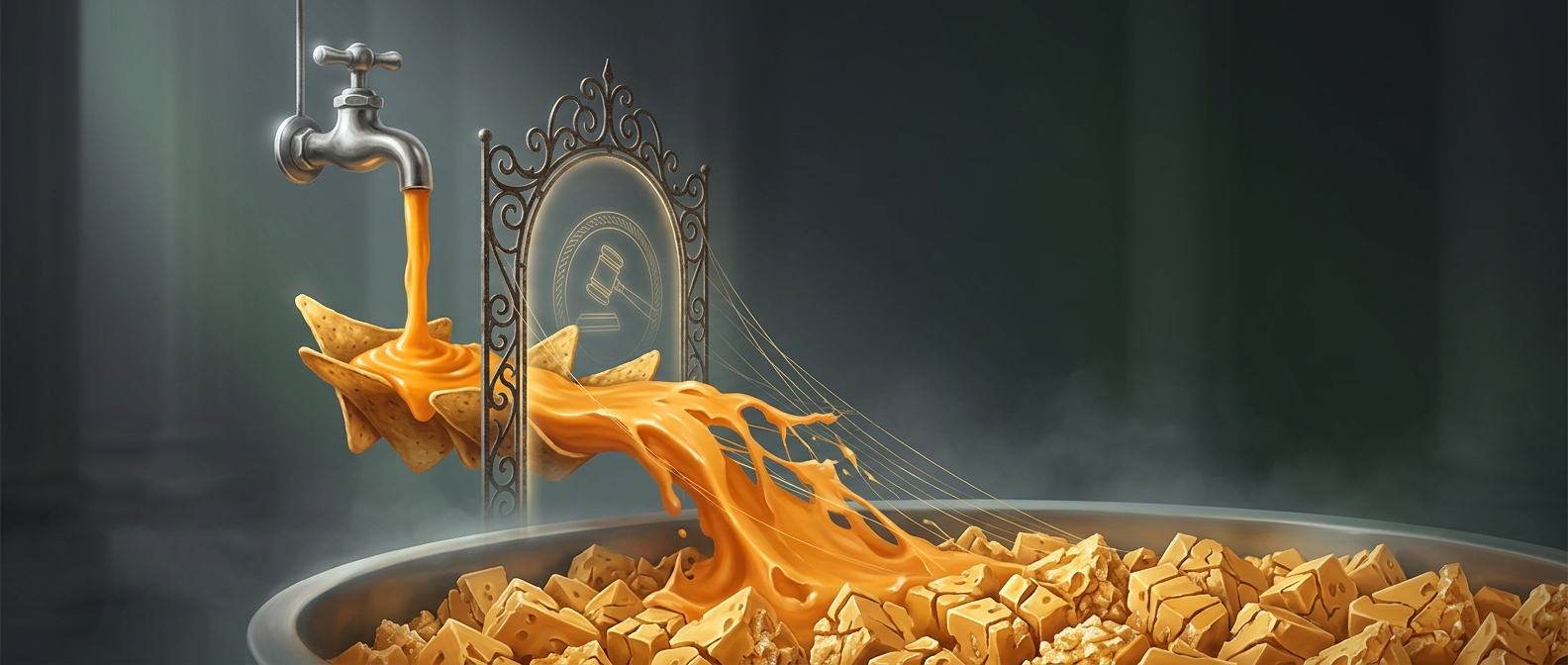
Why “nacho cheese” may not count as cheese
In the United States, “cheese” is more than a flavor description on a package: many cheeses have legal standards that specify what they must be made from and how much milk fat they must contain. Milk fat is the fat naturally present in milk. A product that falls outside the relevant standard cannot necessarily be sold under that standardized cheese name, even if it tastes unmistakably cheesy.
What changes in a sauce
Nacho sauce is designed to pour smoothly and stay that way as it heats and cools. To get that texture, manufacturers may combine cheese or other dairy ingredients with water, oils, starches, emulsifiers, and flavorings. Emulsifiers help ingredients that would otherwise separate—such as fat and water—remain blended. The resulting sauce can contain cheese without being cheese in the legal sense.
If a product does not meet the standard for a cheese name, its label may instead identify it as a cheese-flavored sauce or use another description appropriate to its ingredients. The exact wording depends on the product; “nacho cheese” on a menu or in everyday conversation does not guarantee that the food is legally classified as cheese.
The tradeoff behind the label
A traditional block of cheese is built around a relatively concentrated dairy mixture. A pourable topping is built around performance: it must flow over chips, cling to them, and resist separating under heat. The label reflects that difference in formulation—not necessarily the absence of cheese, but the fact that the finished sauce may not meet the legal requirements for a standardized cheese product.