Emoji began as a word for a kind of character
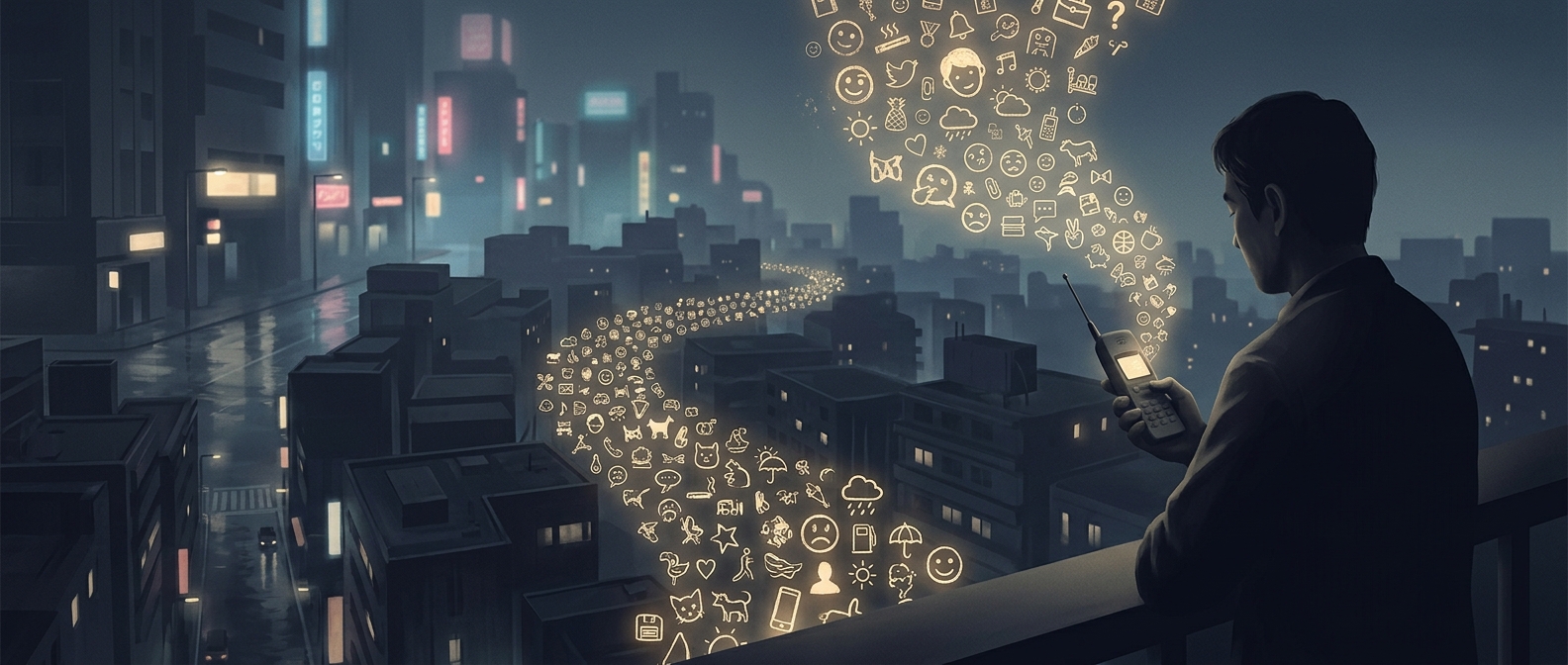
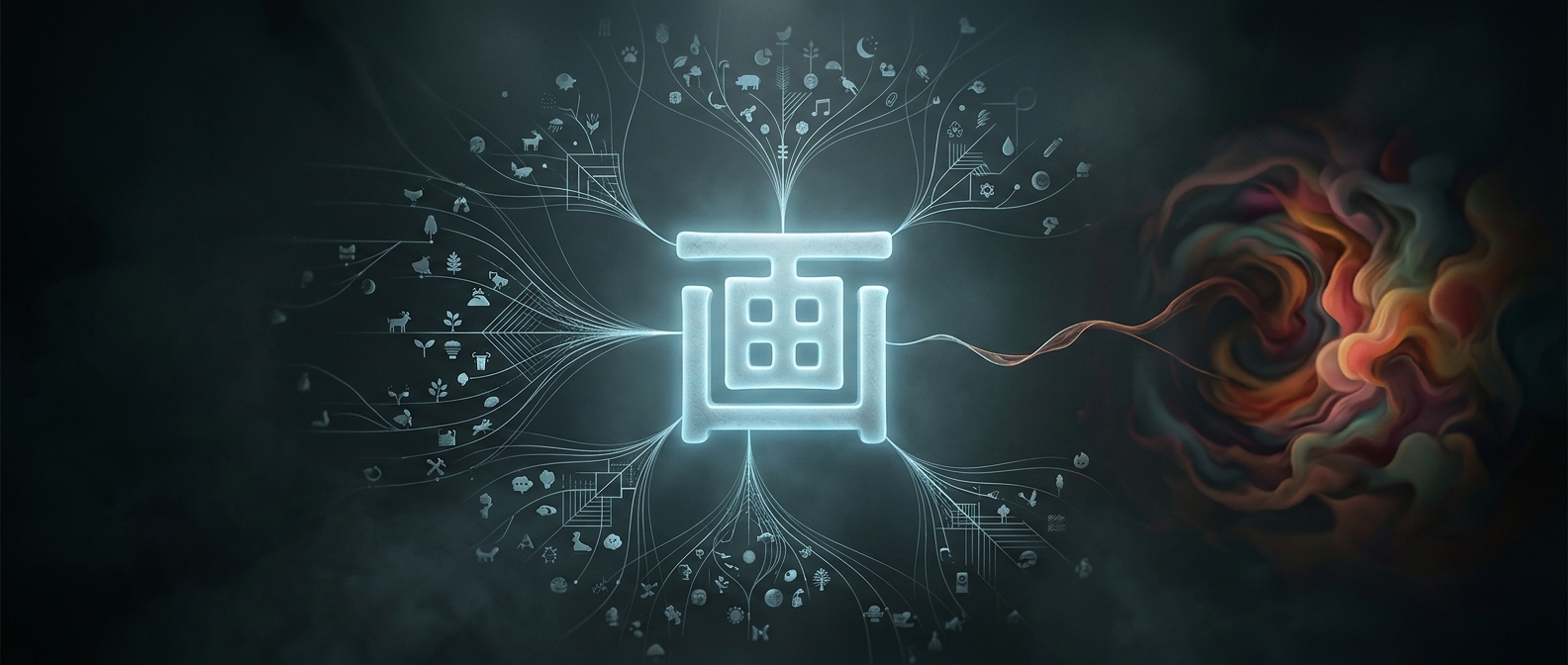
The Japanese word emoji combines e, “picture,” with moji, “character.” It names a small pictorial symbol treated as part of written text—not a feeling. The English word emotion happens to begin with the same letters, which makes the connection feel natural but does not explain the word’s origin.
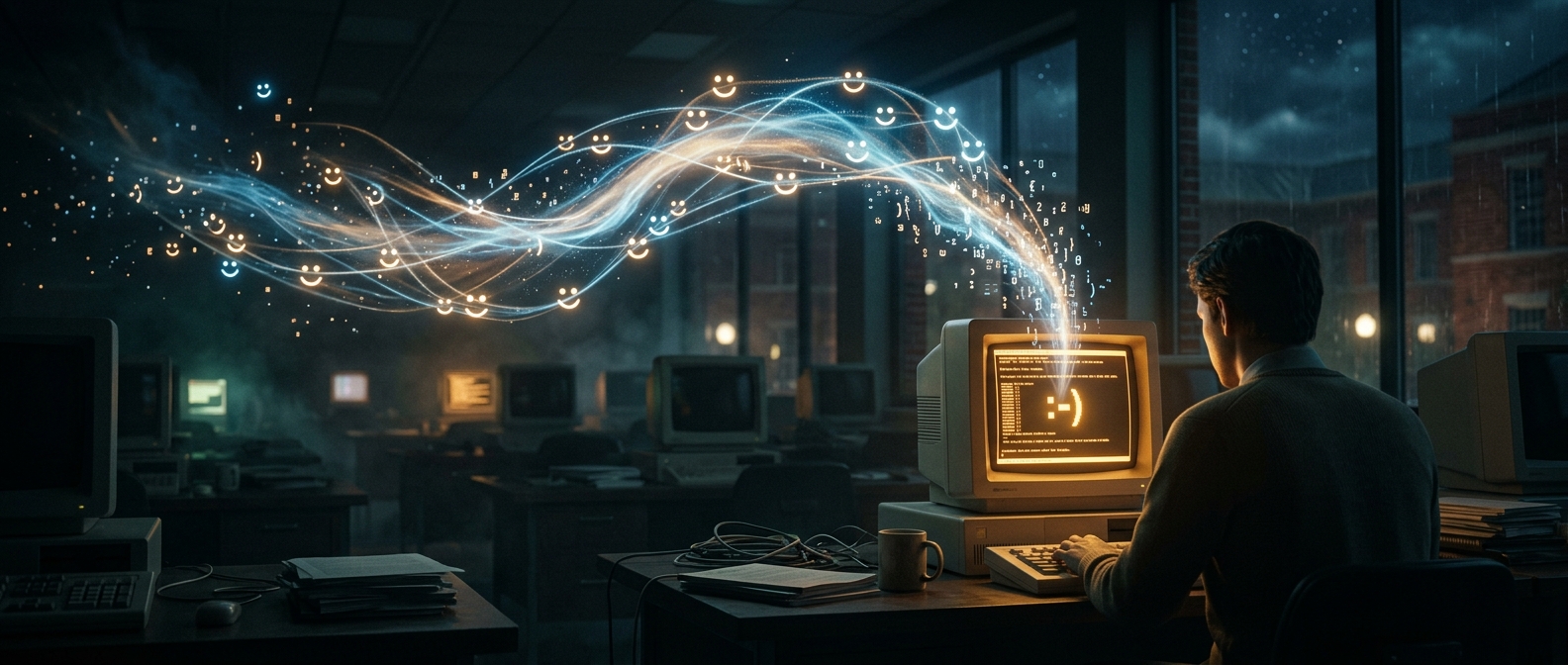
That distinction also separates emoji from emoticons such as `:-)`. An emoticon is made from ordinary keyboard punctuation arranged to suggest a face. An emoji is a character in its own right: a tiny image encoded and displayed as text.
Why the mix-up stuck
Emoji often depict faces, gestures, and expressions, so readers quickly came to associate them with mood. But their range is much wider: food, objects, animals, places, and symbols can all carry meaning without expressing an emotion. A heart or a steaming bowl can add tone, identify a topic, or stand in for an idea.
The name describes the form, not the job. An emoji is a picture-character; whether it conveys affection, humor, emphasis, or something else depends on the symbol and the conversation around it.