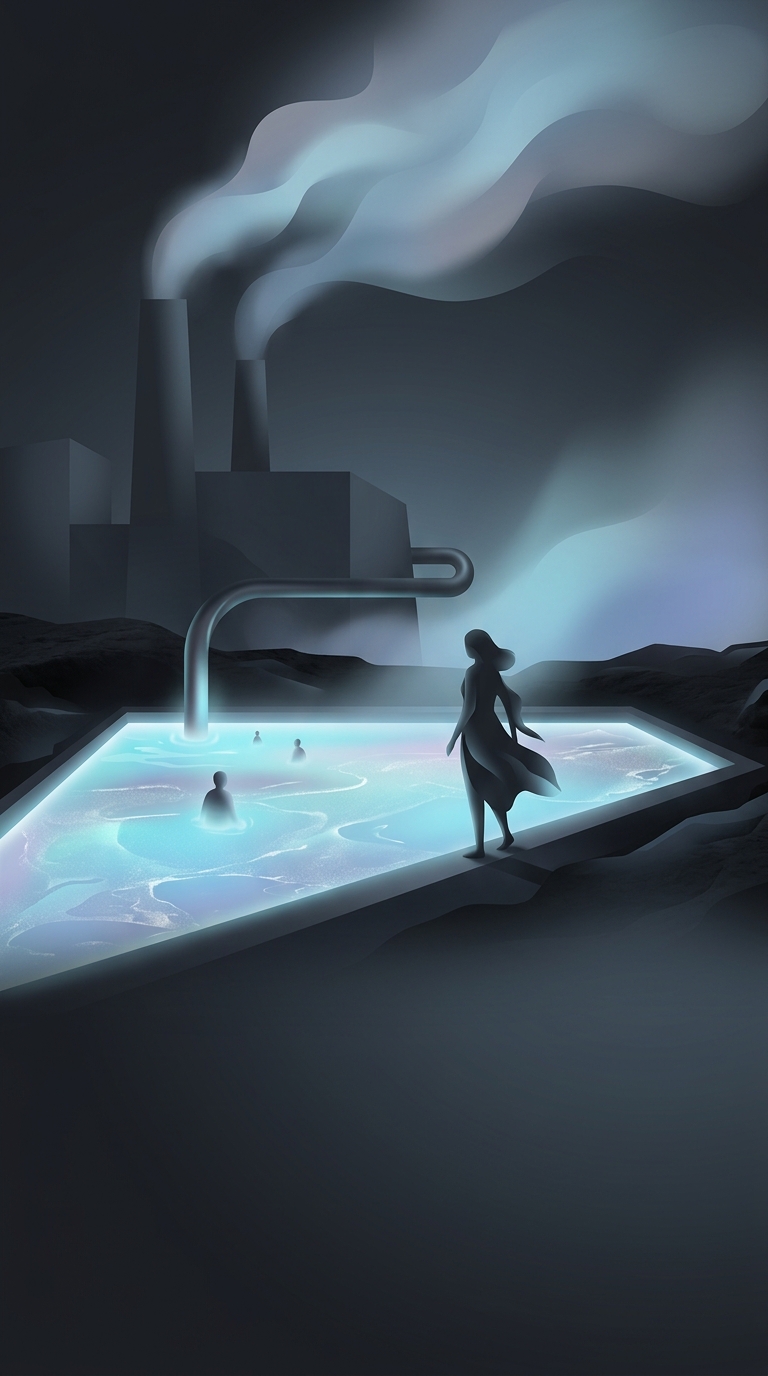
How a power plant’s water became a bathing lagoon
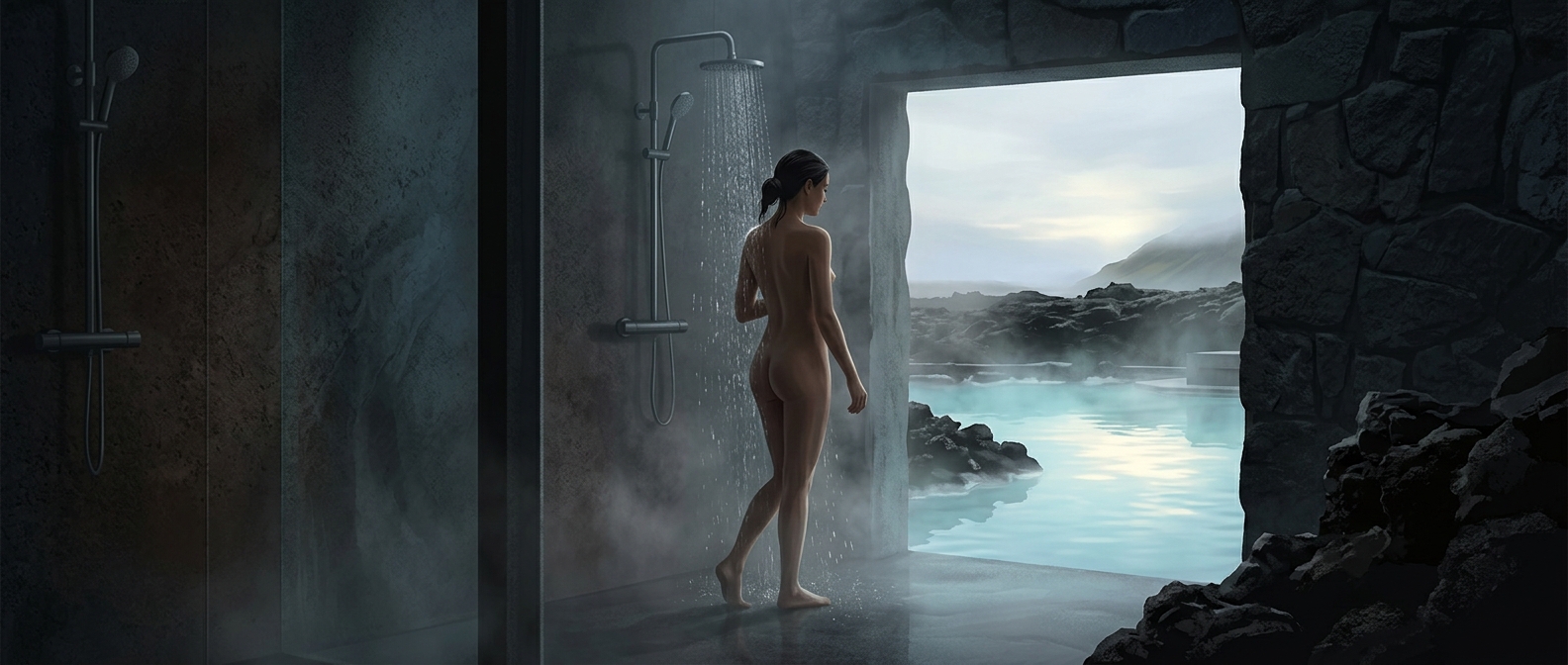
At Svartsengi, geothermal wells bring hot water and steam from underground to the surface. The plant uses the steam to generate electricity and the heat to warm water for nearby communities. After that process, mineral-rich geothermal seawater is discharged into a basin among the lava fields. The Blue Lagoon grew out of that flow: its setting is volcanic, but the bathing basin is a human-made feature.
Calling the water industrial runoff can sound as though it is untreated waste. More precisely, it is used geothermal water released by the plant, and the lagoon is part of the system through which that water flows. It is not the same as bathing in raw fluid drawn directly from deep underground.
Why the water looks milky blue
The distinctive color comes largely from silica, a mineral carried in the geothermal water. As the water cools, silica forms tiny particles that scatter light, giving the lagoon its pale, opaque blue appearance. Some silica also settles on the surrounding lava and forms the soft white material often called silica mud.
The lava rock helps shape the landscape, but it does not create the color by itself. The striking contrast—blue water against dark volcanic stone—is the visible result of geothermal chemistry meeting cooler surface conditions.
A landscape shaped by infrastructure
The lagoon’s appeal rests on an unusual overlap: Iceland’s volcanic geology supplies the heat and minerals, while the power plant’s operations supply the water that made bathing there possible. Its spa identity came later than that industrial relationship. The important distinction is that a place can look wild and feel restorative while still depending on engineered infrastructure—in this case, a geothermal plant next door.