Why the Pages Had to Be Typed by Hand
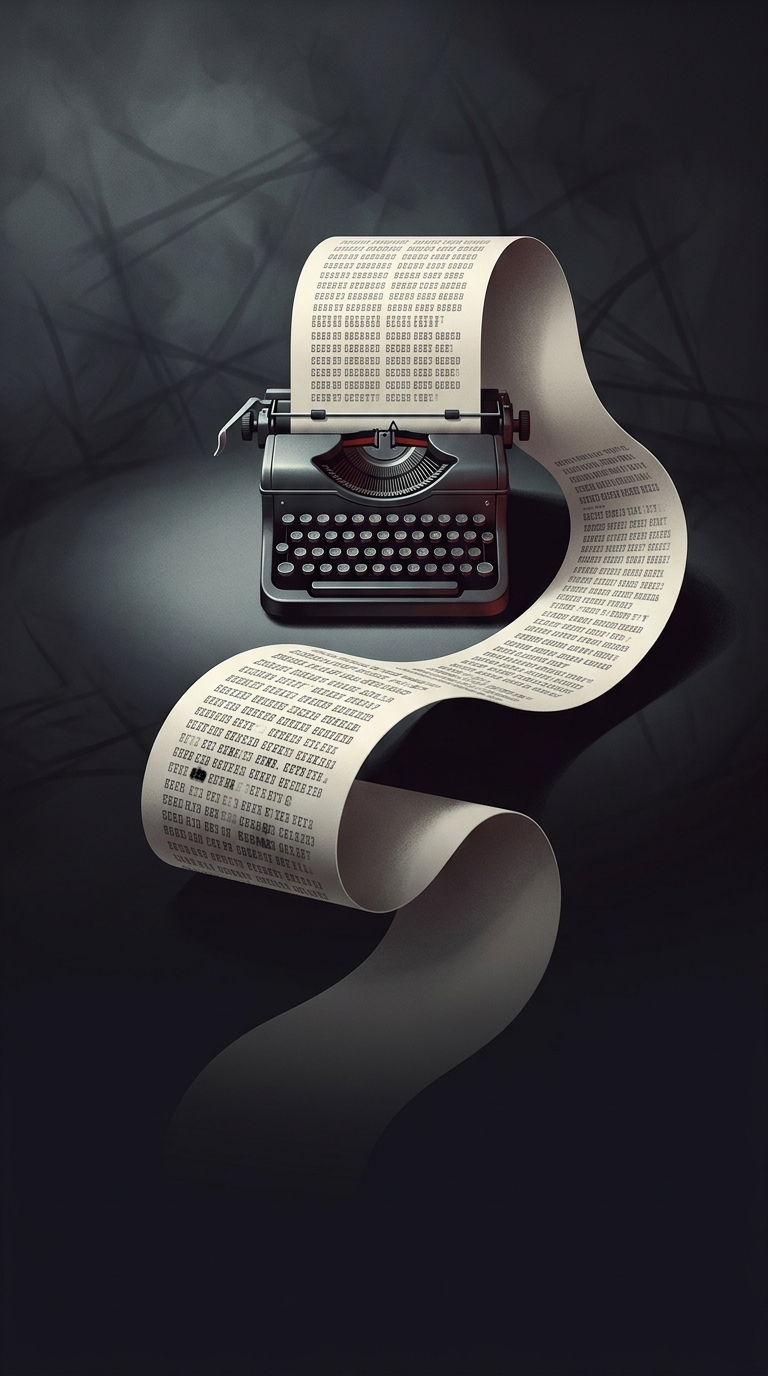
In The Shining, the repeated sentence is more than a line of dialogue: it is a physical object Wendy discovers, one page after another. Having the pages typed individually gave them small differences that a stack of identical photocopies would lack. A typewriter’s keys strike an inked ribbon against paper; variations in the force and alignment of those strikes can make letters look slightly darker, lighter, or less evenly printed.
Those irregularities help the pages read as used sheets from a real typewriter, rather than reproductions made for a prop. The difference is subtle, but it matters in a close-up: viewers can inspect the pages as Wendy does, and their apparent physical reality makes the discovery harder to dismiss as a movie effect.
Repetition Becomes a Visual Threat
The sentence itself is monotonous. Its force comes from seeing it multiplied across page after page, turning an ordinary piece of writing into evidence of Jack’s fixation. Hand-typing made each sheet part of that accumulation. The work behind the prop echoed the work implied by the pages: the line had been repeated not just in the story, but in the making of the film.
A copier could have supplied the same words quickly, but identical duplicates would have weakened that impression. The painstaking pages make the scene’s unease tangible: Wendy is not looking at one strange sentence, but at a whole stack of them, each bearing the marks of a separate strike of the keys. Returned to finalzh**