A shade is also a claim on shelf space
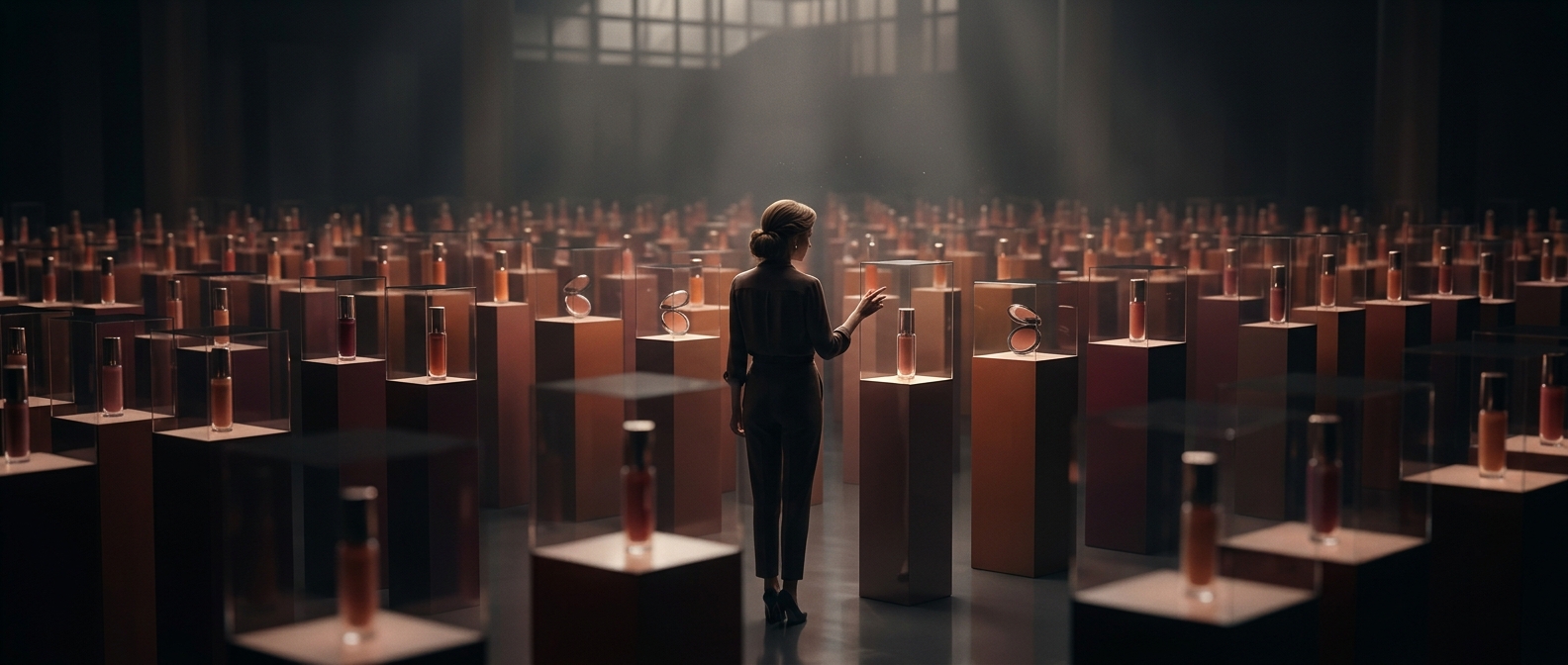
A cosmetics display has a fixed number of slots. Retailers use planograms—maps that assign products to specific places—to decide which items get space and how much. Every new shade occupies a slot that could have gone to another color, another brand, or another product category.
For a large beauty company, adding several close shades can be worthwhile. Slight differences in undertone, depth, or finish may help shoppers find a closer match, and each option gives the brand another chance to meet a preference. The shades may look nearly interchangeable to a passerby, but the shopper choosing foundation or lipstick may see a meaningful distinction.
More options can reinforce an advantage
Retailers also tend to give space to products they expect to sell. A brand with many established products can use its sales history and broad lineup to make a strong case for keeping or expanding its shelf presence. If several shades earn their places, the brand occupies more of the display and becomes harder to overlook.
That creates a practical hurdle for smaller or independent brands. They may have a distinctive product, but getting it into a store requires a retailer to give up a slot already assigned to something else. Even a modest number of neighboring shades from established brands can leave fewer openings for new entrants.
The tradeoff behind the crowded display
Shade variety can make a display more useful by improving the odds that shoppers find a suitable match. But the same variety also consumes limited retail space. The result is a competition not just over which product is better, but over which products get a visible place where shoppers can compare them at all.