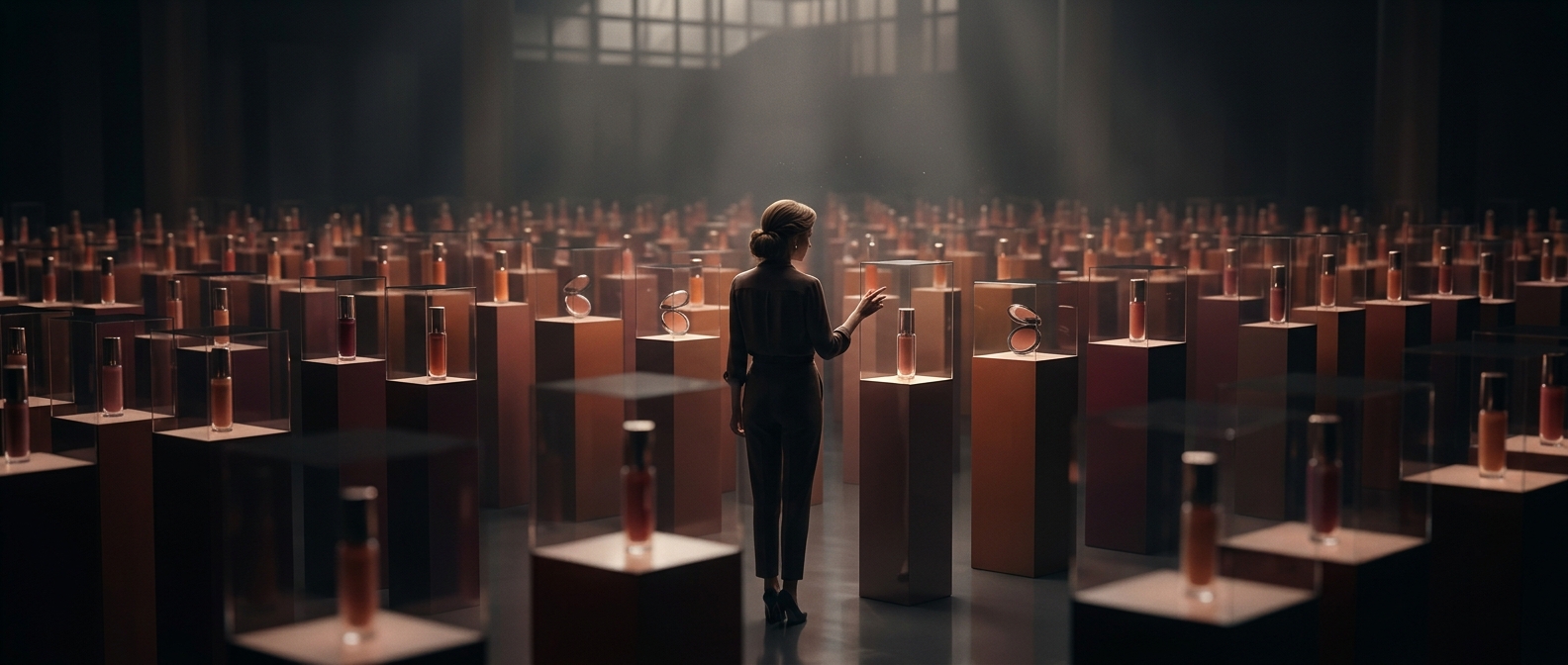
How a beauty market can turn texture into a problem
Skin is not a smooth surface. Pores, fine lines, changes in tone, and small bumps are ordinary features, but they can be hard to notice until advertising singles them out. A close-up image, a label such as “uneven,” or a before-and-after comparison can shift the viewer’s attention from how skin functions to how closely it matches an idealized picture.
That shift matters economically. A product is easier to sell when a feature is presented not as normal variation but as a condition with a remedy. The campaign can then define both the problem—say, visible pores—and the proposed answer, such as a primer or serum. The product may change how skin looks temporarily, but its presence in the ad does not establish that the feature needed correction in the first place.
Why the cycle can keep renewing
Appearance standards also give marketers room to introduce finer distinctions. Once one concern becomes familiar, another can be framed as the next thing to address: texture, then tone, then the appearance of pores. This creates a succession of needs rather than a single, finished purchase. Consumers may keep buying not because their skin has become unhealthy, but because the standard for acceptable skin keeps narrowing.
The key distinction is between a product’s practical effect and the judgment attached to the feature it targets. A moisturizer can help with dryness; that does not make every visible line or patch a defect. The commercial opportunity lies partly in persuading people that ordinary variation is a problem requiring a product.