A party game built around losing your bearings
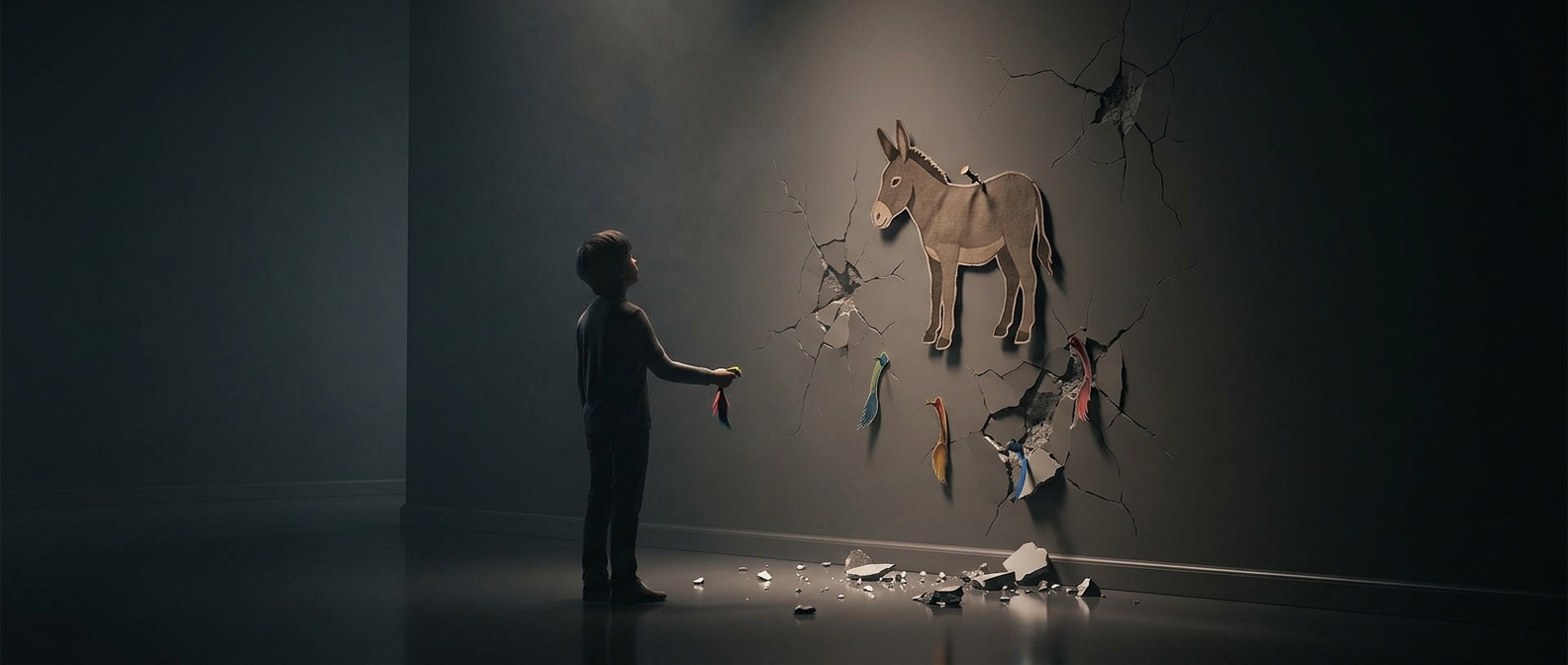
The challenge was not simply to find the donkey. Players had to do it after a blindfold removed their visual guide and a few turns disturbed their sense of direction. Once the blindfold came off—or while still wearing it, depending on the version—the player had to judge where the target was and reach it with a tack.
That combination made the game’s central joke a matter of coordination: the player knew the goal, but could not reliably line up hand, body, and target. Spinning could leave someone facing the wrong way; the blindfold made it harder to correct course.
When the wall became the target
A sharp tack made a miss more consequential than a misplaced paper tail. Instead of landing on the donkey, it could strike the wall, turning a failed attempt into part of the spectacle for everyone watching. The danger was practical, too: players and bystanders had to share space with a point that could injure someone if handled carelessly.
The game’s appeal depended on that gap between intention and result. A player aimed at a familiar picture, but disorientation made even a simple reach unpredictable—and the tack gave each miss a visible, sometimes startling, consequence.