Why the Table Turns Into a Pinball Field
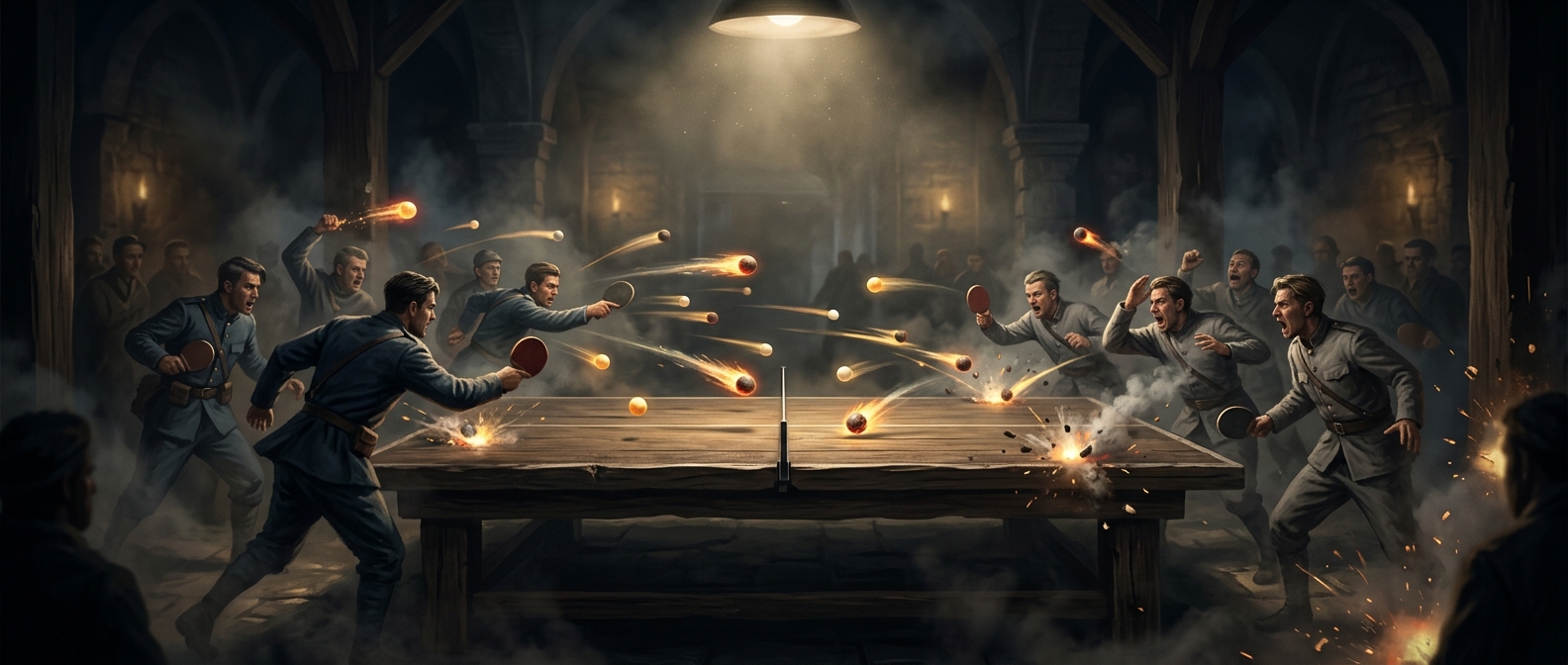
The chaos comes from removing the pause that normally separates one player’s attempt from the next. In a turn-based cup game, players can focus on a single shot and reset their attention before the next one. Here, several attempts unfold in the same small space at once. A ball that misses its target does not disappear; it stays in motion, rebounds off the table, and can cut across someone else’s path.
Ping-pong balls are light enough to change direction after small collisions, yet lively enough to keep bouncing. Add cups and drinks to a crowded tabletop, and every extra shot increases the chance that a harmless ricochet becomes a spill. The mess is not a side effect of poor control so much as a consequence of the game’s design: the shared space is both the playing field and the source of interference.
A Game Built on Competing Attention
With no turns, players must act while tracking several moving balls and other people’s attempts. There is little time to study a perfect angle or wait for a clear lane. That shifts the challenge from patient accuracy toward quick reactions and accepting that the table may become unpredictable.
The same feature that makes the game disorderly also makes it social: everyone’s action can affect everyone else’s moment. A shot can be disrupted by a stray ball, and a rebound can send the table into a new scramble. The result is less like a quiet contest of isolated throws and more like a brief, shared traffic jam—played with balls that keep bouncing.