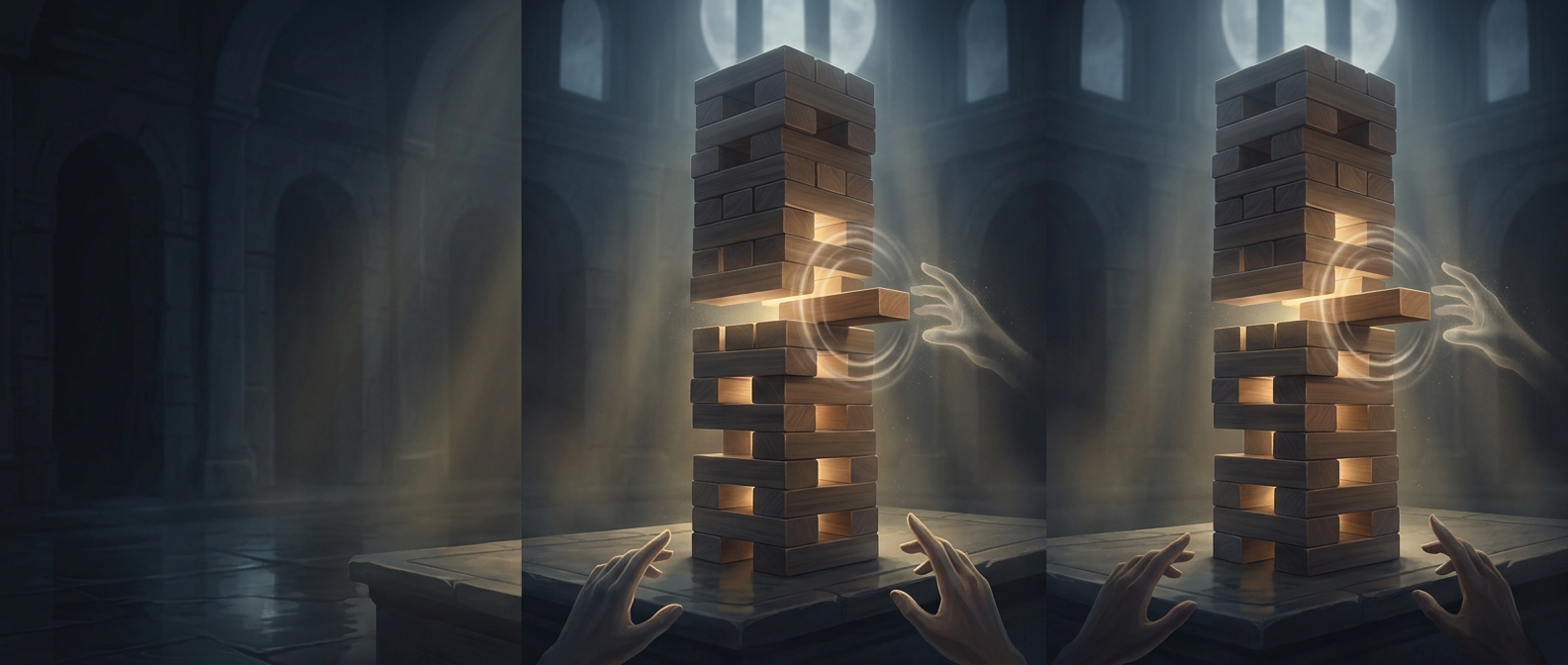
Why a half-pulled Jenga block causes trouble
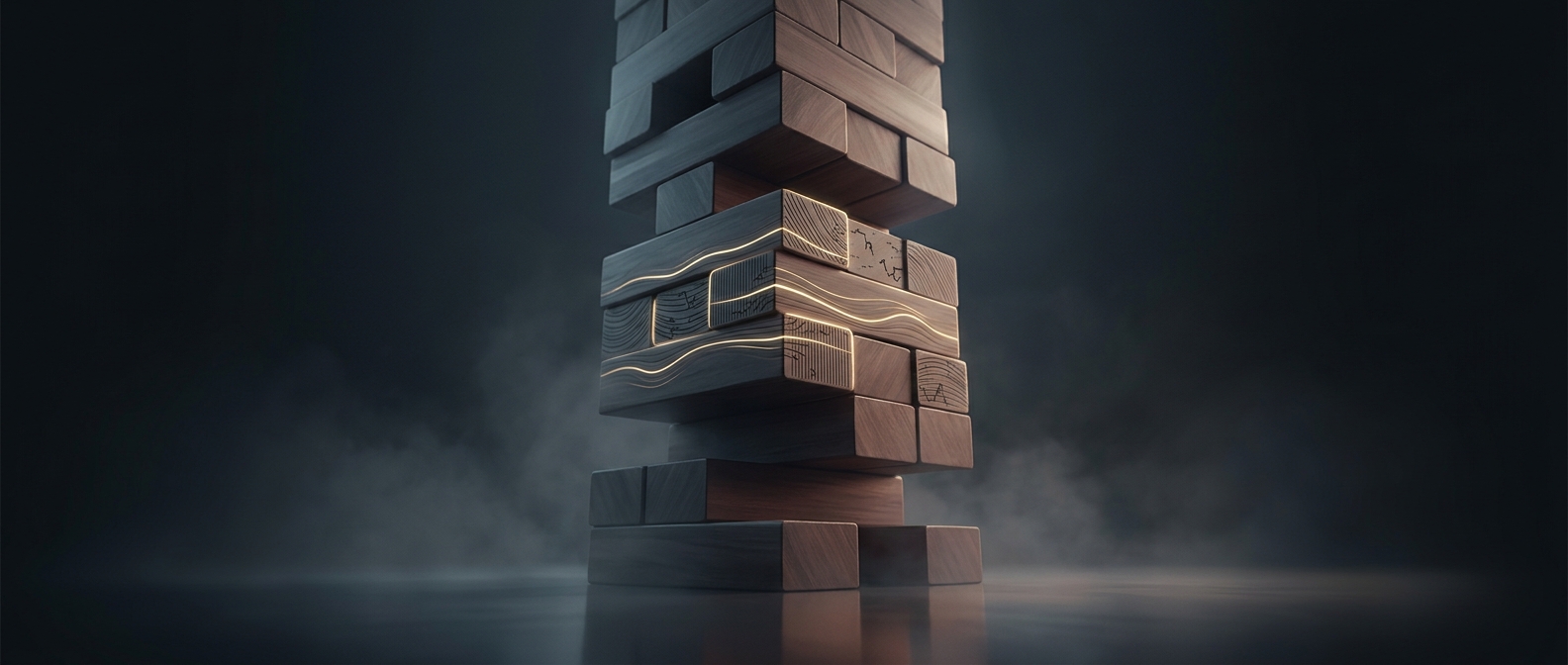
A Jenga tower is a stack of interlocking rows, with each row laid crosswise to the one below. As blocks come out, the remaining pieces take on more of the tower’s weight. A block that slides easily may be carrying little load; one that resists may be wedged tightly or helping support the rows above.
That makes a stuck piece more than a test of finger strength. Pushing it farther can shift pressure through the stack, while tugging at it can make neighboring blocks move. Players are judging a structure that changes with every touch, and there is no clean way to know how much a partial move has altered it.
The argument is about the state of the game
A block left halfway out creates an awkward question: Is that a completed move, an abandoned attempt, or still the next player’s problem? The tower may also be harder to read and handle, because the protruding piece can catch a hand or be mistaken for a block already selected. Returning it fully to the row restores a clear, shared starting point before anyone tries another piece.
That small reset matters because Jenga has no referee to settle every borderline move. Players rely on everyone seeing the same tower and applying the same expectations. The safest move after a failed attempt is to leave the structure as unambiguous as possible—especially when a wobble can turn a disputed turn into a collapse.