Why Rasputin’s Assassins May Have Failed to Poison Him
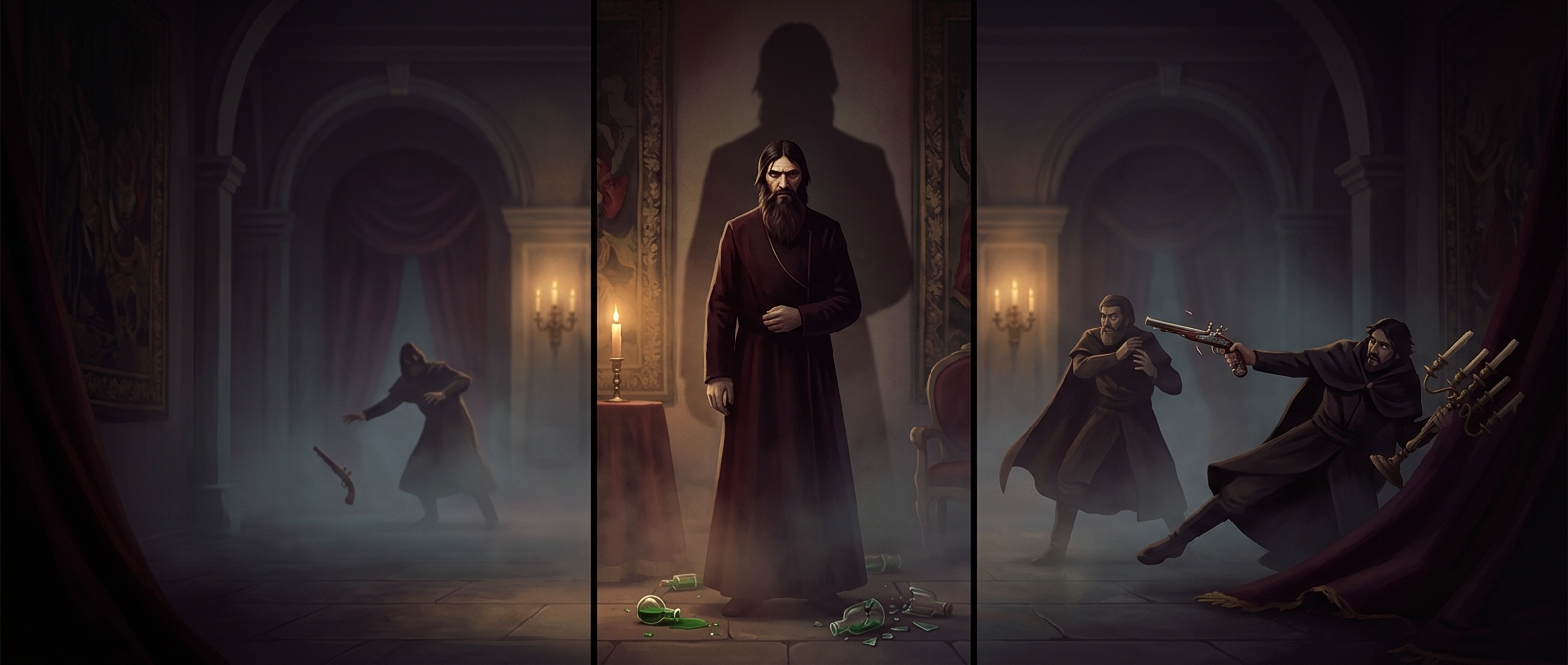
The familiar account of Grigori Rasputin’s murder turns his survival into a near-supernatural episode: conspirators supposedly served him cyanide-laced cakes and wine, then shot him when the poison did not work. A more ordinary explanation is that the plan was poorly executed—and that the dramatic details come from accounts whose reliability is disputed.
Cyanide is dangerous when enough of it reaches the body, but adding it to food is not a guarantee of a predictable dose. If the poison was mixed into baked pastries, heat may have reduced its potency; uneven mixing could also have left some portions with less poison than intended. The story’s central irony is that the killers may have trusted a theatrical method without ensuring it would work.
A Plot Made by Inexperienced Gunmen
The conspirators were aristocrats, not professional assassins. Once the poisoning appeared to fail, they resorted to firearms. Shooting a person at close range is not automatically decisive: panic, poor aim, and confusion can make an attack far less controlled than its planners expect. Accounts of Rasputin’s final hours vary, so the precise sequence—and the extent of his resistance—cannot be treated as certain.
That uncertainty matters because the tale grew into legend. The more spectacular the reported survival, the easier it became to imagine Rasputin as somehow beyond ordinary harm. But the less mystical explanation is also the more revealing one: a killing can become famous not because its target was invulnerable, but because its perpetrators relied on a shaky plan and then struggled to finish what they had begun.