A braid as a calling card
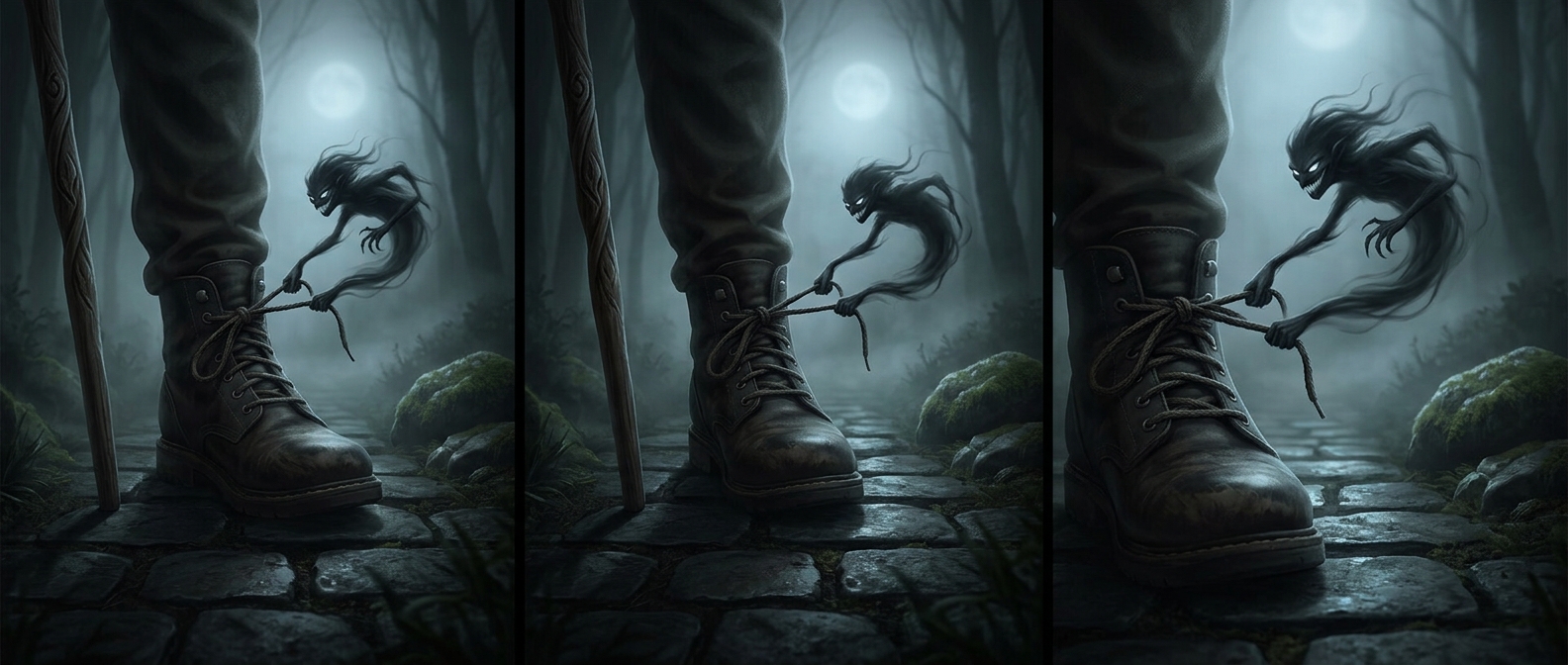
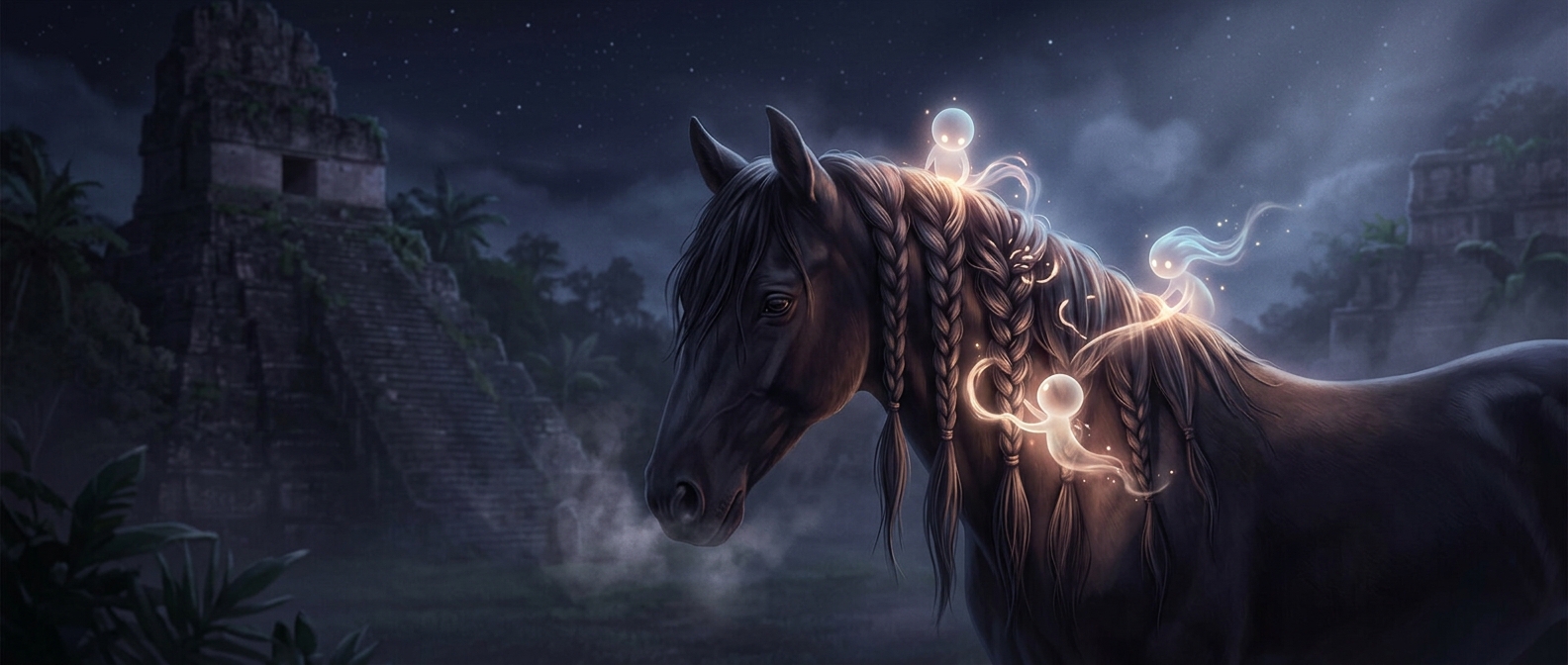
In Guatemalan folklore, El Sombrerón is a small, hat-wearing nighttime figure whose visits leave a mark: horses’ manes are found neatly braided. The detail makes the legend tangible. Instead of merely saying that something strange happened in a stable, a teller can point to a visible change in the animal’s hair—and let the braid stand as evidence of the visitor’s mischief.
The image also mixes care with unease. Braiding takes patience and dexterity, but the work is done in secret, while people and animals are supposed to be asleep. The little guitar adds another layer to the story: El Sombrerón is not simply a creature that appears, but a character imagined as lingering and performing while he works.
Folklore made for retelling
A stable is an ordinary, recognizable setting, so the supernatural intrusion feels close to everyday life. A caretaker might discover the braids at dawn; the unexplained handiwork gives the tale a memorable ending and a reason to pass it on. As with many oral legends, details can differ from one telling to another, but the braided mane remains a vivid signature.
For visitors encountering Guatemalan folklore, that signature offers a small glimpse of how a place’s stories can attach the mysterious to familiar surroundings. The legend turns a horse’s carefully worked mane into something more than grooming: a trace of an unseen nighttime visitor.