A stove as a winter refuge
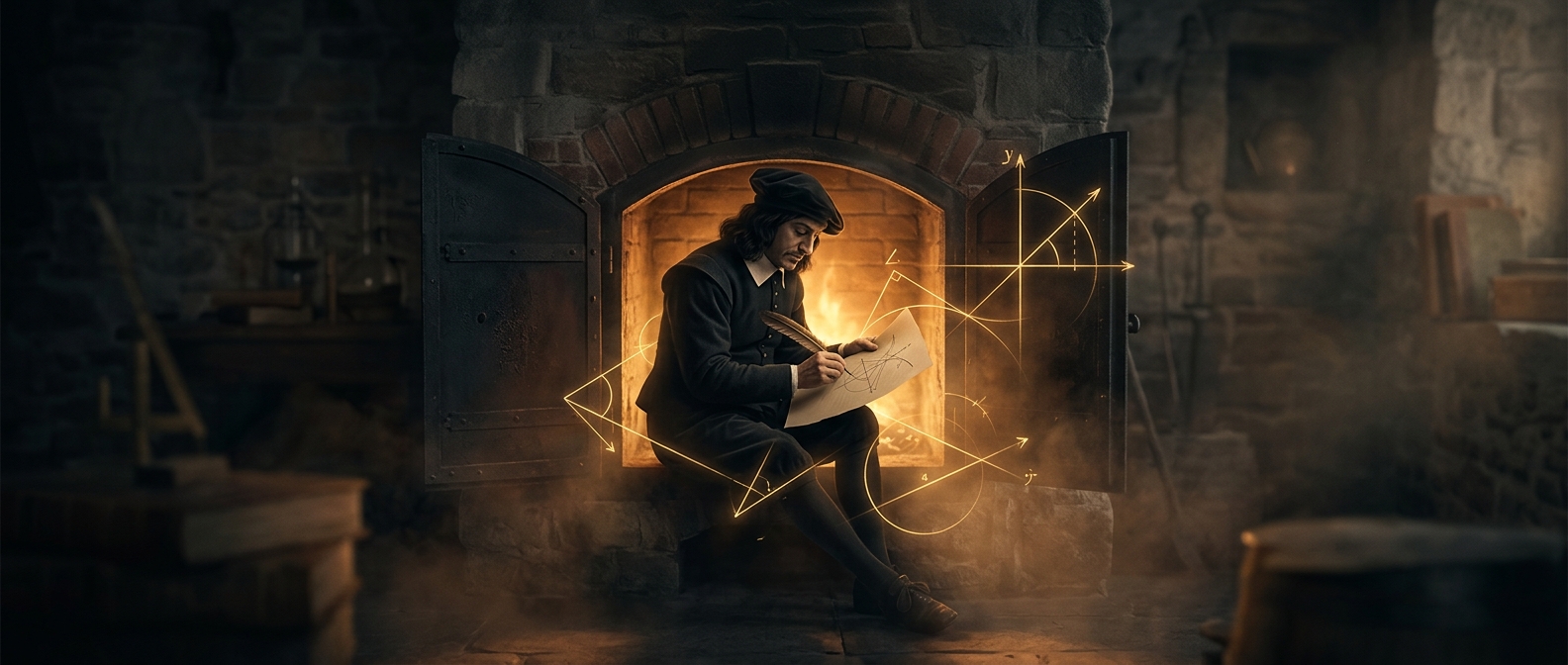
The episode is usually dated to 1619, when René Descartes was traveling in central Europe. In the cold, he reportedly took shelter inside a heated masonry stove—an enclosed, brick-built heating space, not the open kitchen range suggested by the modern word “stove.” It offered a pocket of warmth and solitude while the weather outside made ordinary travel and work uncomfortable.
The detail matters because it places a famous intellectual origin story in a physical situation: Descartes was not composing a treatise at a desk but seeking shelter from the cold. The story is known through later accounts, so its scene should be treated as reported rather than as a moment documented beyond doubt.
From shelter to a philosophical project
That winter, Descartes also described a series of vivid dreams or visions. Later retellings connected them with his determination to pursue a unified method for finding reliable knowledge. The connection is suggestive, but it does not mean the visions supplied the arguments of his philosophy. His enduring project took shape through sustained reasoning: testing beliefs, asking what could be known with certainty, and rebuilding from what survived that test.
The stove story compresses that larger development into one memorable image. A search for certainty began, in the telling, with a practical need for warmth—and with the long, solitary hours that shelter made possible.