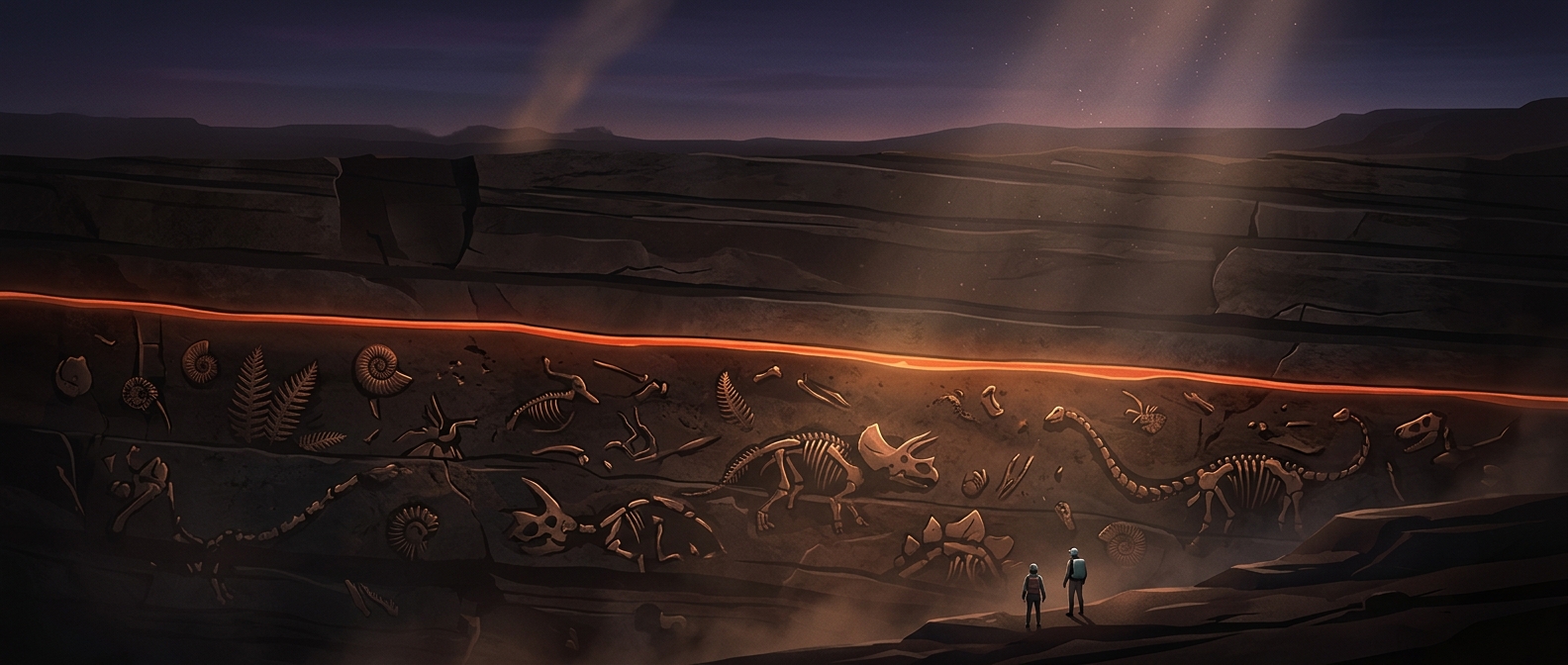
A chemical clue in a narrow seam
At the boundary between the Cretaceous and Paleogene periods, rocks around the world contain a thin layer of clay with an unusual amount of iridium. The seam is easy to overlook, but its chemistry offered a way to connect a local geological event to a catastrophe recorded across the planet.
Iridium is a platinum-like metal. It is scarce in the rocks that make up Earth’s outer crust, but relatively abundant in many asteroids. A sudden, widespread deposit therefore suggested that material from space had been spread across the surface. The clay layer did not show the impact crater itself; it preserved a chemical trace of the dust thrown into the atmosphere and later settled onto land and seafloor.
From trace metal to global disaster
The impact interpretation became more persuasive as other evidence accumulated, including a large buried crater near Mexico’s Yucatán Peninsula. Together, the clues linked the boundary layer to a powerful impact at roughly the time many species disappeared, including the non-avian dinosaurs.
The impact’s consequences did not stop with the collision. Dust and other material lofted into the atmosphere could reduce sunlight, disrupting photosynthesis and the food webs that depended on it. In that way, a brief event could trigger ecological upheaval far beyond the crater. The iridium seam is a remnant of that chain of events—and a reminder that a nearly invisible layer of rock can preserve evidence of a planetary turning point.