How the Kanto earthquake turned fires into a moving hazard
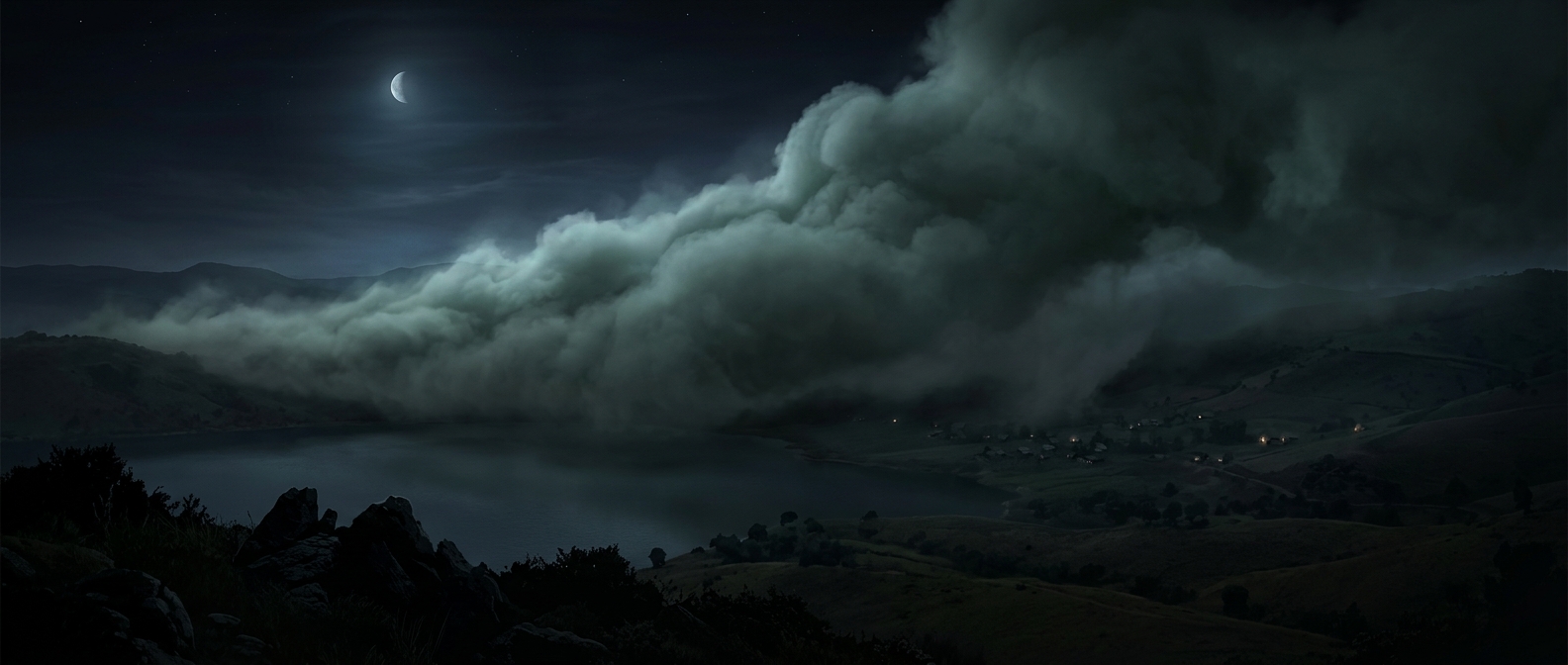
The Great Kanto earthquake struck on September 1, 1923, while many households were cooking over open flames. Shaking damaged buildings and overturned stoves; fires then broke out across Tokyo and nearby areas. In a city with many closely packed wooden structures, separate blazes could quickly join, giving flames a broad, continuous path through the streets.
A fire whirl is not a tornado
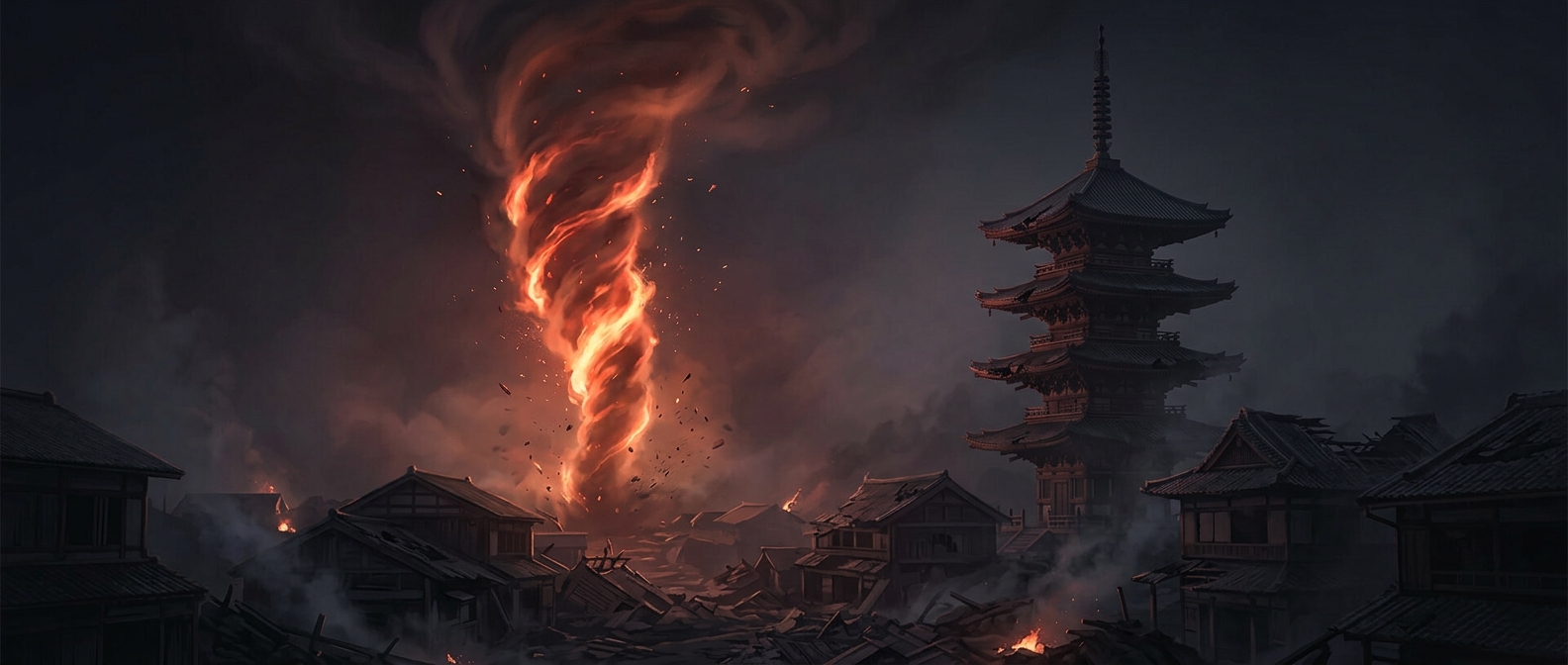
As a large fire heats the air, that air rises rapidly. Cooler air rushes in at ground level to replace it. If winds and surrounding conditions make the incoming air rotate, the rising column can twist into a fire whirl: a swirling mass of hot air, flame, and burning debris. Unlike a tornado, it is driven by heat from the fire, not by a thunderstorm.
The earthquake did not create a single, ordinary tornado of flame. Rather, the many fires and strong winds produced conditions in which intense, rotating fire could form and move unpredictably. The exact forces behind any one whirl are difficult to reconstruct, but the basic danger was clear: a wind-driven fire could leap beyond the flames’ apparent edge, carrying heat and burning material into places people had fled for safety.
When refuge became a trap
One of the worst-known fire disasters unfolded at the former Army Clothing Depot in Tokyo’s Honjo district, where large numbers of people had gathered in an open area. A powerful fire whirl swept through the site, and tens of thousands died there. The exposed space that seemed safer than the surrounding streets offered little protection from a fire carried through the air.
The disaster showed why earthquake safety cannot end once a building stops shaking. In a dense city, open ground may still be vulnerable if fires merge nearby and wind drives them across it.