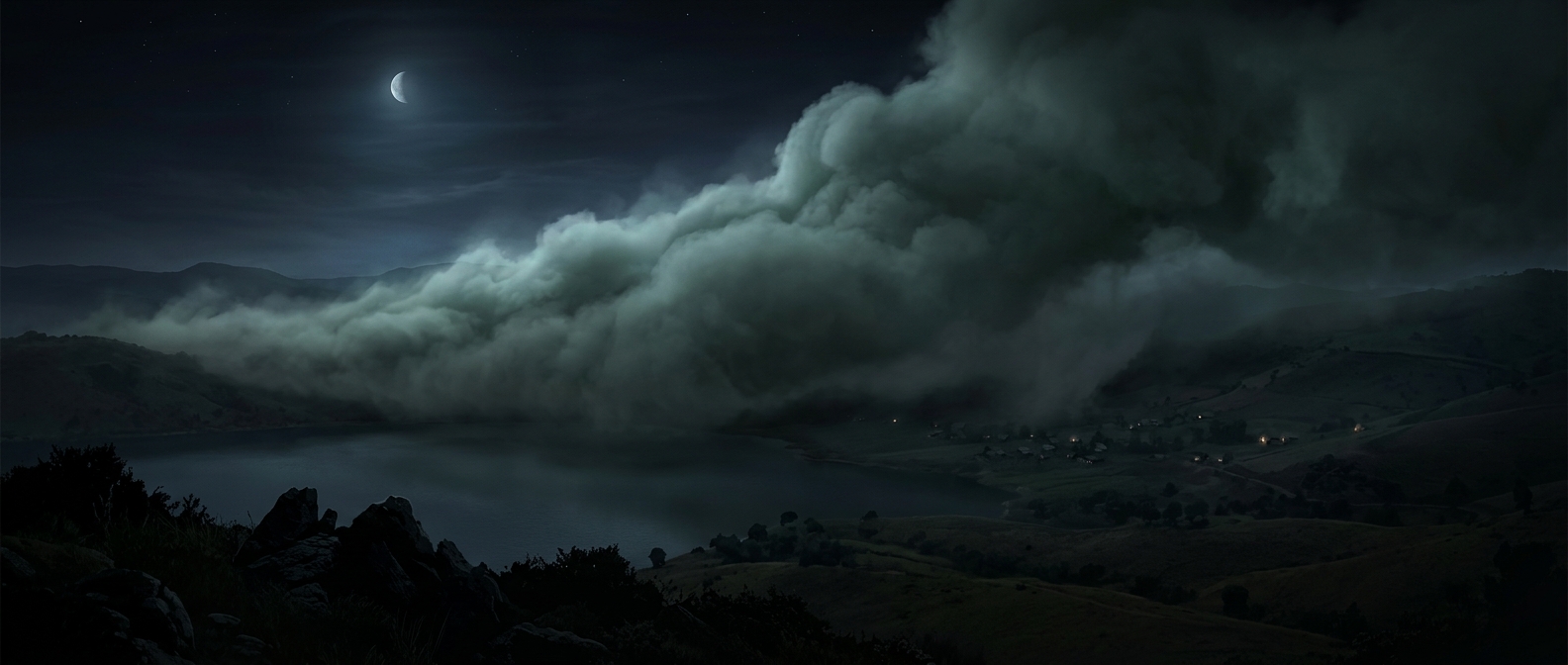
How Lake Nyos stored a hidden hazard
Lake Nyos sits in a volcanic region of Cameroon, where carbon dioxide rises from below the ground and dissolves into the lake’s deep water. Pressure from the water above keeps much of that gas dissolved—much as pressure keeps carbon dioxide in a sealed bottle of soda.
The lake’s layers can remain relatively still, allowing gas to accumulate at depth. If gas-rich water rises, the pressure drops. Carbon dioxide then escapes as bubbles, which lift more deep water upward and release still more gas. This self-reinforcing process can turn a slow buildup into a sudden eruption.
A cloud that followed the ground
In 1986, a large release sent carbon dioxide out over the lake and into nearby valleys. The gas is invisible and has no smell, so people could not see it coming. It is also denser than air: in low-lying places, it can displace the air people need to breathe. Many victims died while asleep, when they had little chance to notice the danger or escape.
The cloud did not behave like lava or an explosive blast. Its danger came from an ordinary physical property—carbon dioxide’s tendency to collect in hollows and depressions—combined with a sudden, enormous release.
Keeping the gas from building up
After the disaster, engineers installed pipes that draw carbon-dioxide-rich water from the lake’s depths. As that water rises through a pipe, the pressure falls and gas escapes in a controlled way at the surface. The system does not remove the volcanic source; it helps prevent the lake from storing gas until another abrupt release becomes possible.
Lake Nyos made a deep lake look deceptively calm: the most dangerous part of its contents was invisible, dissolved far below the surface.