The impact turned a local collision into a global crisis
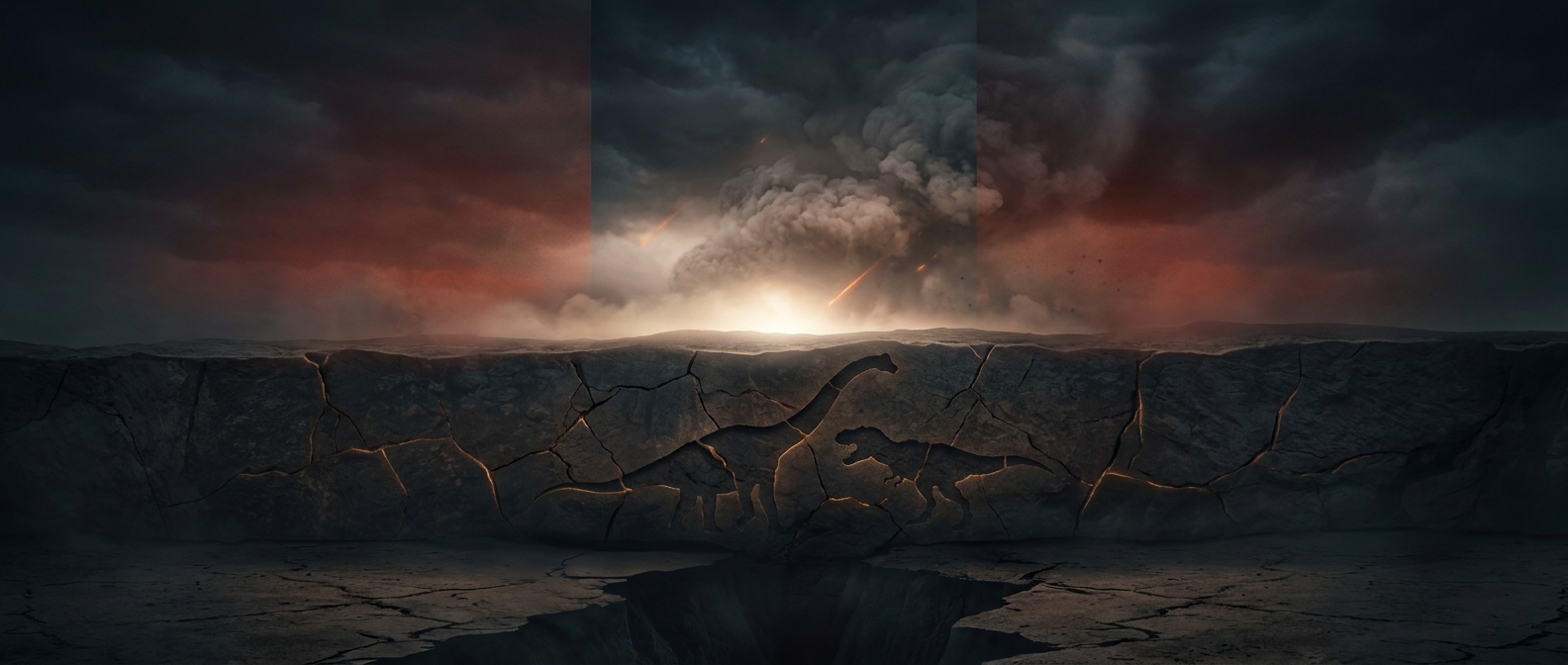
About 66 million years ago, an asteroid struck near what is now Mexico’s Yucatán Peninsula. The collision excavated rock and sent pulverized material high into the atmosphere. Winds carried this debris around the world, where it reduced the sunlight reaching Earth’s surface.
The danger was not just a sudden blast. With less light, plants and tiny ocean organisms that rely on sunlight struggled to grow. That weakened the base of food webs: plant-eaters had less to eat, and predators then lost prey. A shock that began at one impact site became a prolonged crisis for ecosystems across the planet.
Survival depended on what an animal needed
Large, non-bird dinosaurs disappeared, but extinction did not strike every kind of life equally. Animals that needed abundant food or specialized habitats were vulnerable when those resources failed. Some smaller animals could get by on less, shelter in protected places, or eat a wider range of foods. Those traits did not guarantee survival, but they could help populations persist through the disruption.
Birds are the surviving branch of dinosaurs, so dinosaurs did not vanish in the most literal sense. Small mammals also survived. In the changed ecosystems that followed, mammals diversified into many forms and eventually occupied roles left open by extinct species. The impact reshaped life not only by killing animals directly, but by changing which food sources and ways of living remained possible.