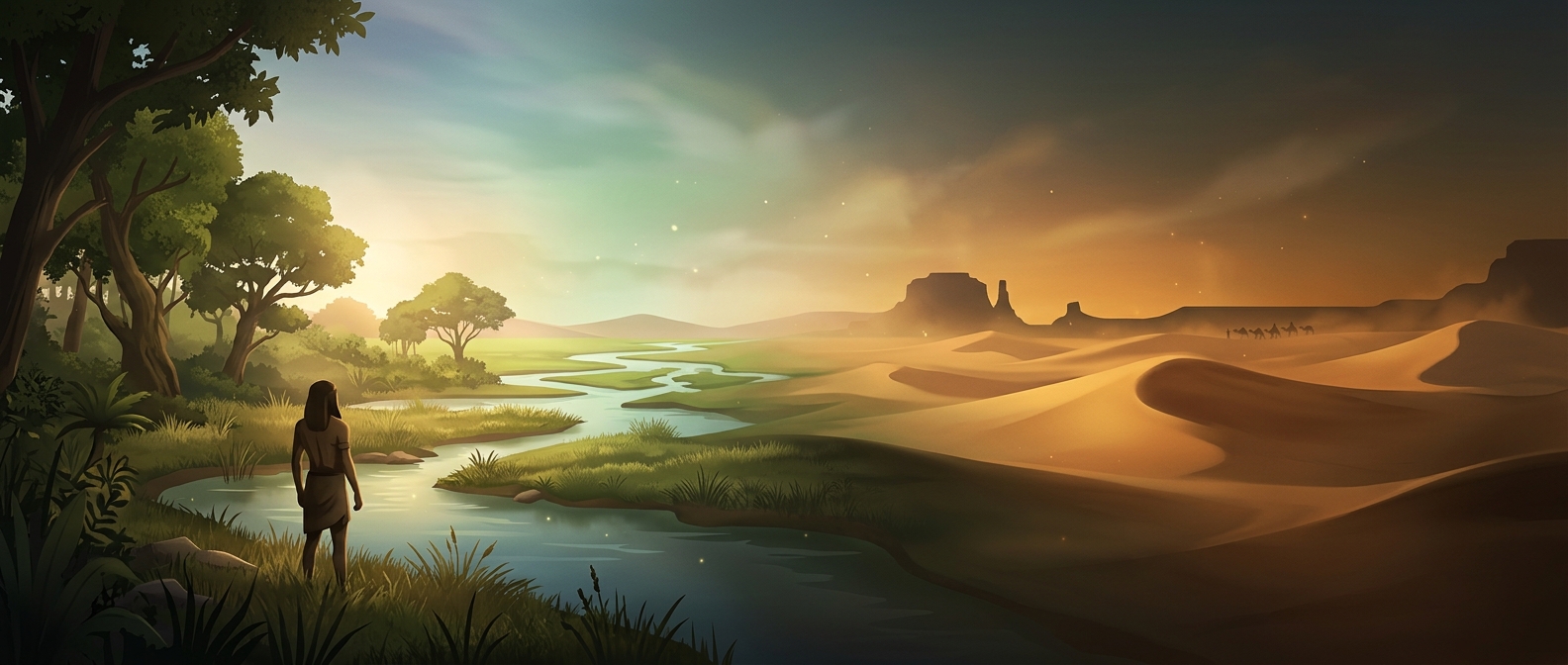
How a small orbital shift moved the rain belt
Earth’s orbit changes shape and orientation in slow cycles. Those changes affect how much sunlight reaches different parts of the planet in different seasons. When Northern Hemisphere summers received more sunlight, the land warmed more strongly than the nearby Atlantic, helping draw moist air inland and strengthen the African monsoon.
The result was not a little extra rain falling evenly across today’s desert. Seasonal rains reached much farther north, feeding rivers, wetlands, and large lakes across areas now dominated by sand and bare rock. Grasslands and scattered trees could grow where water lasted long enough through the dry season.
Why the green landscape did not vanish all at once
Plants helped reinforce the wetter conditions. Vegetation darkened the ground, so it absorbed more sunlight than pale, exposed desert soil. Plants also returned moisture to the air, where it could contribute to further rainfall. This feedback made the landscape more able to sustain greenery once the rains expanded.
As the orbital pattern shifted and summer sunlight weakened, the monsoon gradually lost strength. With less rain, vegetation thinned; the exposed ground reflected more sunlight and supplied less moisture to the air. That made it harder for rain to persist. Lakes shrank or disappeared, though the timing differed from place to place.
A landscape remembered in its traces
This wetter interval, often called the African Humid Period, lasted for thousands of years and ended at different times across the region. Its former lakes and rivers are now recorded in dry basins, ancient shorelines, and sediments beneath the desert. The Sahara’s present appearance is therefore not a permanent backdrop: it is one phase in a landscape that has repeatedly shifted with climate.