A gourd turns a pluck into a larger sound
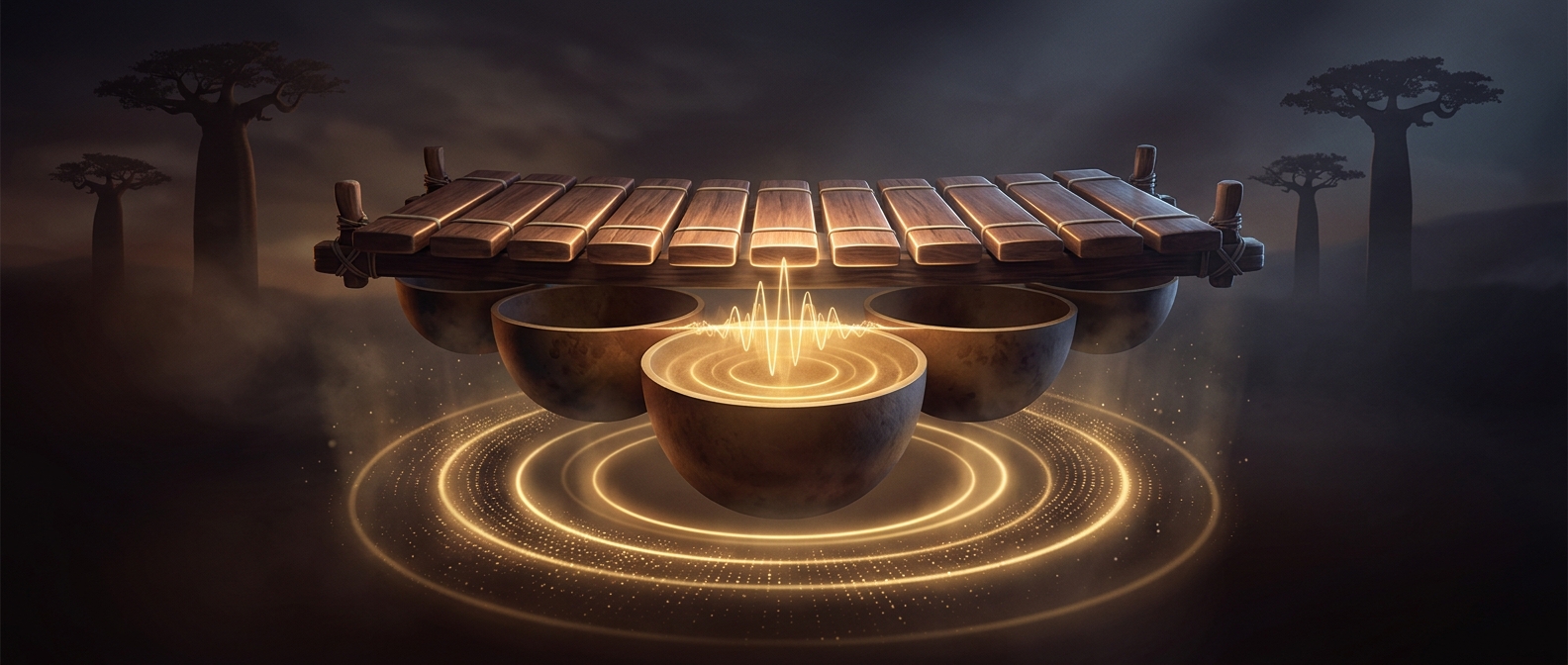
An mbira’s metal keys make a quiet, bell-like tone when plucked. The hollow calabash beneath them acts as a resonator: the vibrating air inside reinforces parts of the sound, making it louder and giving it a rounder, wavering quality. The gourd does not create the notes; it changes how the notes carry.
Why the sound seems to shimmer
In many mbira performances, the instrument is played inside or against a larger resonating gourd. Small openings in the gourd—and sometimes objects attached around its edge—can add a soft buzz as the instrument moves. That extra vibration blends with the keys’ clear tones, producing the distinctive, watery texture listeners hear. The result depends on both the metal tongues and the space of air around them.
A practical instrument with a recognizable voice
The mbira is associated especially with Shona musical traditions in Zimbabwe, where it has been used in social and ceremonial settings. Its compact keys can produce interlocking patterns: several notes ring together while the player repeats and varies a rhythmic figure. The gourd helps those patterns project, while its added resonance makes individual notes mingle rather than sound like isolated plinks.
That combination is part of the instrument’s identity: a small pluck can bloom into a layered sound, with the gourd shaping not just volume but the way the music seems to shimmer.