A bow trapped between two strings
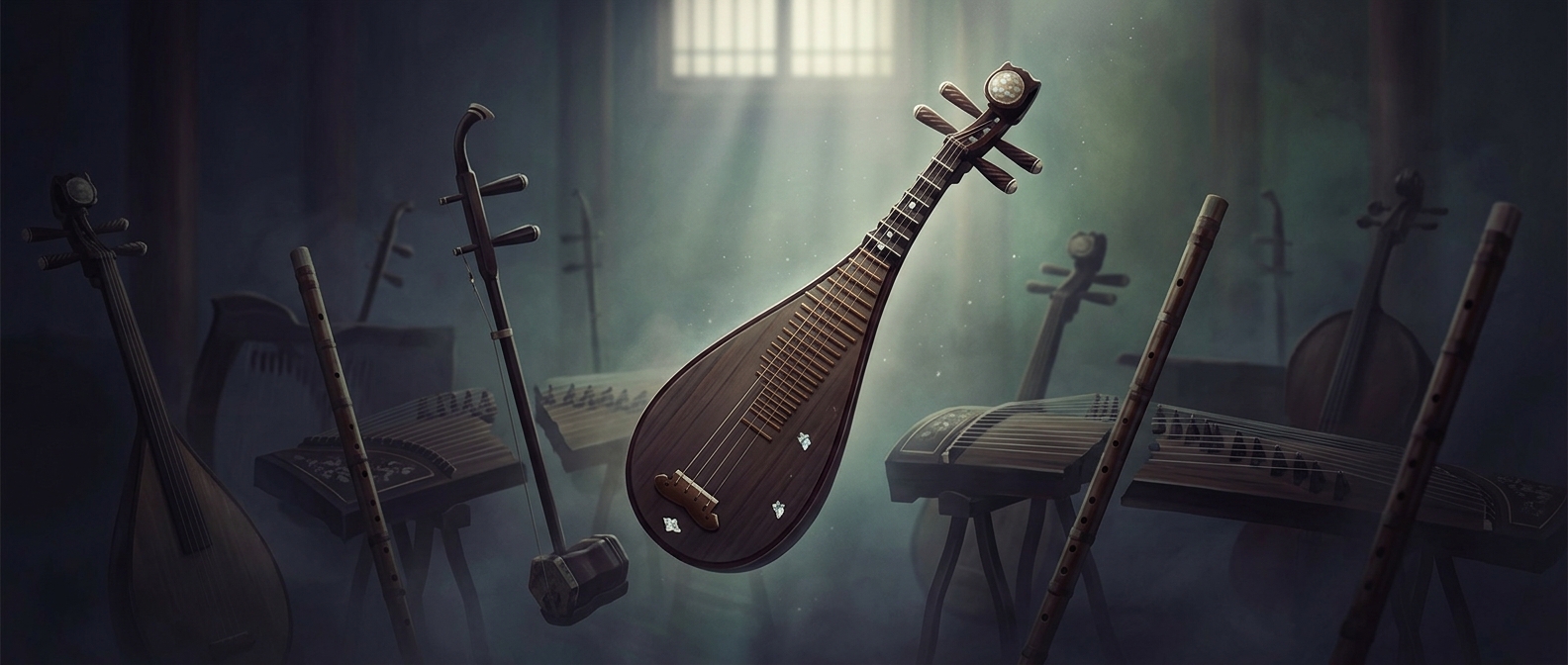
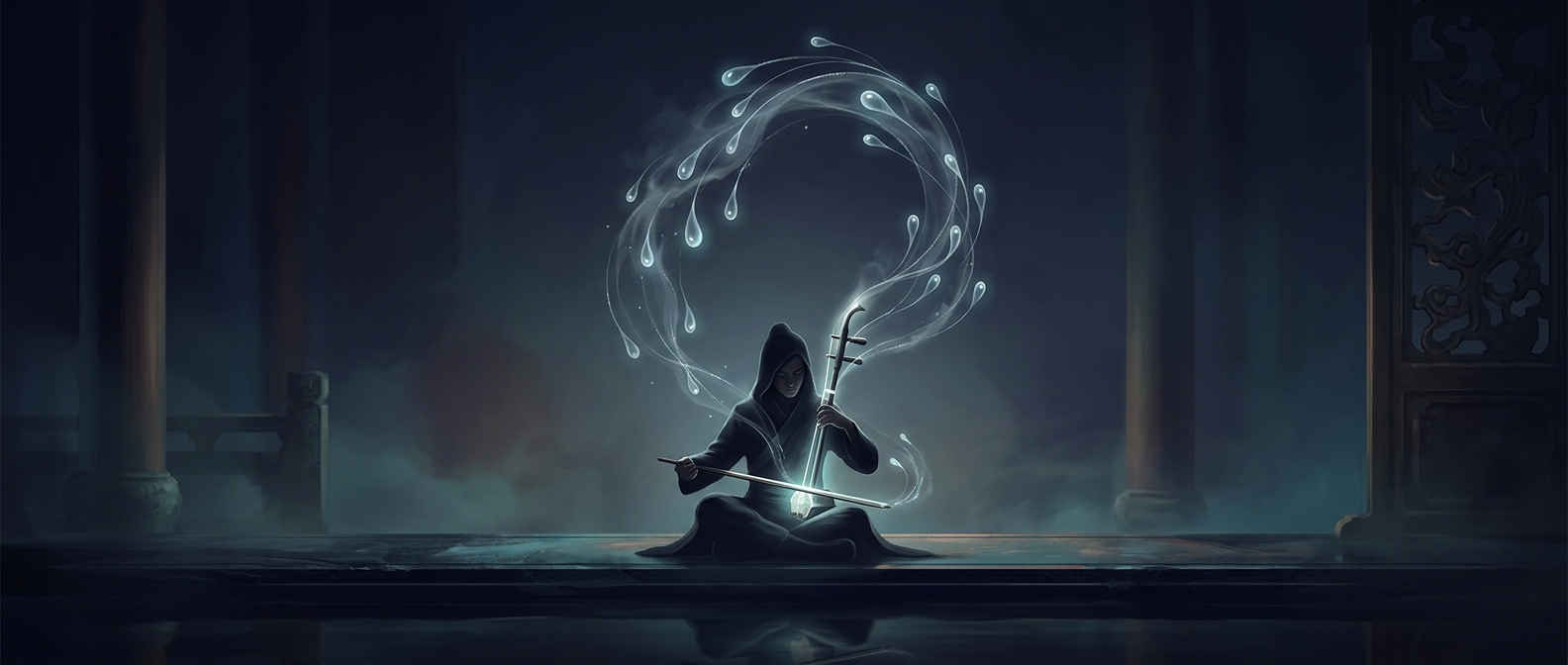
The erhu’s sound begins with an unusual bit of construction: its bow hair runs between the instrument’s two strings. Moving the bow makes the hair grip and release each string in rapid succession, setting it vibrating. Because the bow stays threaded between the strings, the player draws it in one direction to sound one string and reverses it to sound the other.
Unlike a violin, an erhu has no fingerboard beneath the strings. The player’s left fingertips press a string from the side, changing its vibrating length to raise or lower the pitch. Since there are no fixed frets to mark the notes, the hand can slide continuously between pitches.
Shaping a voice from a note
That continuous motion gives the player room to imitate the wavering pitch of a human voice. A small slide into a note or a quick oscillation around it—called vibrato—can make the sound seem to catch or tremble. The right hand shapes the other half of the effect: changing bow speed and pressure alters how firmly the bow hair grips the string, adding force or a grainier edge.
Together, these gestures turn a steady pitch into something that seems to break and recover, much as a sob does. The resemblance is not built into the instrument alone; it comes from the player’s control over pitch and friction. With only two strings, the erhu can make a melody feel less like a sequence of fixed notes than a voice bending through emotion.