A bridge that can move—and a note that can bend
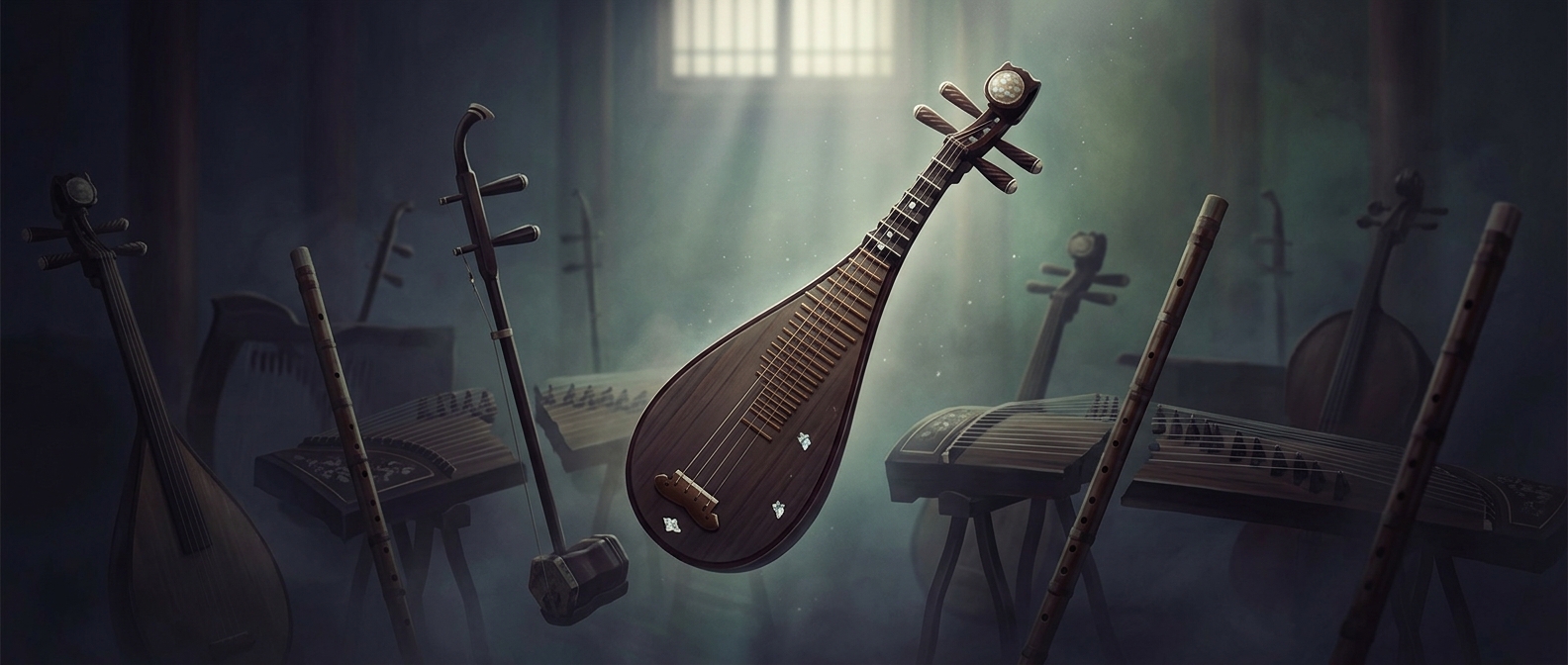
On a guzheng, each string rests on its own movable bridge. The bridge supports the string and sets the length of the section that vibrates when plucked. Shifting it changes that length, so the player can tune the string to a different pitch.
But the bridge also makes room for expression. A player usually plucks on the right side and presses the string on the left. That pressure increases tension across the bridge, raising the pitch of the plucked note. Releasing the pressure lets it fall again. The change can be smooth and continuous, unlike switching between fixed pitches on a keyboard.
One hand makes the note; the other shapes it
This division of labor is central to the instrument’s playing style: one hand sets the string vibrating while the other bends its pitch, adds vibrato, or lets the note waver as it fades. The sound is not produced by moving the bridge during every note; rather, the bridge gives the string a stable support point against which the player can press.
Because bridges can be repositioned, the guzheng can also be adjusted for different tunings. The same physical feature therefore serves two purposes: it helps set the instrument’s pitches before playing and lets the performer reshape them in real time. A plucked note can arrive with a clear pitch, then lean upward under the player’s hand—a small, audible reminder that the melody is being shaped, not merely struck.