Why the Pipa’s Notes Carry Across an Ensemble
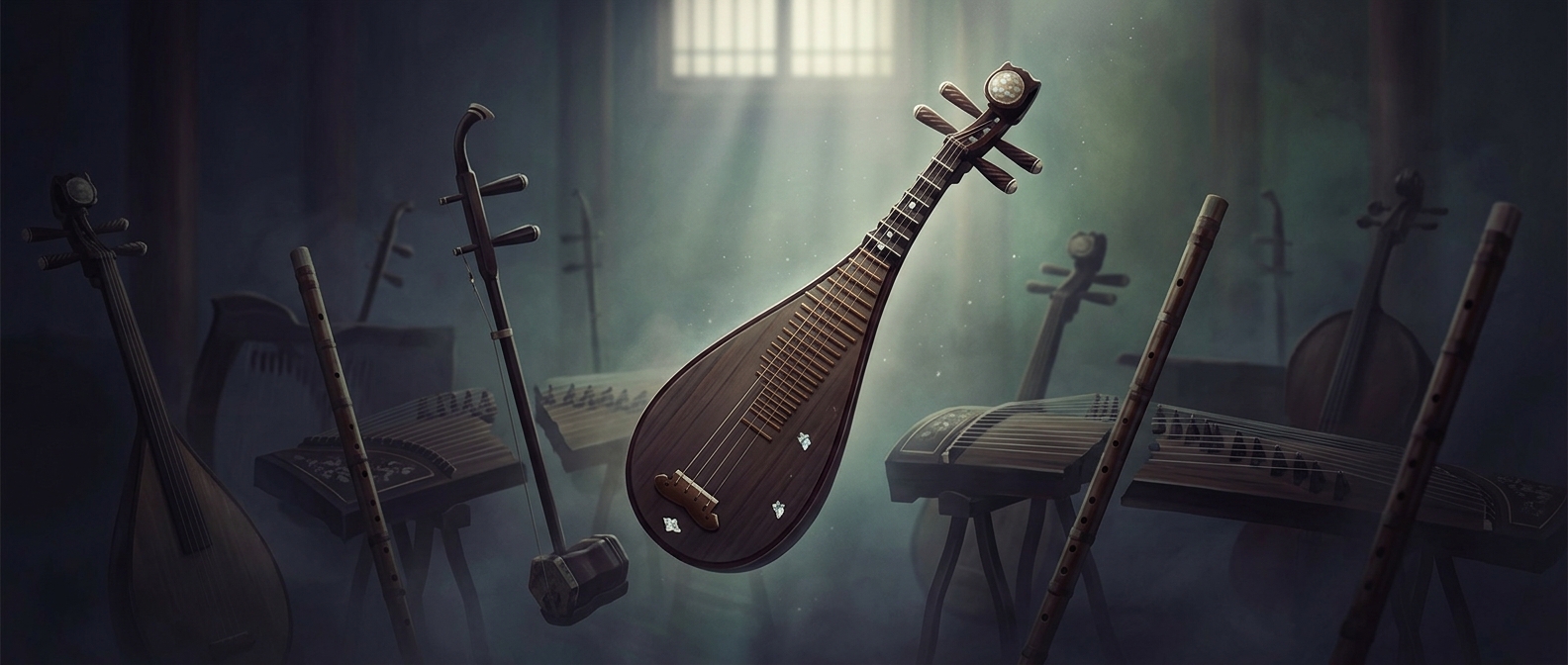
The pipa’s bright, sharply defined sound comes from the way its strings are struck and stopped. A player plucks the strings with quick, forceful movements, then presses them against raised frets to set their pitch. Each note begins with a crisp attack rather than a long, blended swell, so even a rapid run can remain distinct amid other instruments.
That clarity is especially useful in ensemble music. A pipa can fill the space between sustained tones with quick figures, answer another instrument, or give a passage a rhythmic edge. Its sound does not need to be louder than everything around it to be noticeable: the contrast between its brief, metallic notes and longer, softer tones helps the ear pick it out.
A Solo Voice and an Ensemble Color
The instrument’s role is not limited to providing background texture. In solo playing, performers use rapid plucking and changes in attack to suggest motion, rhythm, and shifts in mood. In a group, those same techniques let the pipa move between accompaniment and a more prominent melodic line.
That flexibility helps explain why its distinctive timbre has endured in Chinese musical traditions. The pipa can make a small gesture—a flickering run or a sudden, sharply struck note—audible across a layered sound, giving listeners a clear thread to follow.