A forecast made by twelve leeches
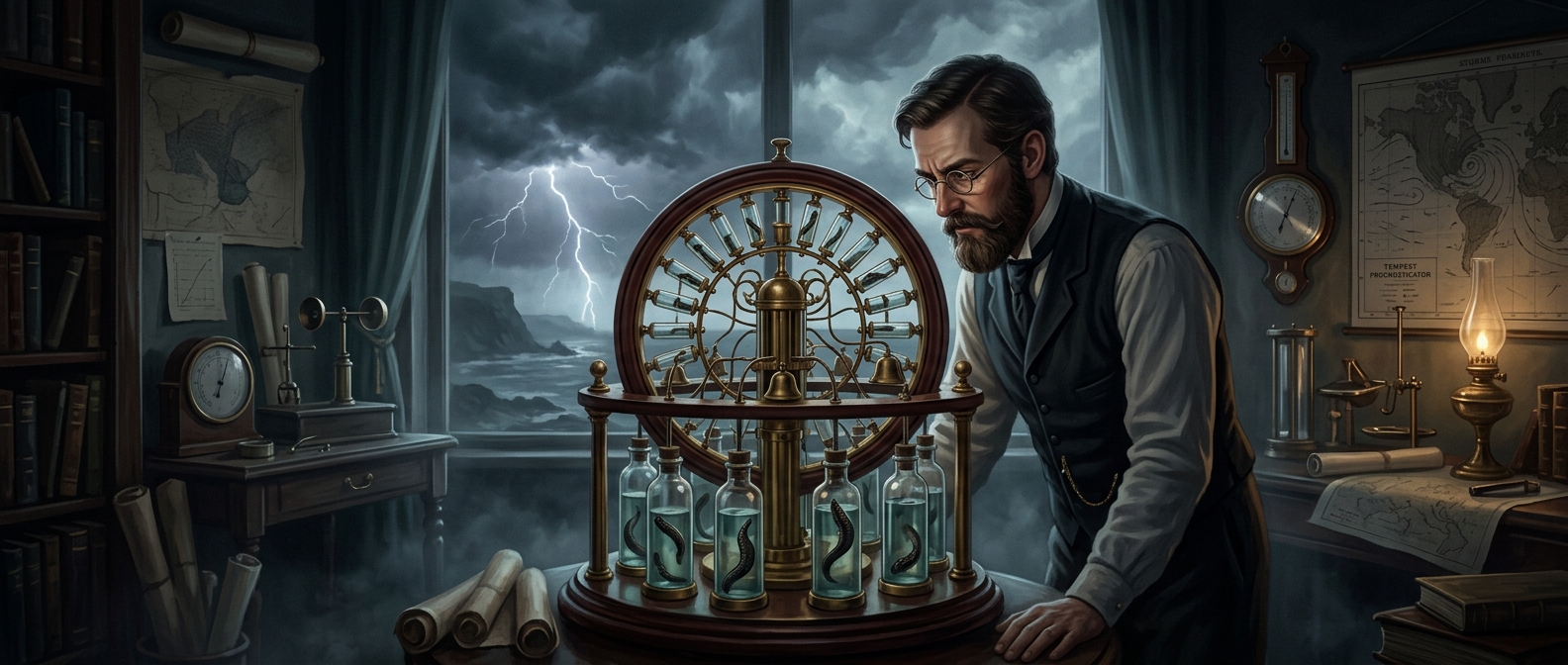
In the 19th century, physician George Merryweather devised an unusual way to watch for storms: keep leeches in separate glass bottles and let their behavior trigger bells. The idea was that a drop in air pressure ahead of bad weather would make the animals restless. When a leech climbed toward the top of its bottle, it could set off a small mechanical signal.
The leeches were not measuring pressure directly. A barometer does that by showing how the weight of the air changes; Merryweather’s device instead treated animal behavior as an indirect warning. The bells made the signs audible, turning a collection of living creatures into a kind of alert system.
Why use leeches at all?
The design rested on a practical observation: animals can respond to changes in their surroundings before people notice a change in the weather. Merryweather thought leeches might be especially sensitive to the conditions that preceded storms. Using twelve meant the device could register several separate responses rather than depend on one animal’s movements.
That arrangement also exposed the forecast’s central difficulty. A bell could announce that a leech had moved, but it could not establish why it moved—or whether a storm would follow. The device depended on interpreting behavior as a weather signal, not on a direct, calibrated reading of the atmosphere.
An instrument with a living mechanism
The leech barometer is memorable because its “sensor” could crawl, while its output was a ring. It turned a subtle, invisible change in the air into a sound people could hear. But each alert still depended on an animal behaving as expected: the forecast began with a leech’s movement, not a number on a scale.