A living fishing line in the dark
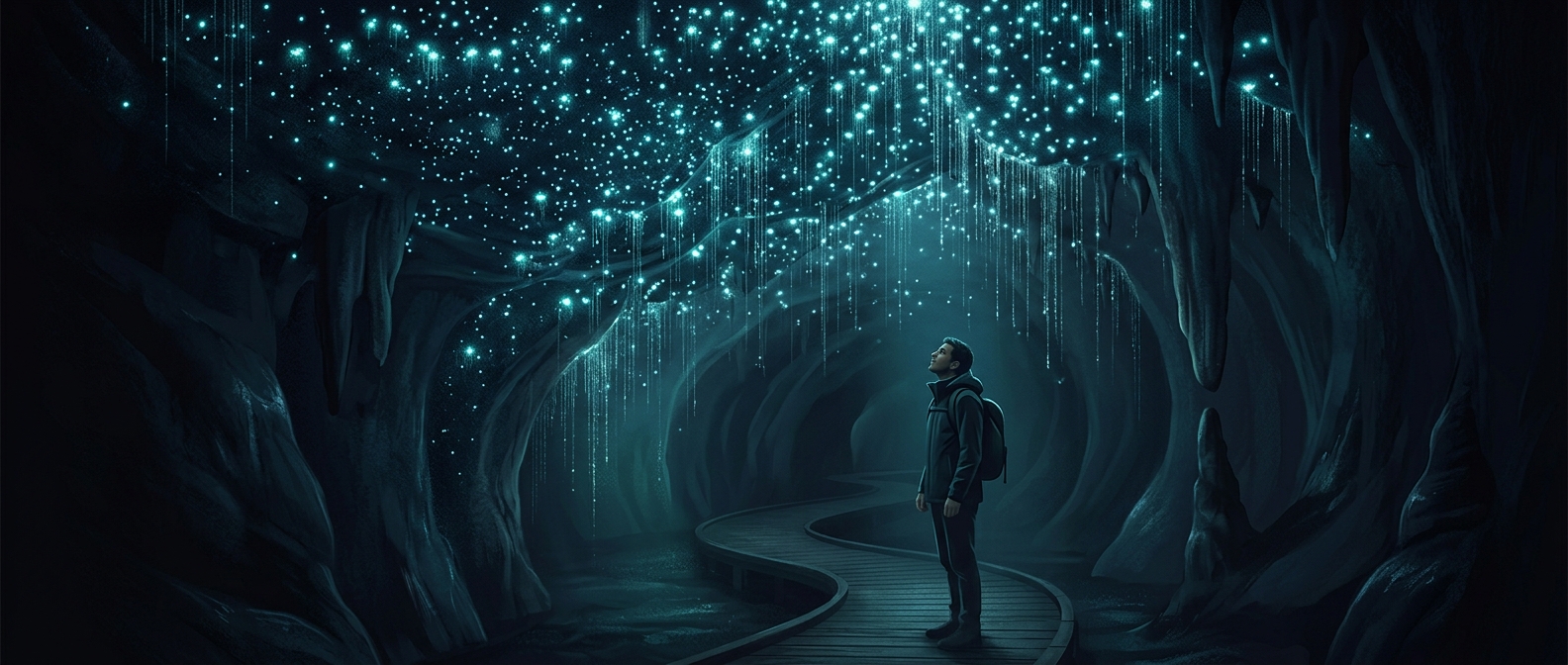
New Zealand’s famous cave glowworms are the larval stage of a fungus gnat, not worms that glow from their whole bodies. Each larva makes a small nest on a cave ceiling or wall, then lowers fine silk threads. Sticky droplets along the threads turn them into hanging traps for tiny flying insects.
At the larva’s tail is a light-producing organ. A chemical reaction there creates the blue-green glow, which can draw insects toward the nest. In the darkness, a small insect that approaches too closely may strike a thread and become stuck in its droplets.
How the catch reaches the hunter
The larva does not need to rush after prey. It waits above its lines, senses movement through vibrations, and hauls a trapped insect upward by pulling in the silk. It can then feed on the catch. The glow is therefore part of a patient hunting system: light brings potential prey within reach, while the threads do the capturing.
Caves suit this strategy because darkness makes the glow conspicuous, and their damp air helps the delicate, sticky lines stay usable. What looks like a ceiling full of tiny stars is also a field of suspended traps, each connected to a waiting larva.