A relic from Newstead Abbey
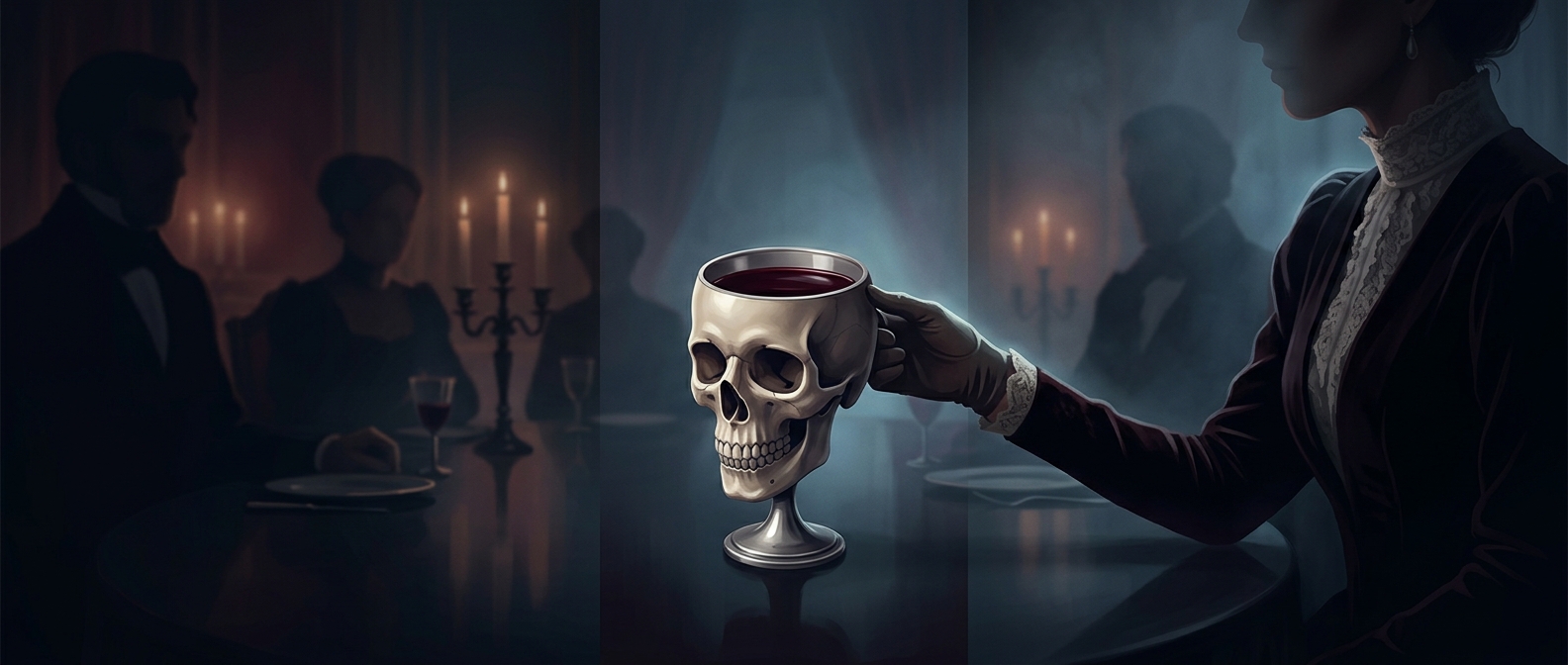
The poet was Lord Byron, who found a human skull at Newstead Abbey, the former monastery that had become his family home. He had it polished and fitted with a silver rim, turning a graveyard remnant into a drinking vessel. The skull was traditionally said to have belonged to a monk, though its owner could not be identified with certainty.
Gothic theater at the dinner table
Byron’s choice made sense in a culture fascinated by ruins, death, and the macabre. The abbey’s monastic past supplied a ready-made story, while the skull made that story startlingly tangible. Passing wine around in it transformed an ordinary gathering into a performance: guests were invited to feel both the thrill of the taboo and the joke in treating a human relic as tableware.
Byron even wrote verses for the cup, giving it a voice that turns the macabre object into a meditation on mortality. The gesture was not just a stunt; it joined the Romantic era’s taste for Gothic imagery with Byron’s cultivated reputation for shocking convention.
The unsettling afterlife of an object
The cup’s power came from its double identity. Silverwork made it look like a deliberate piece of entertaining, but the skull remained unmistakably human. That contrast forced guests to confront the fact that the dead body beneath the polished surface had once belonged to someone. Byron’s wine cup made mortality part of the party—and made the party itself a story people would repeat.