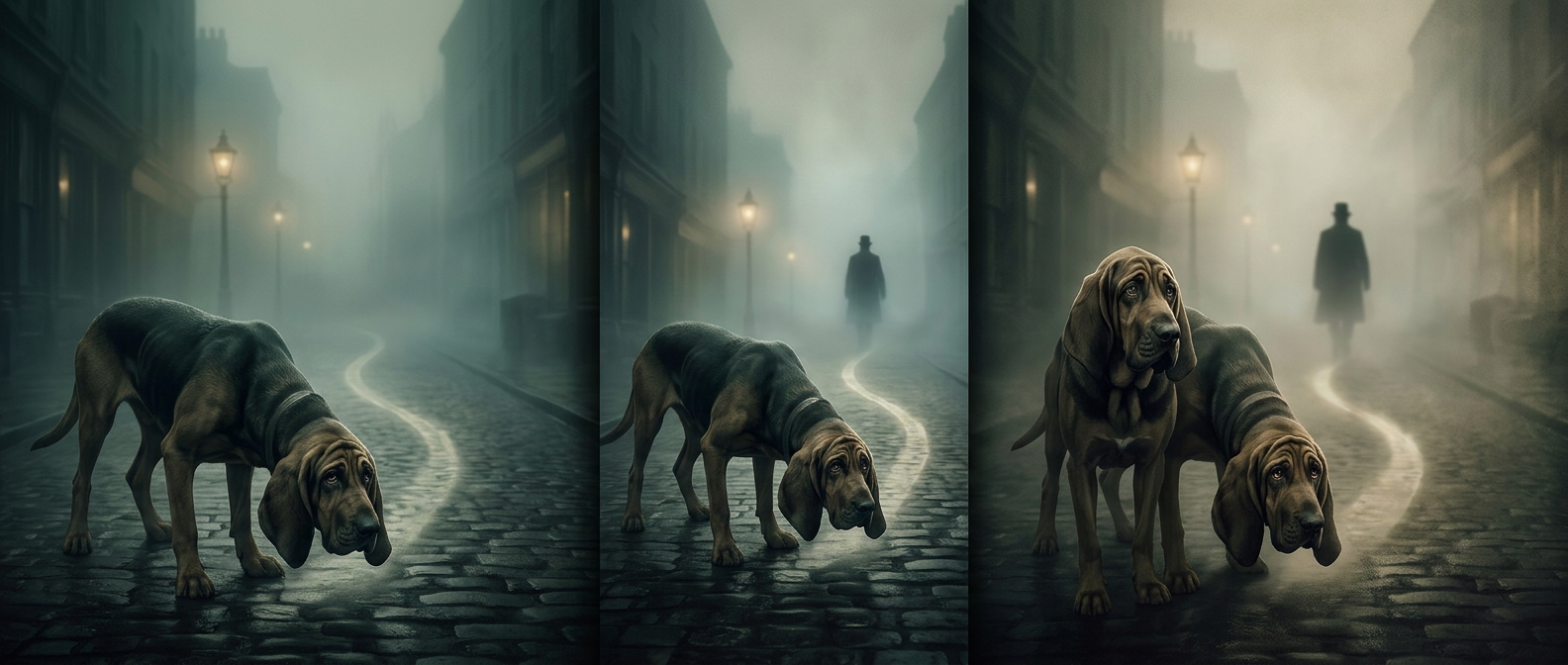
Why the bloodhounds were brought in
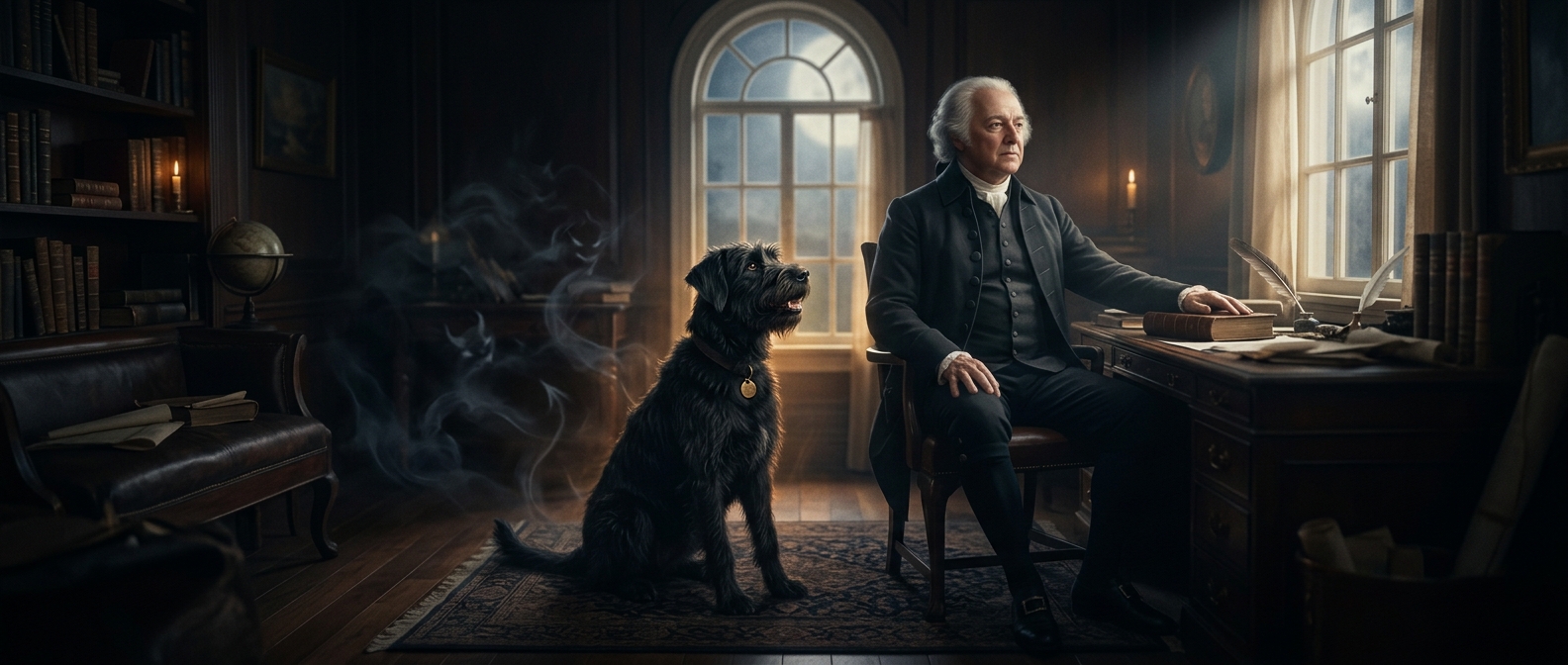
During the 1888 hunt for the Whitechapel murderer known as Jack the Ripper, police considered using bloodhounds to follow his scent. The idea was straightforward: give a dog a scent associated with a person, then let it search for that person’s trail. In theory, the streets could become a kind of map, with the dog following a trace its human handlers could not detect.
But a dog cannot track a name or a description. It needs a usable scent trail—and the conditions have to let it distinguish that trail from everything else around it.
A London street was no clean trail
Urban streets were a difficult setting for the plan. People, horses, carts, and other dogs passed through the same spaces, laying down overlapping smells. As time passed, weather and traffic could further weaken or muddle a trail. A bloodhound’s powerful nose could detect scent, but that did not guarantee it could identify the right one amid the city’s competing traces.
The dogs’ public trial exposed the gap between the promise and the practical reality. They became distracted, failed to produce a useful trail, and one bit a police commissioner. Instead of narrowing the search, the demonstration added disruption to an investigation already under pressure. Police quietly abandoned the experiment.
The limits of a celebrated tool
The failure did not mean bloodhounds were useless in every setting. It showed that tracking depended on circumstances: a clear starting point, a sufficiently fresh scent, and a route not overwhelmed by other activity. Those conditions were hard to secure in a crowded murder investigation, where the killer’s movements were unknown and the streets were constantly used.
The episode is memorable because the dogs were expected to turn an invisible clue into a direction. In Whitechapel, the city’s noise was not only human; it was in the scent itself.