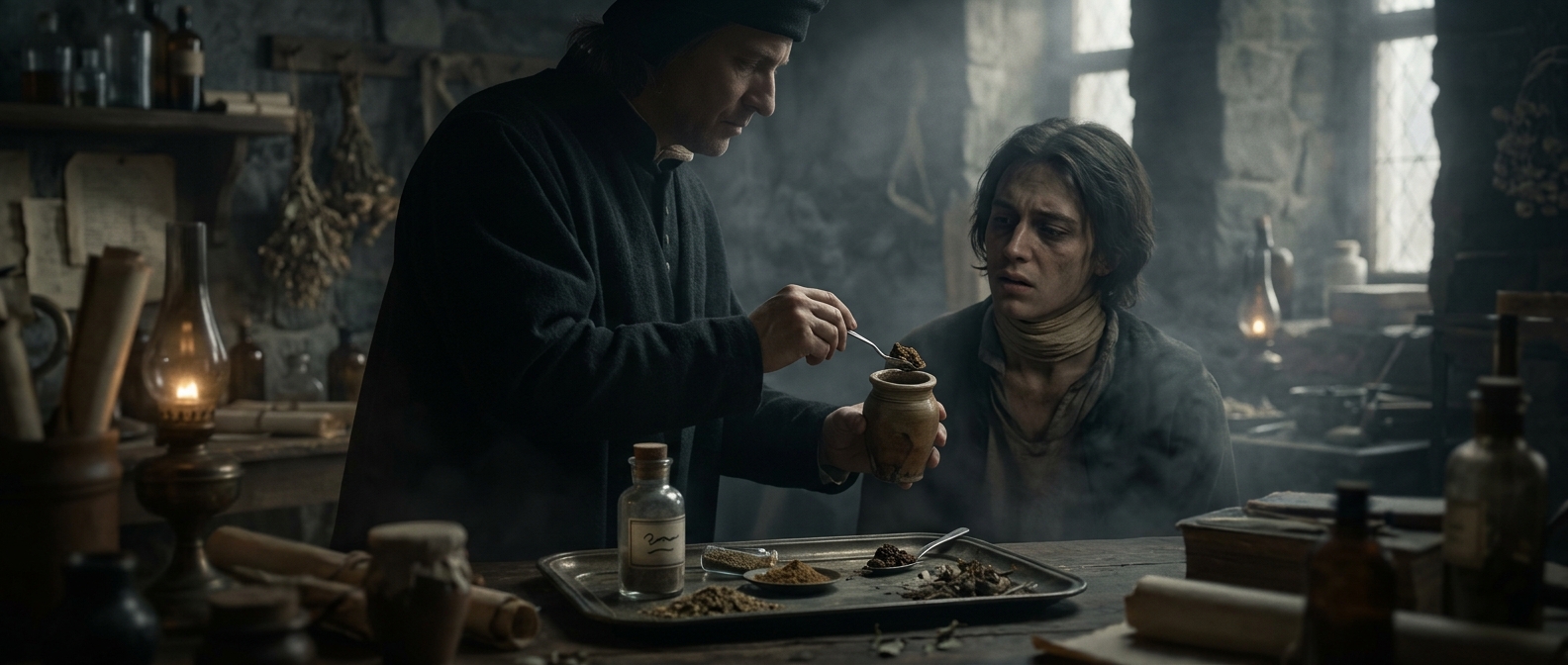
A recipe built on ancient ideas of healing
The prescription reflects a medical world in which treatment often meant preparing substances from animals, plants, and minerals—not isolating a single active ingredient. A recipe could specify an animal and a cooking method because physicians believed that the materials’ qualities, transformed through preparation, might help restore the body. The account preserves that reasoning, even though it does not tell us how often anyone followed the recipe.
Why it could not repair a damaged nerve
Nerves carry signals between the brain, spinal cord, and the rest of the body. When a nerve is badly crushed or cut, its delicate fibers can be disrupted; rubbing or applying an oil cannot reconnect them. The remedy’s detailed preparation may have made it seem purposeful, but detail is not evidence that it worked.
Ancient prescriptions are therefore useful as records of what medical writers thought was worth trying—not as proof of a treatment’s effectiveness. In this case, the striking ingredient also points to the limits of medicine before the structures and healing processes of nerves were understood.