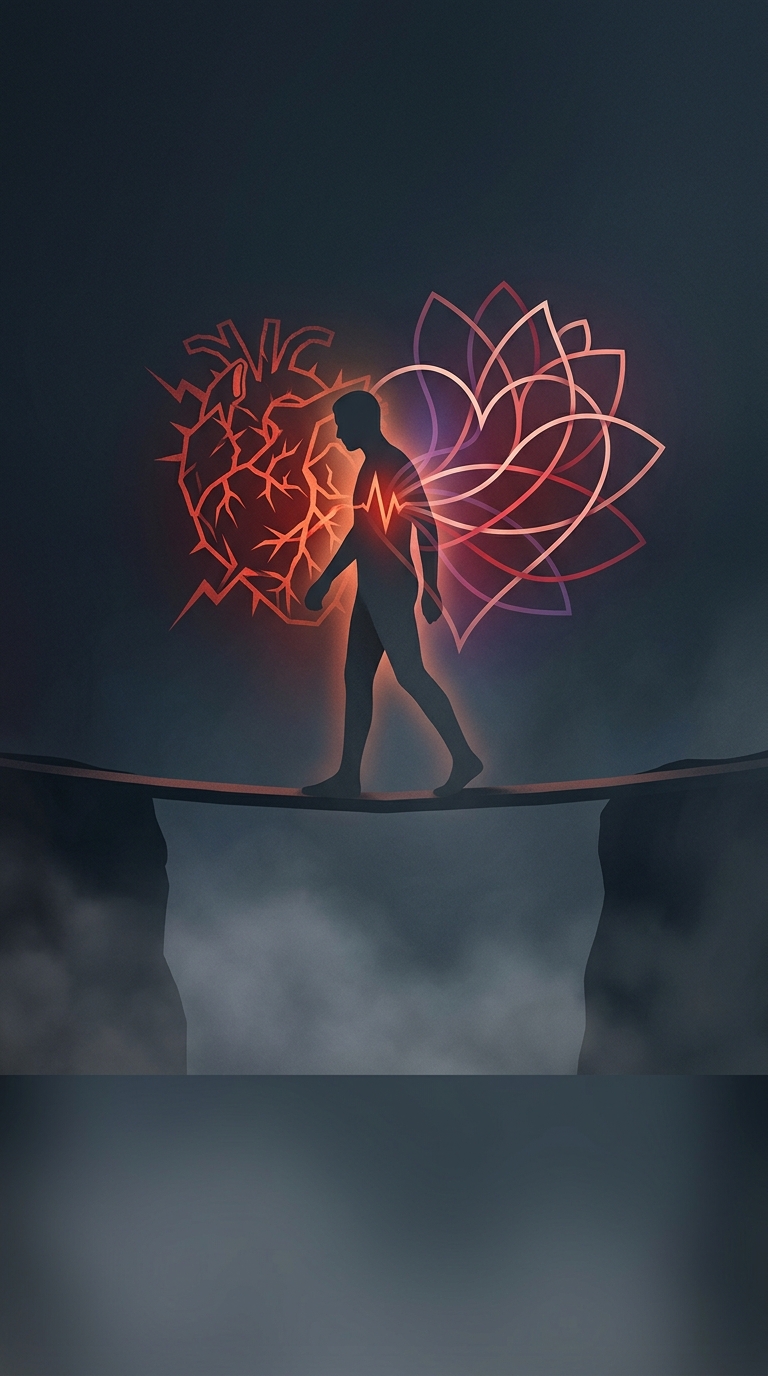
A racing heart is a signal, not a feeling
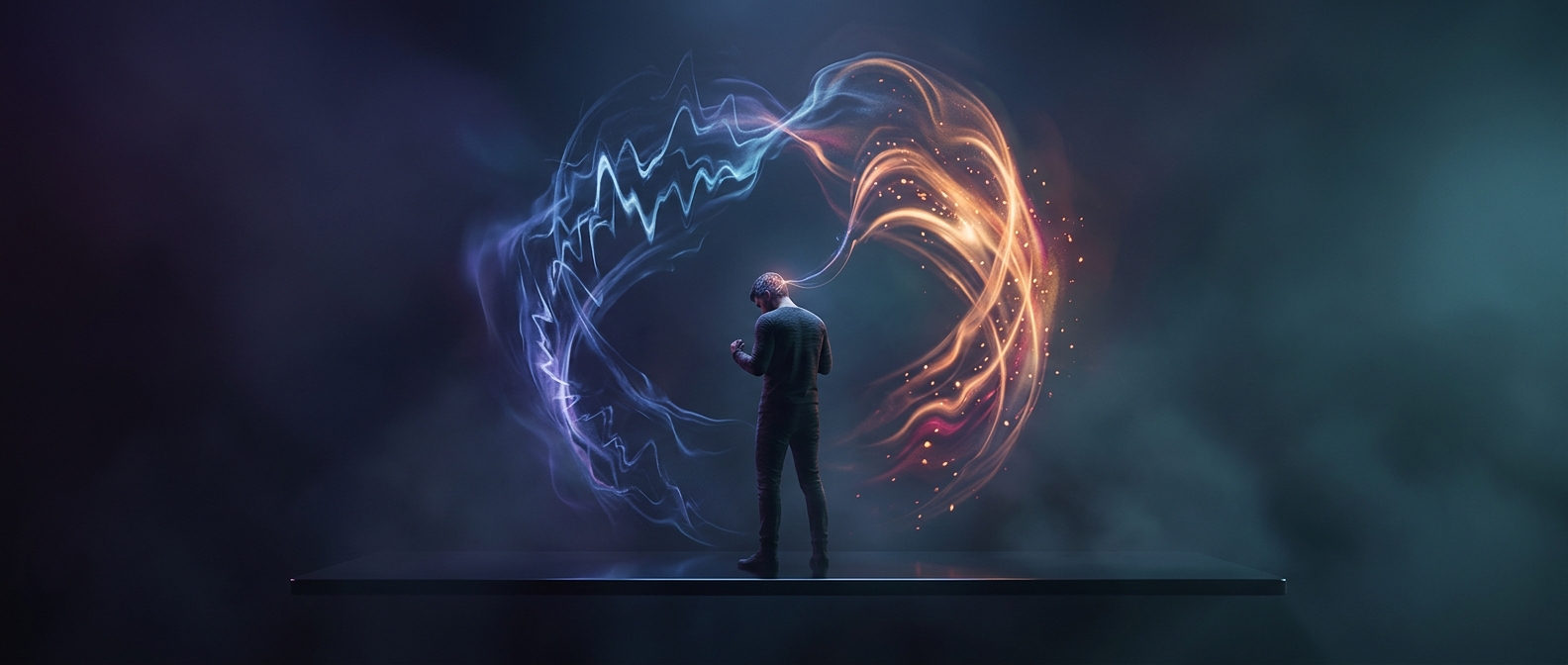
Your body can raise its heart rate for many reasons: fear, attraction, exertion, surprise. The physical changes overlap—faster pulse, heightened alertness, sometimes warm skin or shallow breathing—so the body does not provide a neat label saying what caused them. The brain has to interpret the signal.
That interpretation draws on the scene. A pounding heart during a threatening encounter is likely to register as alarm; the same sensation during a flirtatious moment may feel like excitement or desire. The body supplies intensity; the situation helps supply its meaning.
Why the wrong label can stick
When the cause is obvious, interpretation is easy: after running up stairs, you have a good explanation for being winded. But if the source of arousal is unclear—or several things are happening at once—the mind leans more heavily on nearby cues. Who is present? What just happened? What do you expect to feel here?
That process can produce a mistaken reading. If fear has already left someone keyed up, a later encounter that feels intimate or exciting may be experienced with extra intensity. The person may attribute part of that heightened sensation to attraction, even though the original surge came from the stressful event. This does not mean fear automatically becomes desire; context, interpretation, and individual experience all matter.
Intensity can amplify a feeling without proving its cause
The practical lesson is not to distrust every strong emotion. It is that a powerful bodily reaction, by itself, cannot tell you exactly what you feel or why. A racing pulse can make a moment feel more charged, while the mind’s explanation of that charge depends on the story unfolding around it. Change the scene, and the very same heartbeat may seem to say something different.