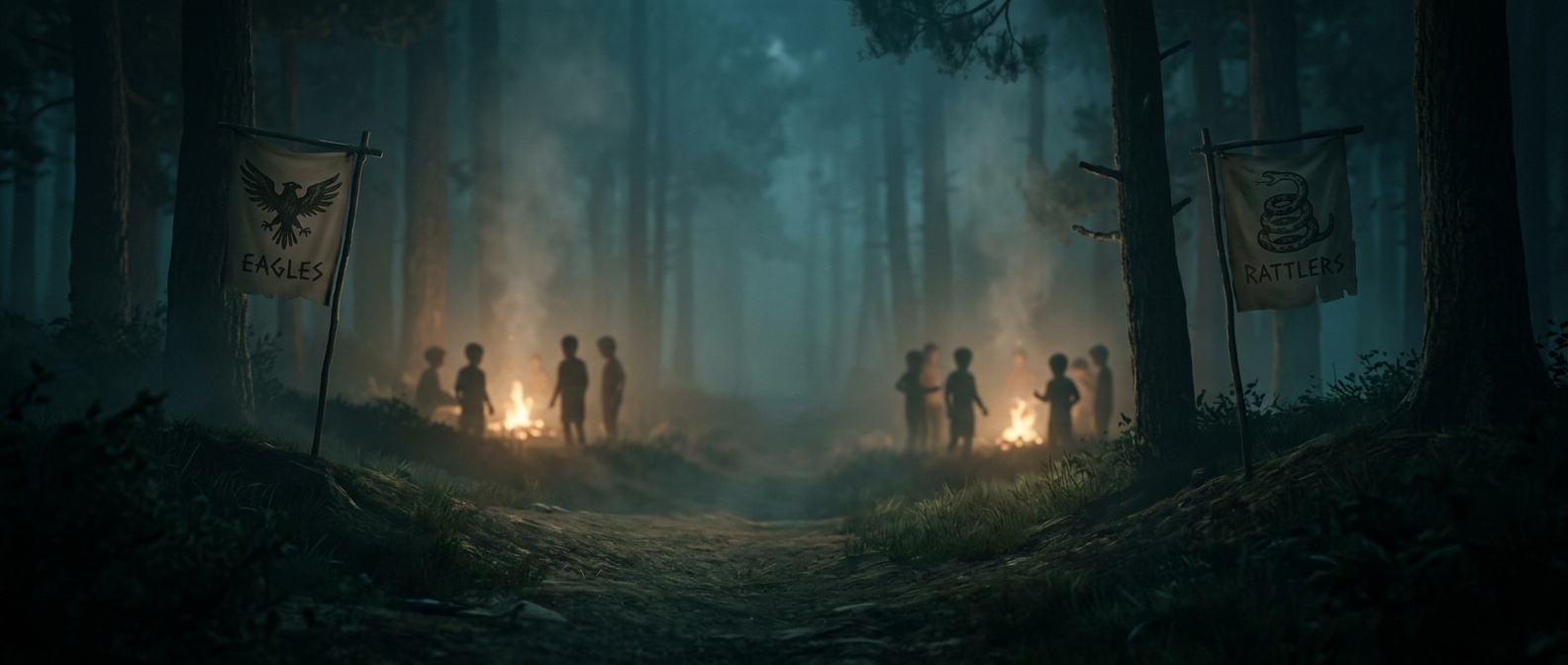
How competition made group labels matter
At Robbers Cave, the important change was not simply that boys were sorted into two teams. They began to think of their own group as “us,” with its own standing to defend, and the other group as the people standing in the way. Once rewards depended on beating that group, a rival’s success could feel like a loss for everyone on your side—even when the prize itself was modest.
That is a powerful shift in attention. Boys had reasons to notice slights, boast about their own team, and interpret the other team’s actions as hostile. Those responses then fed one another: a provocation seemed to justify retaliation, and retaliation made the rivalry feel more real. The conflict did not require the boys to have started out with deep personal grudges; the competition gave ordinary group loyalty a target.
Why a shared problem could change the relationship
Simply putting the groups near each other was not enough to make them cooperate. The more effective turn came when they needed to work together toward outcomes neither group could secure alone. That changed the practical meaning of the other boys: they were no longer only competitors, but people whose help was necessary.
A shared goal can interrupt a feud because it gives both sides a reason to coordinate, depend on one another, and see cooperation succeed. It does not erase every insult or make group identity disappear. Instead, it creates experiences that complicate the story each group has been telling about the other.
The camp’s lesson is concrete: who counts as an ally can depend partly on how a situation is organized. Make success a contest between groups, and their labels can harden into boundaries; make success depend on joint effort, and those same boundaries can become easier to cross.