A production shortcut became part of the show’s visual language
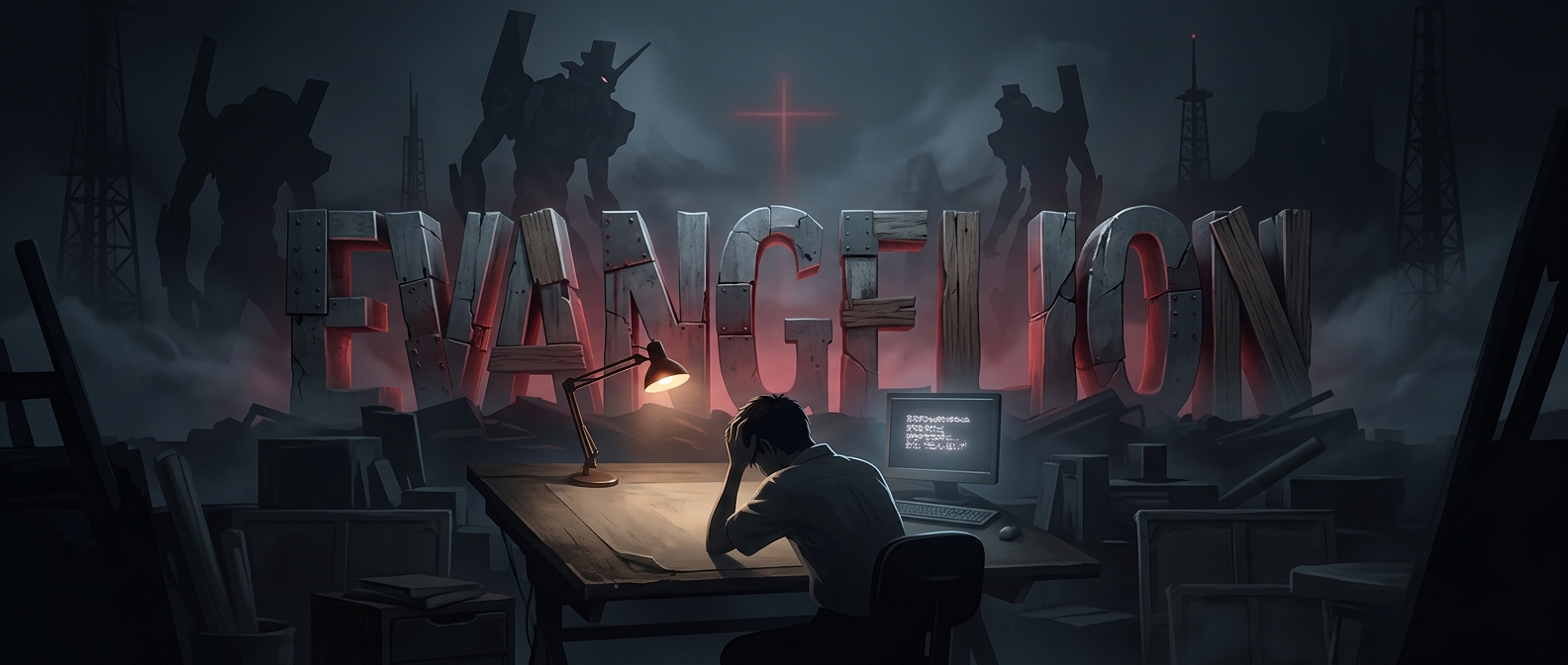
In animation, a moving scene takes many drawings—or carefully assembled layers and edits—to make the image change over time. A card of words, by contrast, can hold on screen with little or no new artwork. For Neon Genesis Evangelion, whose studio Gainax faced budget constraints, director Hideaki Anno could use brief text-only cards to occupy moments that might otherwise demand animated footage.
Reading became part of the rhythm
The cards did more than pause the action. Their quick succession made viewers read at speed, turning exposition and fragments of language into a visual beat. A cut to words could also interrupt a scene abruptly, creating a sense of pressure or disorientation without showing another character or movement.
That tradeoff mattered: the production saved effort, while the audience still received a deliberate experience rather than an empty stretch of screen. The technique asks viewers to do some of the work themselves, assembling meaning from short bursts of text and the images around them.
Constraint, made recognizable
Because the cards recur so strikingly, a practical production device became part of Evangelion’s identity. The show’s stark shifts between animation and text make the limits of what is shown feel like a choice—and give a low-cost way to control pace, attention, and tension.