How Speed Lines Make a Still Pose Feel Fast
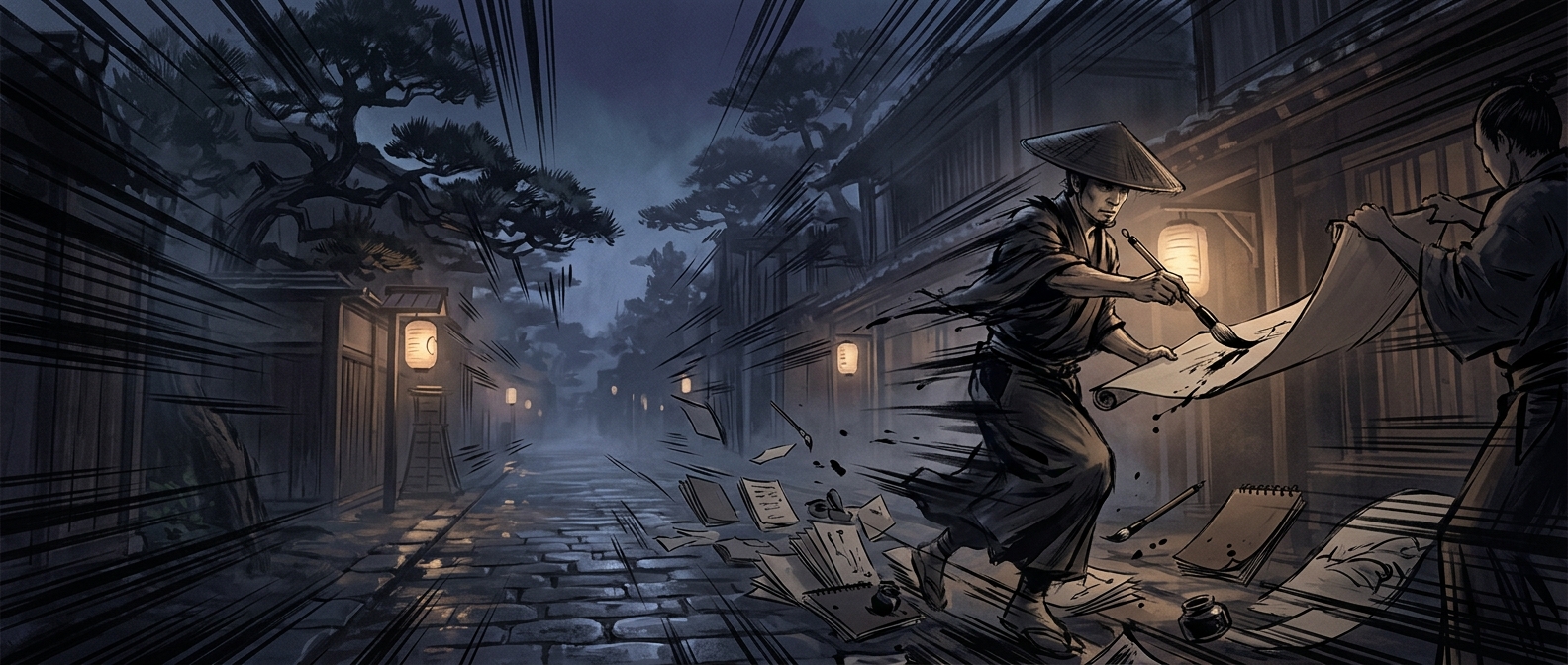
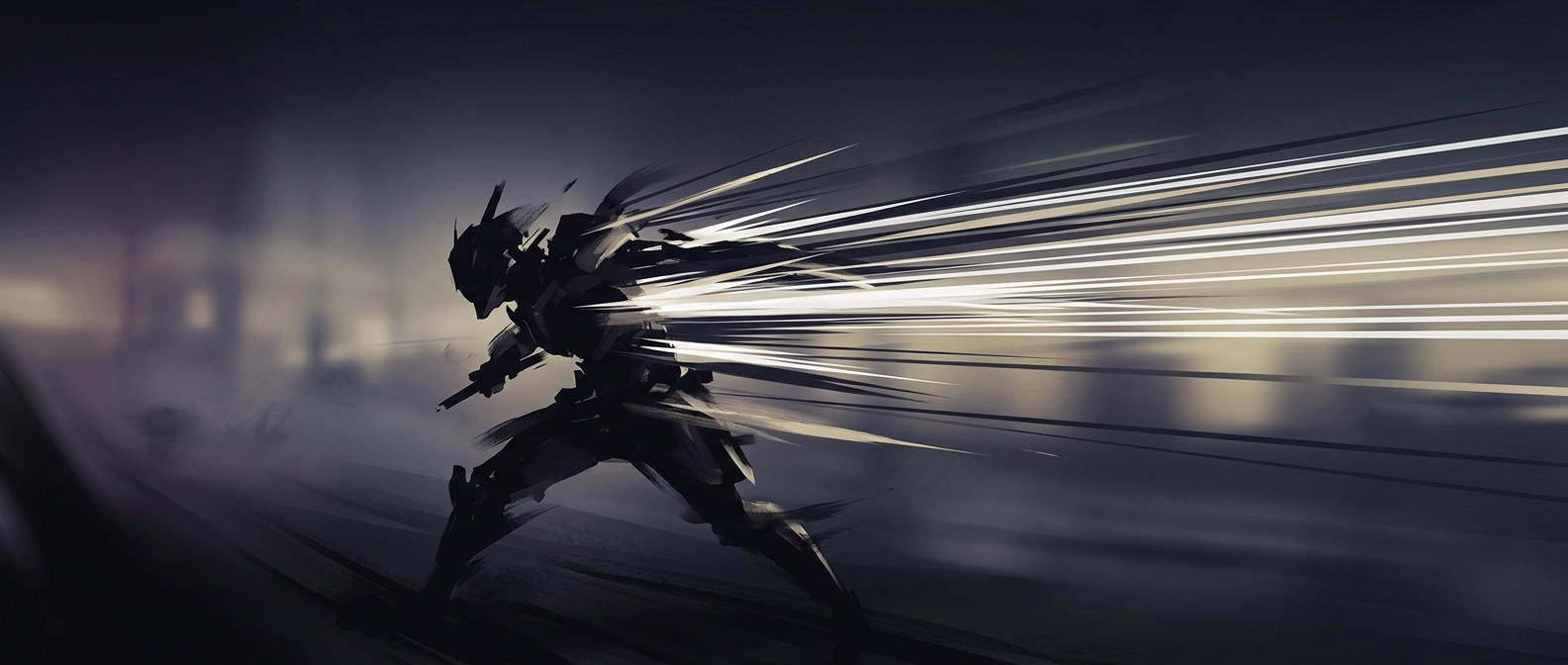
A character can appear to cross a room in an instant even when the image shows only one pose. Speed lines give the viewer a visual path to follow: parallel streaks suggest movement in a direction, while lines radiating from a point can make a blow, collision, or sudden reveal feel explosive.
The trick works because viewers do not need to see every point along a moving body’s route. A strong pose tells us what the character is doing; the lines imply how quickly the action is happening and where it is headed. They turn an otherwise static drawing into a moment with momentum.
A Shortcut That Still Requires Choices
In animation, each change in pose usually has to be drawn or constructed across successive frames. Showing a character’s arm traveling smoothly from one position to another can take many intermediate images. Speed lines offer another tool: the artist can emphasize the key pose and use graphic streaks to suggest the movement between positions, rather than depicting every small shift in the limb.
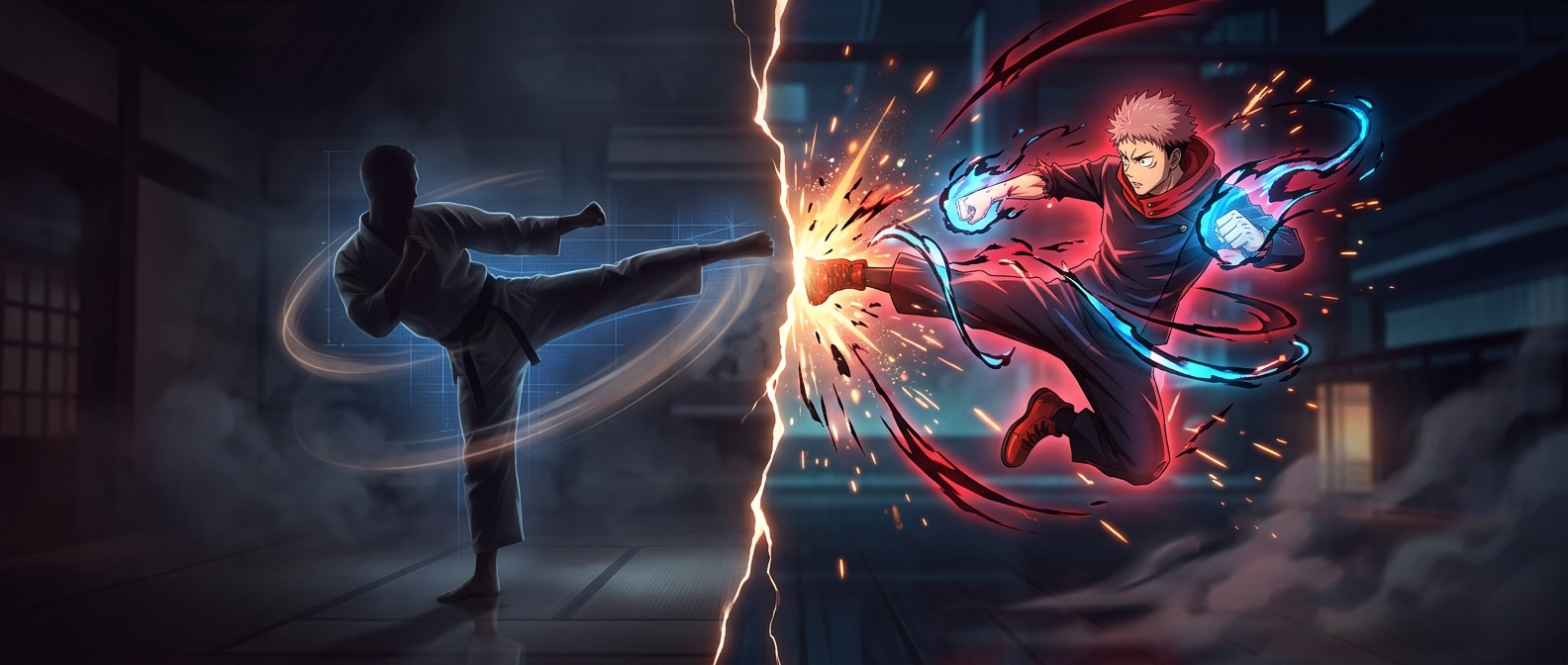
That does not mean the lines replace action drawing. Their direction, density, and placement must agree with the character’s pose and the scene. Lines behind a running figure might imply forward travel; lines converging around a fist can focus attention on the instant of impact. Used carelessly, they can obscure the action or point the eye the wrong way.
The Viewer Supplies the Motion
The effect is a collaboration between image and audience. The drawing provides a clear pose and directional clues; the viewer’s brain connects them into a fast action. That makes speed lines useful not only for saving detailed in-between drawings, but also for controlling emphasis: a few carefully placed streaks can make a punch feel decisive or a sudden entrance feel dramatic.
The result is a compact visual cue doing two jobs at once—suggesting movement while directing attention to the moment the animator wants the audience to remember.