The weight behind an animated punch
A convincing fight is not just a sequence of fast limbs. The body has to look as if it is carrying weight: a fighter plants a foot, turns the hips, loses balance under impact, or takes a moment to recover. Those small shifts tell viewers that force has traveled through the body, even when the characters themselves are drawn.
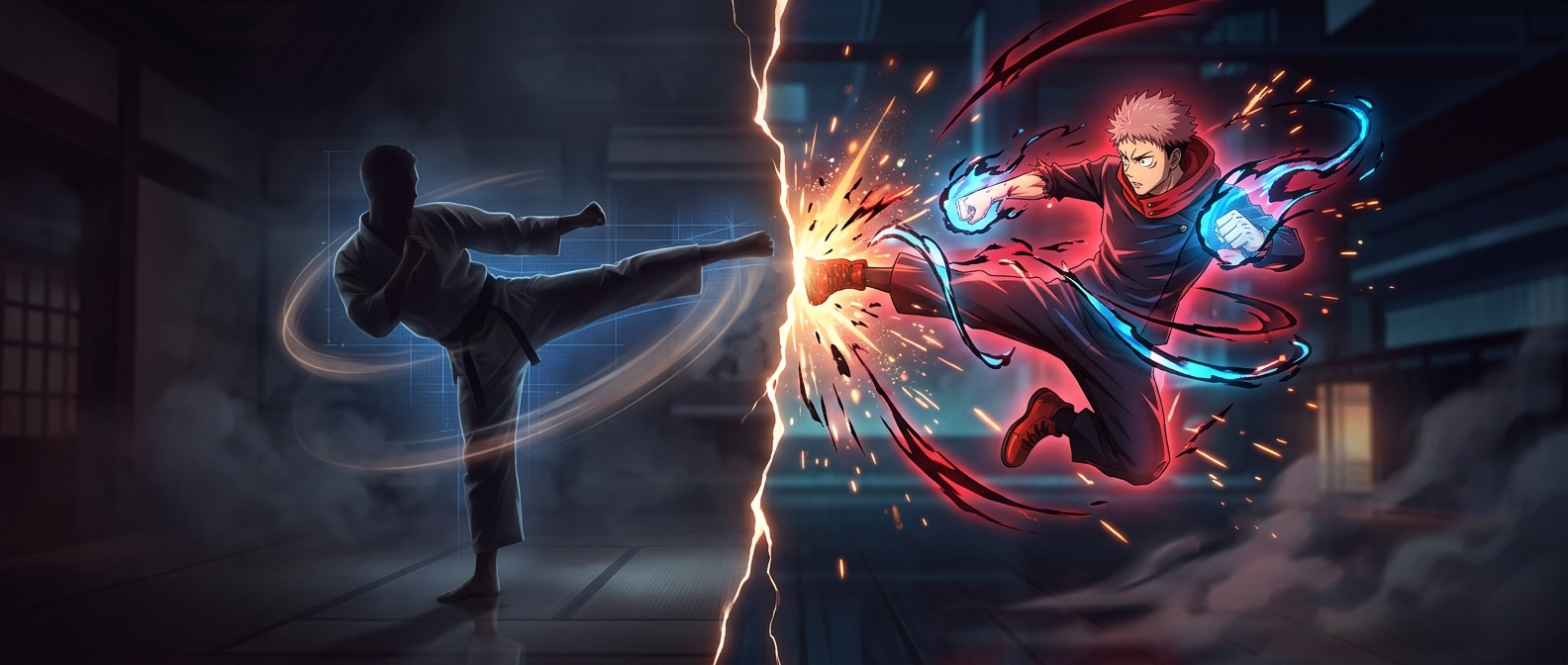
For Jujutsu Kaisen, MAPPA used footage of professional martial artists and stunt coordinators sparring as a reference. Filming the action from multiple angles gave the animators more than a single pose to copy: it showed how a movement changed from frame to frame and how the fighters’ weight shifted as they attacked and reacted.
What rotoscoping contributes
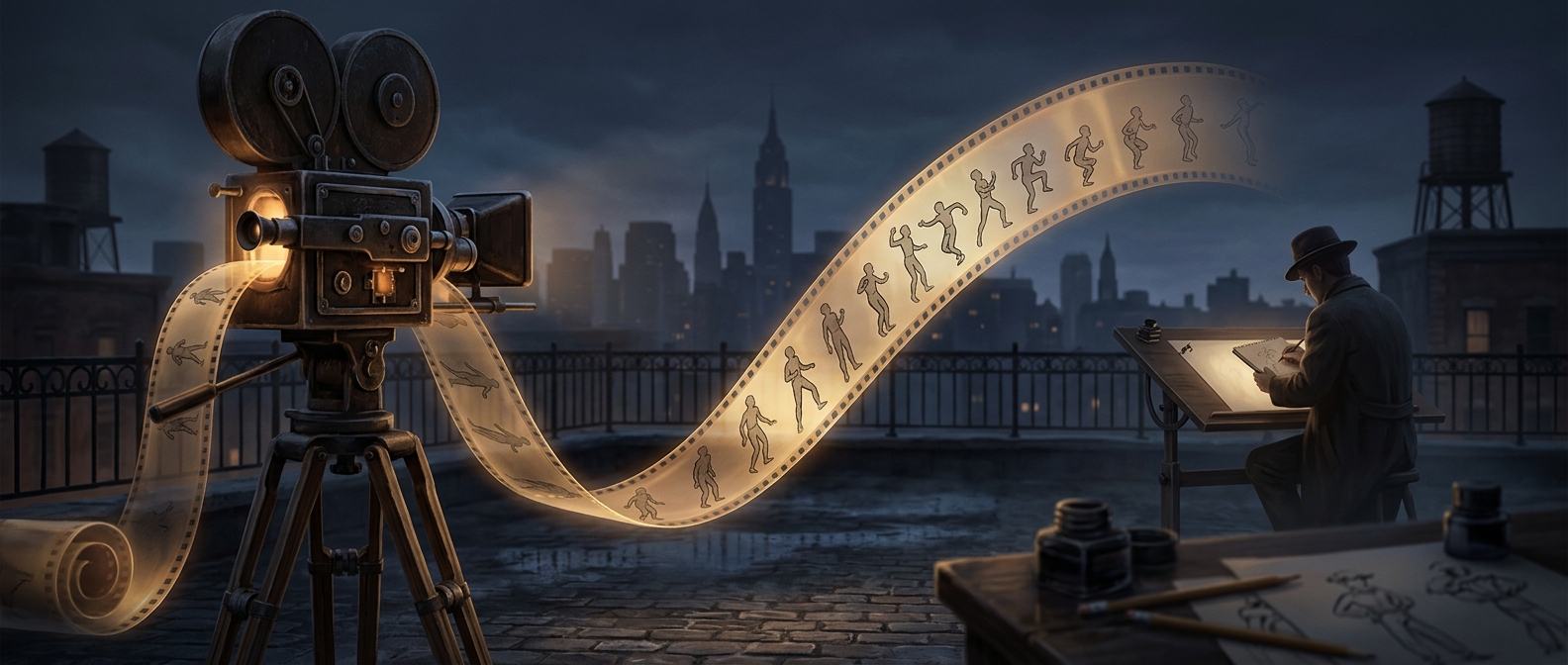
Rotoscoping means drawing or animating over filmed movement. The footage provides a physical guide, but the result can still be shaped for the screen. A real strike may be too quick or visually cluttered to read clearly; animation can adjust its timing, pose, or emphasis while retaining the underlying sense of bodily motion.
That reference matters most in the transitions around a hit. A fist alone can look like it is simply touching its target. When the attacker’s body twists into the strike and the other fighter’s posture gives way, the impact feels connected to a cause. The viewer sees not only contact, but the change in balance that follows it.
Real motion, designed for animation
Sparring footage supplies physical detail; animation turns that detail into a readable fight. The goal is not to make every frame look like raw footage, but to preserve cues—weight, momentum, and recovery—that make the action feel grounded. That is why a punch can seem powerful even in a highly stylized scene: the drawing still carries the logic of a body moving against another body.