How a filmed gesture became a drawn one
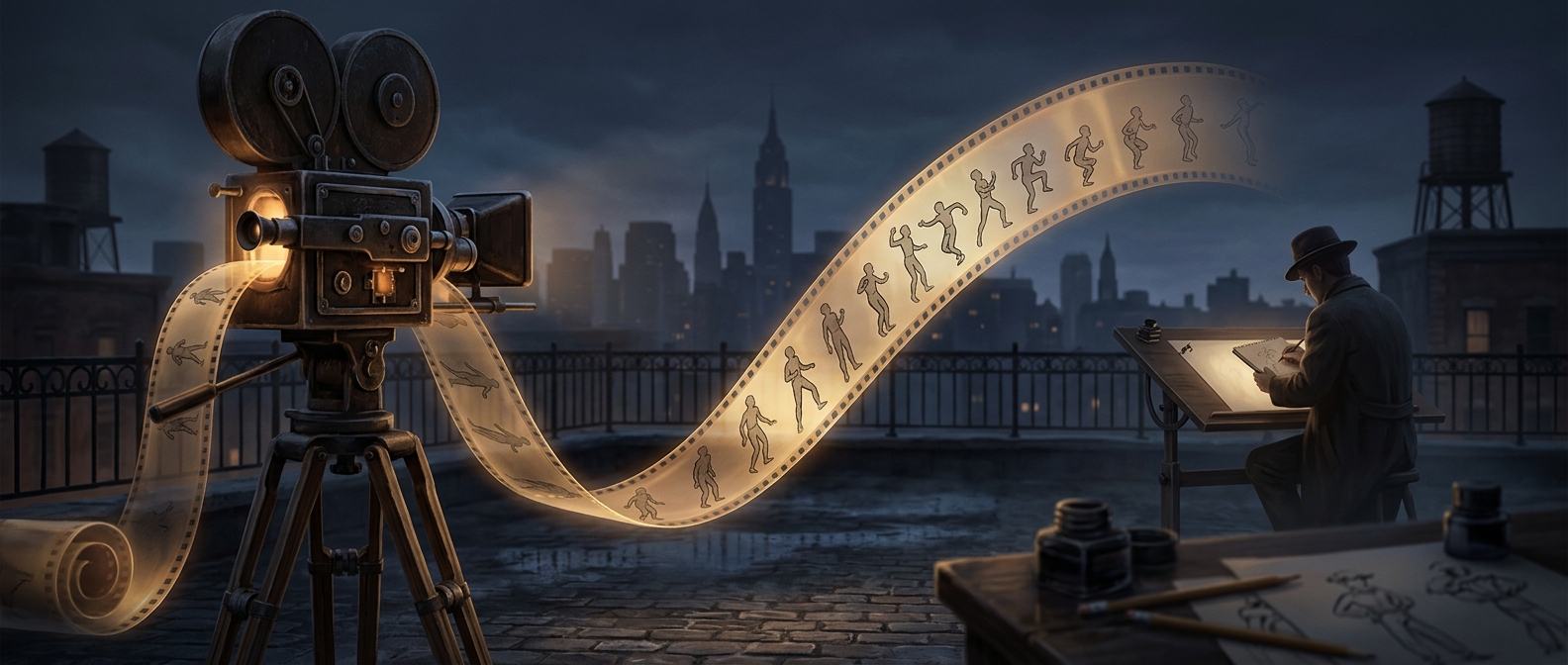
A cartoon animator normally has to invent each movement from scratch: how a body leans, where a foot lands, and how one pose leads into the next. Rotoscoping gave animators a live-action guide. A projector displayed a film frame on a drawing surface, and an artist traced the visible pose before moving to the next frame.
The key was repetition. A single trace could capture a stance; a sequence of traces preserved the tiny shifts that make a gesture feel continuous. The resulting drawings were still cartoons, but their timing and body mechanics could follow an actual performer rather than an animator’s guess.
A reference, not a ready-made cartoon
The footage did not simply become animation by itself. The artist had to translate a moving human figure into drawn shapes, deciding what to keep, simplify, or exaggerate. That distinction mattered: tracing could supply convincing motion, while the cartoon’s design and personality still came from the animator.
It was also painstaking work. Every frame required attention, so rotoscoping traded some invention for a more labor-intensive route to believable movement. It worked especially well when a scene depended on recognizable physical action—a dance, a walk, or a performer’s carefully timed comic gesture.
The lasting tradeoff
Rotoscoping changed animation’s relationship with observation. Instead of relying only on memory and artistic intuition, animators could study how weight shifts and limbs move through time. The method did not eliminate stylization; it gave artists a moving reference they could reshape.
That is why its rooftop origin is more than an unusual bit of production history. A filmed person could provide the motion’s underlying rhythm, while the animator decided what the audience would see: real movement, translated into an invented world.