Building a World That Could Hold Up on Camera
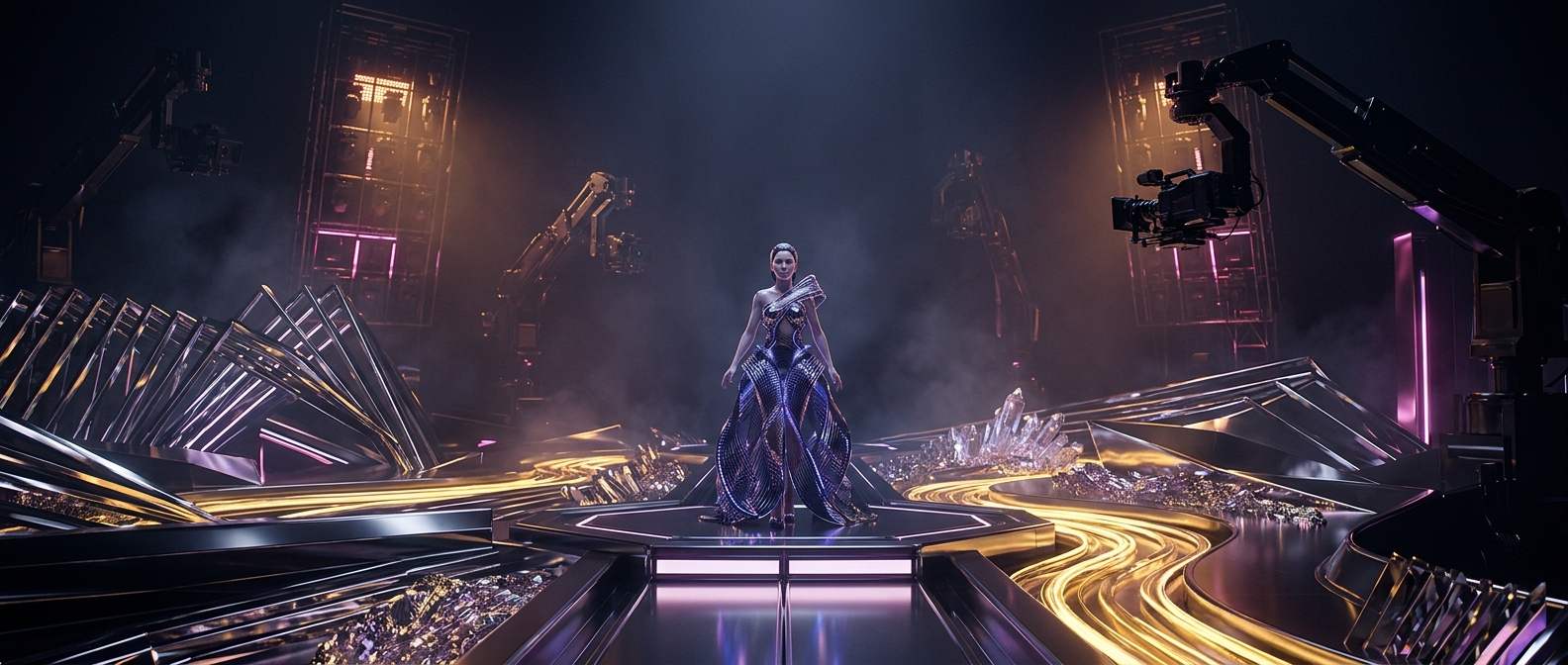
The video’s spacecraft was more than a futuristic backdrop. Practical sets—physical rooms built for filming—gave the performers real surfaces to move through and gave the camera something tangible to explore. That meant constructing a convincing environment rather than relying on a few painted panels or adding every corridor later on a computer.
The choice brought a tradeoff: physical sets could look coherent from many angles, but they demanded space, materials, crew, and time. The more the camera and choreography used the ship, the less the production could get away with suggesting it from just one carefully framed view.
Making the Impossible Feel Physical
Wirework let performers appear to float or move against ordinary gravity. Hidden cables could lift or suspend a person, but they had to be coordinated with the performer’s motion and the camera—and then concealed or removed from the image. That turned a simple-looking gesture into a combination of rigging, timing, and careful framing.
Digital morphing supplied a different kind of transformation. In early computer-generated morphing, one image is gradually reshaped into another, so a face or form seems to change continuously rather than cut abruptly. The effect could create an uncanny transition, but it required the images to be designed and aligned for the change to read clearly. Physical construction, suspended performers, and digital alteration each solved a different visual problem; none made the others unnecessary.
The expense came from assembling those methods into one continuous illusion. The result was not simply a space-themed set, but a video in which the room, bodies, and images could all seem to behave by different rules.