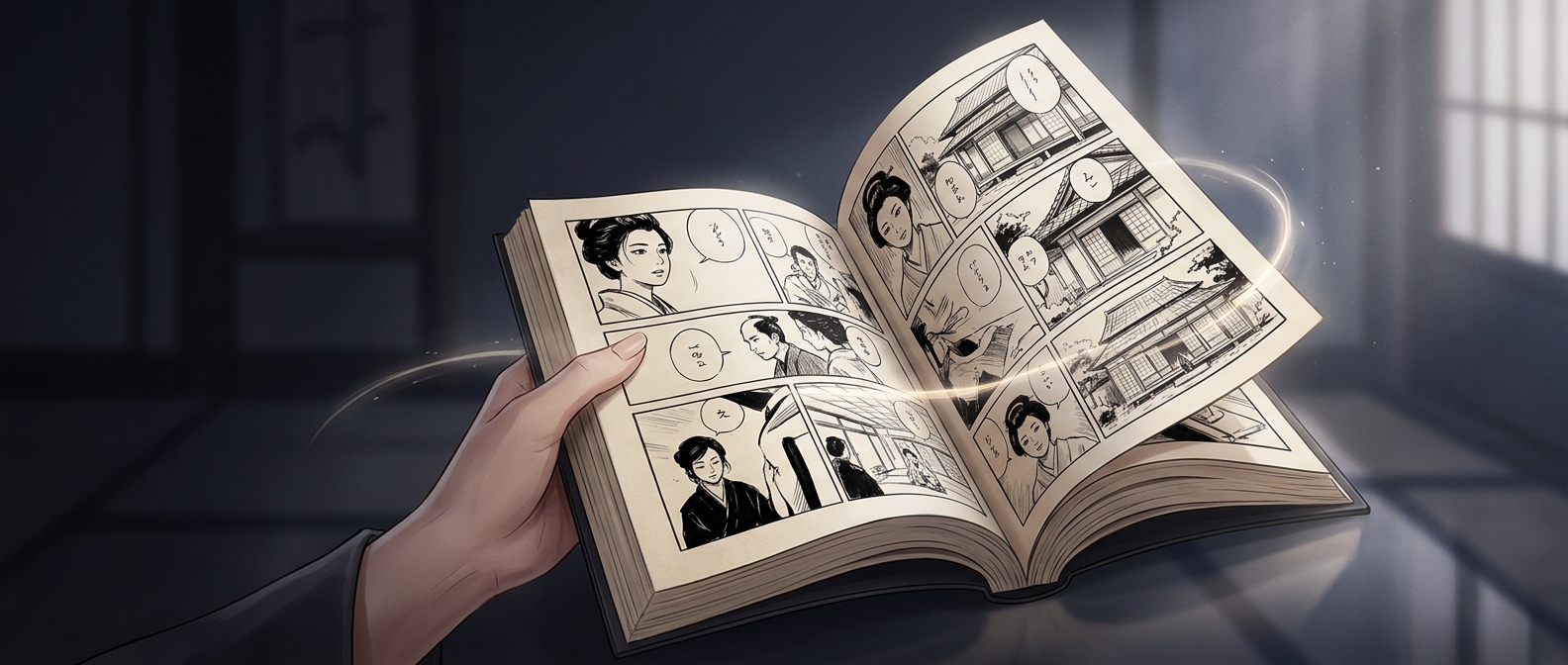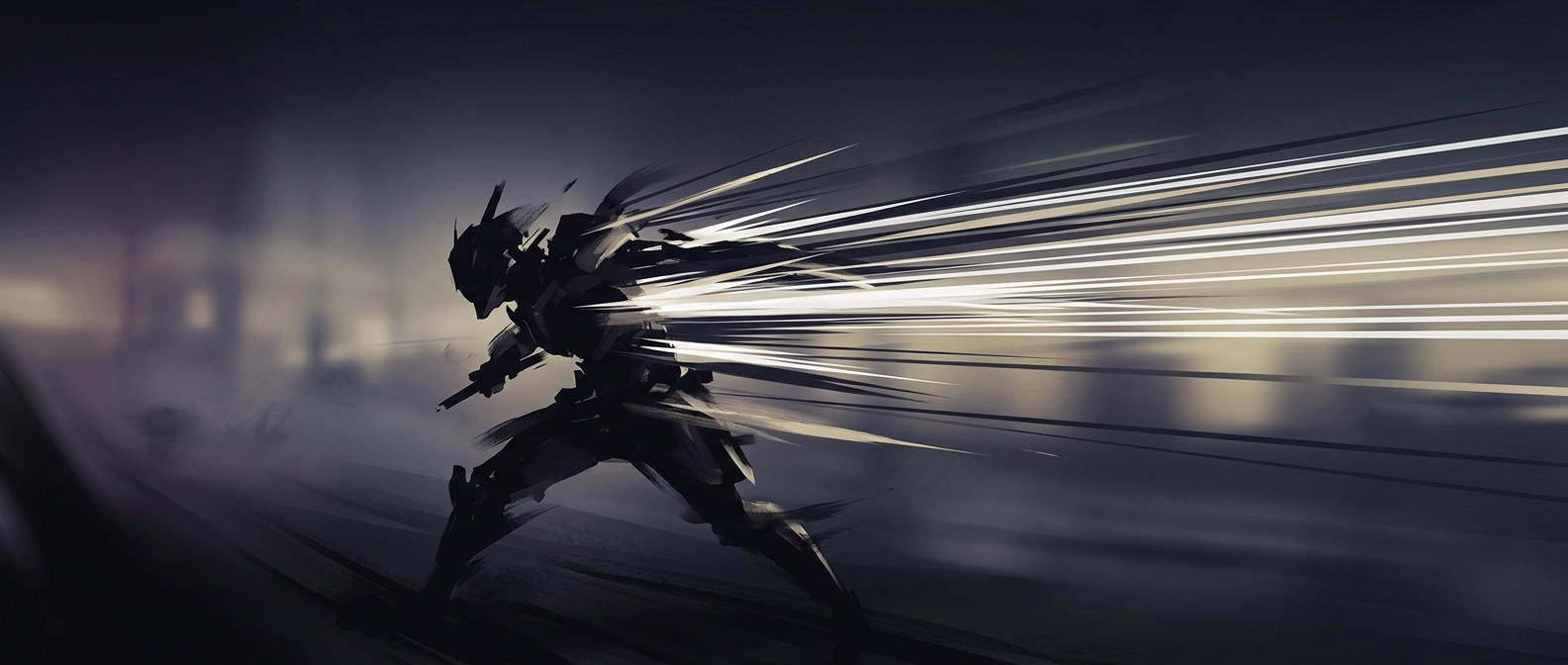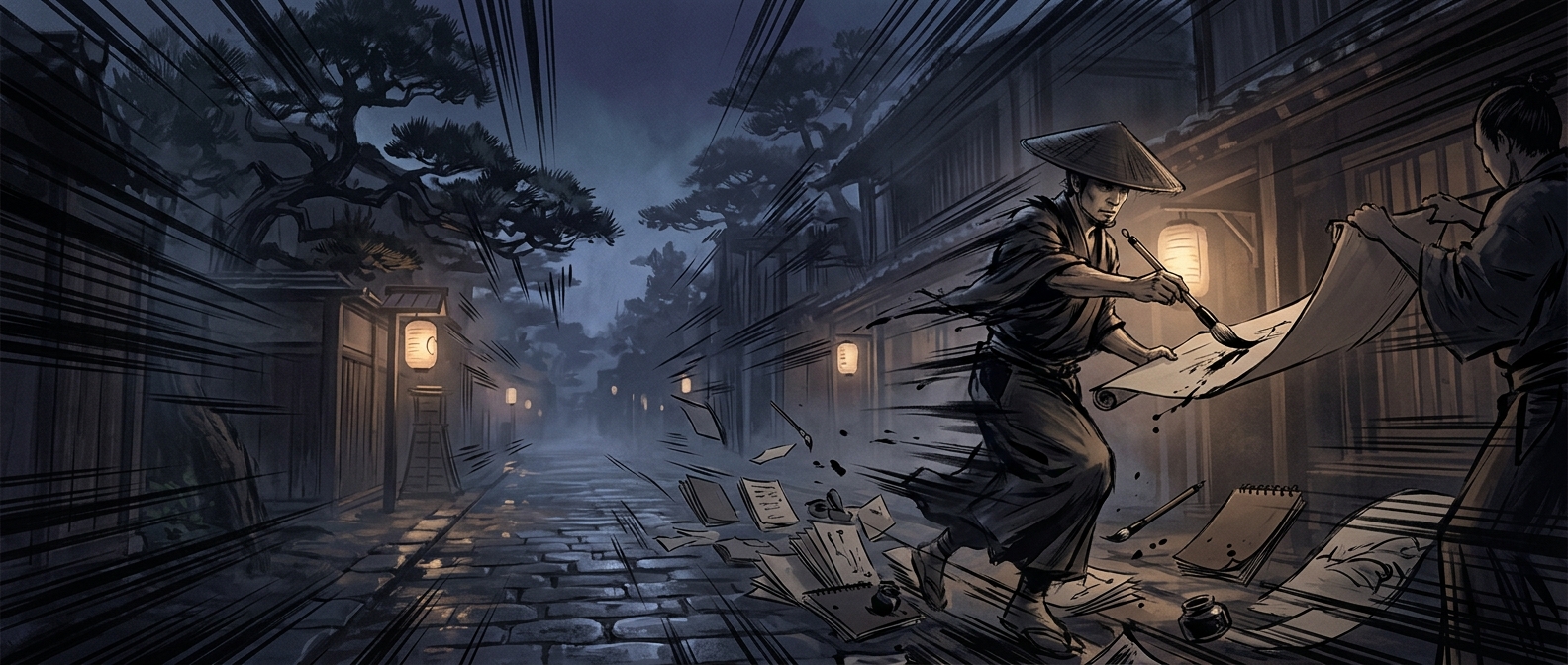
A still image borrows the grammar of motion
A drawing freezes a character at one instant, but viewers are used to seeing movement unfold over time. Speed lines supply a missing before-and-after: their repeated marks imply that the character has passed through the space they occupy, or is moving so quickly that the background seems to trail behind. The eye reads the pattern as evidence of a journey, not as decoration.
The character’s pose helps complete the inference. A forward lean, an extended leg, or an outstretched arm suggests a direction; streaks aligned behind that pose make the implied movement easier to follow. The lines also create contrast: while the marks stretch across the frame, the character remains comparatively solid, so the eye has a clear subject to track.
Placement changes what the lines mean
Artists can use the same basic marks for different effects. Lines that trail behind a runner suggest rapid travel. Lines radiating from a punch or collision instead make the moment feel like an impact. Short, dense marks can make a burst feel abrupt, while longer, cleaner streaks suggest sustained motion across space.
These are visual conventions, not literal records of what a camera would see. Their value is that a reader can understand the action almost instantly, even in a crowded panel or a small image. A few well-placed marks can turn a frozen pose into the split second of a chase.