Why the flash leaves vision behind
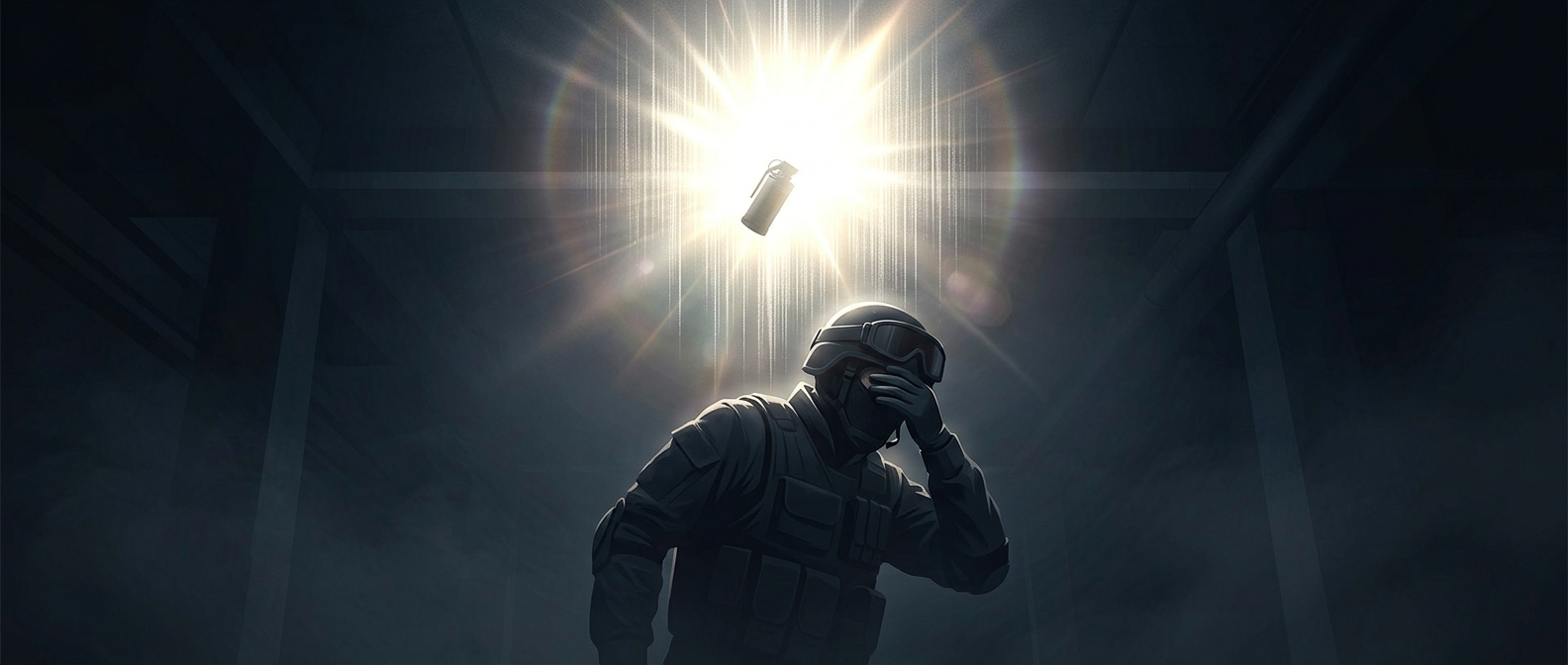
A flashbang creates two abrupt signals at once: an intense burst of light and a sharp blast of sound. The sudden light floods the retina, the layer at the back of the eye that detects light. The visual system cannot adjust instantly, so details may disappear briefly and a bright afterimage can linger as the retina and brain readjust. An afterimage is a temporary visual effect, not an object still in the room.
The bang disrupts more than hearing
The blast can temporarily make other sounds harder to pick out, much as a loud noise masks a quiet one. It can also trigger a startle response: the body tenses, attention snaps toward the sound, and a person may lose track of what was happening around them. That sudden interruption can make it harder to orient or keep steady, especially when paired with momentary visual confusion.
A brief effect is not a harmless one
The device is intended to create a short window of disorientation, not to leave a lasting injury. But the same intense light and sound can cause harm, particularly at close range: hearing may be damaged, and the device’s heat or explosive force can injure someone. The practical consequence is that even a momentary sensory interruption can be consequential—the person affected may be unable to see clearly, hear what is happening, or react in a coordinated way while it lasts.