How a few photons become a visible scene
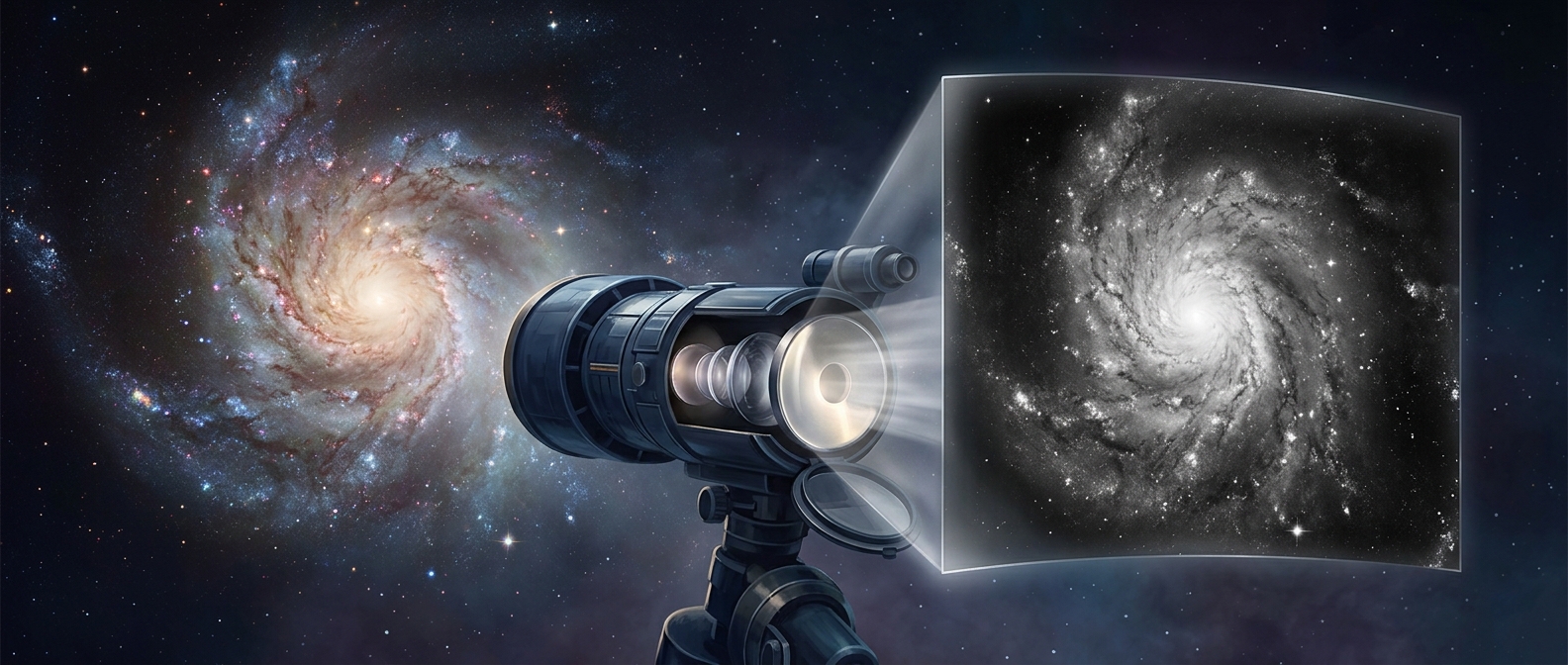
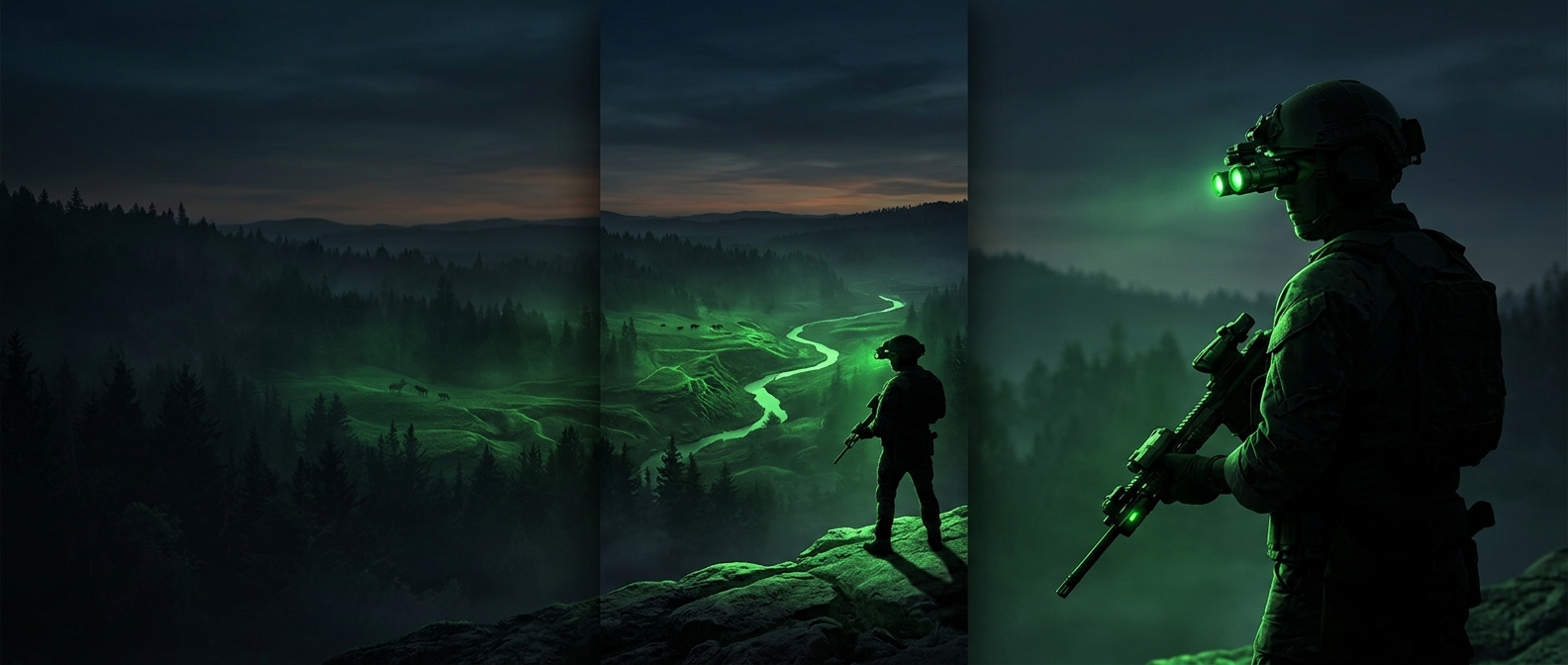
At night, a landscape may look black to the naked eye while still reflecting faint light from stars or distant lamps. Night-vision goggles collect that scarce light through a lens and focus it onto a photocathode, a surface that turns incoming photons into electrons. The device is not creating a clear picture from total darkness: it is making a weak optical signal large enough to see.
The tube multiplies the signal
Inside the vacuum tube, an electric field accelerates the electrons toward a plate filled with microscopic channels. As electrons travel through those channels, they knock loose more electrons, multiplying the signal. The resulting cloud of electrons preserves the rough pattern of the original scene, much as an image is carried from one point to another.
That amplified pattern strikes a phosphor screen. Phosphors are materials that emit light when energized; here, they turn the electron pattern back into a visible image. An eyepiece lets the wearer view it.
Why the picture is usually green
The screen could produce other colors, but green phosphor became a familiar choice because human vision distinguishes shades of green especially well in dim conditions. That makes differences in brightness and detail easier to pick out. The glow is therefore a display choice, not the color of the light the goggles gathered: the original faint light is converted into electrons, amplified, and then rendered in green.
Because the device depends on incoming light, very dark conditions can leave too little signal for a useful image. The key transformation is not “seeing in the dark” so much as turning a handful of otherwise invisible light into a brighter, readable scene.