How a thermal camera builds an image
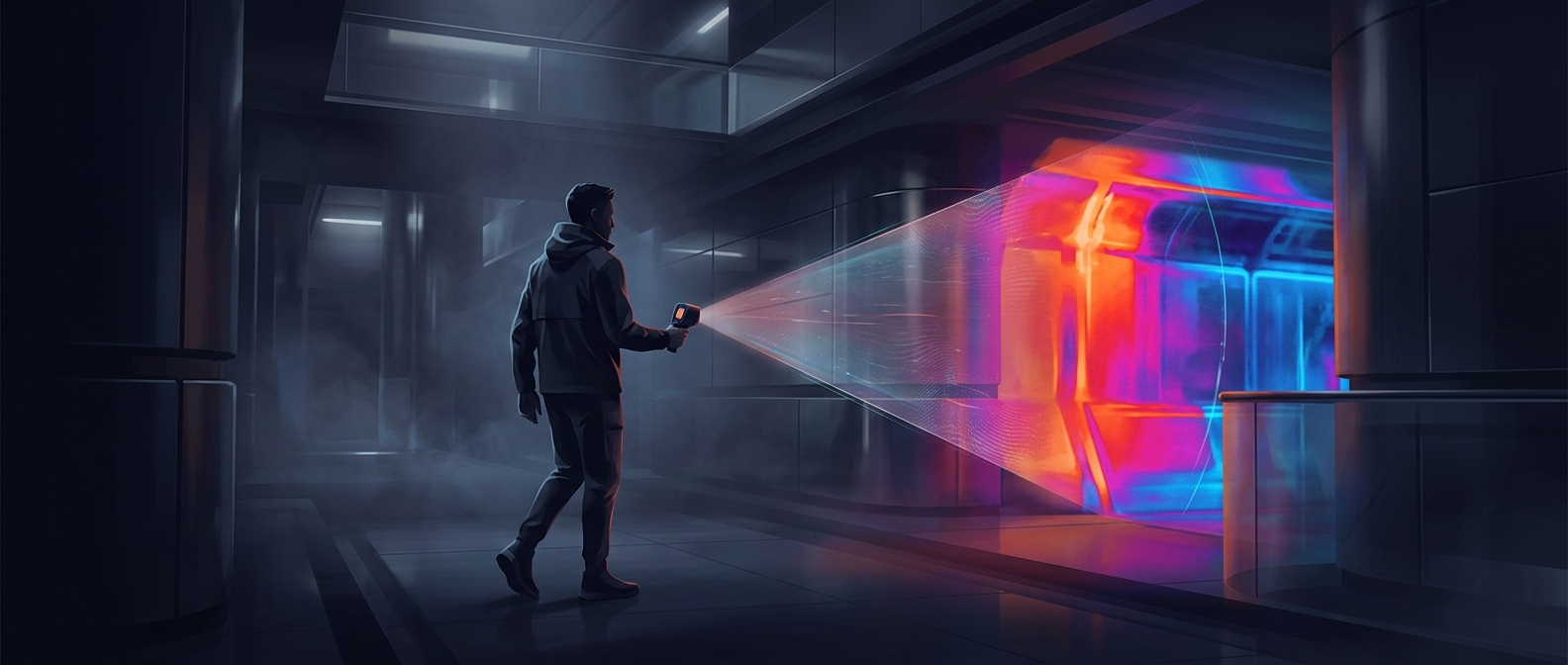
The infrared light from a warm surface is too long-wavelength for human eyes to see. A thermal camera uses a lens designed to gather some of that radiation and direct it onto a detector. The detector converts the incoming energy into electrical signals; the camera processes those signals into a grid of pixels.
Each pixel represents the infrared signal from a small area of the scene. Software assigns those values shades or colors—often bright colors for stronger signals and dark colors for weaker ones. The vivid reds and blues in a thermal image are therefore a display choice, not colors the camera literally sees.
What the picture can—and cannot—tell you
A thermal image is not an ordinary photograph with a heat overlay. Visible-light cameras record reflected light; thermal cameras measure infrared radiation coming from surfaces. The camera can estimate surface temperature from that signal, but the estimate depends on how the material emits infrared and on settings such as emissivity, a measure of how effectively a surface radiates energy. Shiny metal, for example, can reflect infrared from nearby objects and give a misleading reading.
The result is a map of surface temperatures, not a view of heat moving inside an object. A wall may appear cool even if a pipe is warm behind it: the camera usually records the wall’s outer surface, not what lies beyond it. That is why thermal images are useful for spotting patterns—such as a hot electrical connection or a poorly insulated patch—while still requiring care to interpret.